

Road imagery is the primary visual language of trucker identity, translating values like freedom, discipline, and pride into symbols that every driver on the highway recognizes. Understanding why truckers identify with road imagery means looking past the aesthetics and into the psychology of a profession defined by solitude, responsibility, and motion. The open road is not just a workplace for these drivers. It is the backdrop against which their entire professional and personal identity is built. Truckerspride, a brand rooted in that same culture, recognizes that the symbols truckers wear and display are never accidental. They are earned.
Why truckers identify with road imagery: the core of trucker identity
Road imagery functions as occupational symbolism, a recognized field in cultural anthropology that studies how workers use visual markers to express professional belonging and values. For truckers, this symbolism is especially powerful because the road itself is their office, their commute, and their community all at once. The highway perspective narrowing to the horizon is one of the most recognized images in trucking culture. It represents the endless journey and the idea of a workspace without walls, a concept that resonates deeply with drivers who spend weeks away from home.
The connection between truckers and highways goes beyond familiarity. It reflects a worldview. A driver who has logged hundreds of thousands of miles sees the road differently than anyone else. Every painted line, every overpass, and every exit sign carries meaning built from experience. That accumulated knowledge shapes how truckers see themselves and how they want others to see them. Road imagery captures that experience in a single glance.
Slogans like “King of the Road” affirm pride in a demanding profession requiring sacrifice and the delivery of critical societal functions. That phrase is not just a bumper sticker. It is a declaration that this work matters, that the person behind the wheel carries real responsibility, and that the road is a place of earned authority.
What key road symbols do truckers commonly identify with?
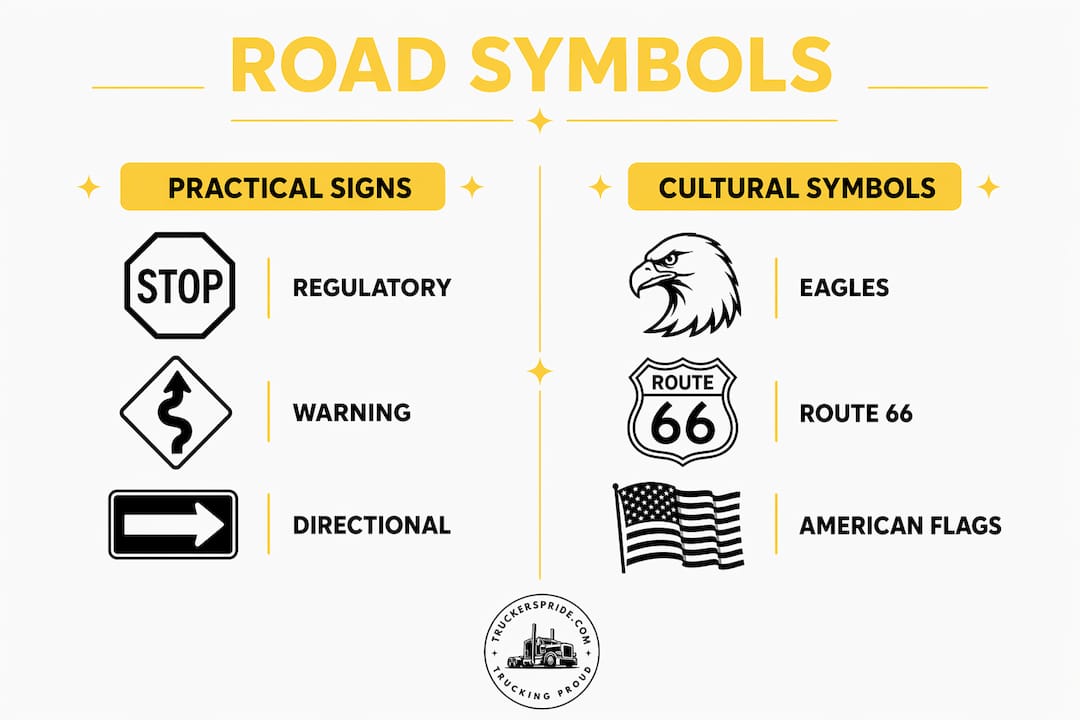
Truckers gravitate toward a specific set of symbols, each carrying layered meaning that goes well beyond decoration.
- The narrowing highway perspective. This image, a two-lane road shrinking toward a distant horizon, is the single most recognizable symbol in trucking culture. It captures the scale of the job and the meditative quality of long-haul driving. The road becomes routine, but it never loses its weight.
- Eagles. The eagle represents freedom, vigilance, and a connection to open spaces. For a driver who spends most of the day alone under a wide sky, the eagle mirrors something real about the experience.
- The American flag. Patriotism runs deep in trucking culture. Drivers understand that they keep the supply chain moving, and the flag signals pride in that essential role. The phrase “If you bought it, a trucker brought it” is not marketing copy. It is a statement of fact that drivers carry with genuine conviction.
- Manufacturer logos and rig silhouettes. Brands like Peterbilt, Kenworth, and Freightliner carry heritage. A driver who has run the same make for twenty years sees that logo as a mark of professional identity, not just a product badge.
- Route numbers and road signs. Specific highways like Route 66 or I-80 carry cultural weight. They represent legendary stretches of American road history that truckers have personally traveled.
Pro Tip: When choosing apparel or cab décor, drivers who select symbols tied to their actual routes or rigs report a stronger sense of personal connection to the imagery. Specificity matters more than generic road graphics.
The importance of road imagery for truckers lies in this specificity. Generic landscapes mean little. But a symbol tied to a real experience, a real route, or a real rig becomes a marker of lived identity.
How does road imagery support truckers emotionally and build community?
The trucking life is defined by long stretches of solitude. Road imagery addresses that solitude directly, serving as both emotional anchor and social signal.
Research on truck art across cultures reveals how deeply drivers rely on symbolic decoration for psychological support. A study of 135 trucks found that 58.5% featured religious motifs for protection, 31.1% carried romantic inscriptions to combat isolation, and 16.3% displayed national imagery for collective identity. These numbers reflect a universal human need. When a driver is alone on a dark highway at 2:00 AM, the symbols around them carry real emotional weight.
Road imagery builds community in four distinct ways:
- Shared recognition. When two drivers see the same symbol on a shirt or a rig, they share an unspoken understanding. No explanation is needed. The symbol does the work.
- Cultural continuity. Symbols passed down through trucking generations connect newer drivers to the history of the profession. A young driver wearing a classic rig graphic is participating in something larger than a single career.
- Combating isolation. Romantic and devotional inscriptions on trucks serve as reminders of home and connection. They transform the cab into a space that holds personal meaning, not just cargo.
- Professional differentiation. Road imagery signals membership in a specific community. It separates career drivers from temporary operators in a way that words alone cannot. Symbolic apparel and imagery reinforce those bonds across distances and state lines.
The psychology of truckers and road culture is grounded in this need for belonging. The road isolates, but the symbols connect.
Why do road signs carry practical and cultural weight for truckers?
Road signs occupy a unique position in trucking culture. They are simultaneously functional tools and cultural markers.
On the practical side, the stakes are high. Failure to interpret over 400 regulatory road signs can result in accidents and legal consequences for professional drivers. Out of 1,094 total road signs in the United States, 418 are regulatory. That means a significant portion of every drive involves reading and responding to signs that carry legal force. Misreading a weight restriction or a low-clearance warning does not just inconvenience a driver. It can end a career or a life.
That practical weight gives road signs a cultural gravity that other symbols lack. A trucker who has memorized every regulatory sign has done real work. That knowledge represents discipline and commitment.
| Symbol type | Practical function | Cultural meaning |
|---|---|---|
| Regulatory signs | Legal compliance, safety | Discipline and professional mastery |
| Highway route markers | Navigation and route planning | Heritage routes, personal history |
| Warning signs | Hazard awareness | Vigilance and experience |
| Directional signs | Logistics and delivery timing | Sense of place and territory |
Pro Tip: Experienced long-haul drivers use visual route knowledge beyond digital maps, drawing on practical familiarity with specific roads and hazards. That knowledge is a form of professional pride that no app fully replaces.
The symbolism of roads for truck drivers is built on this dual reality. Signs mean something legally, and they mean something personally. Both layers matter.
How do truckers integrate road imagery into their daily identity?
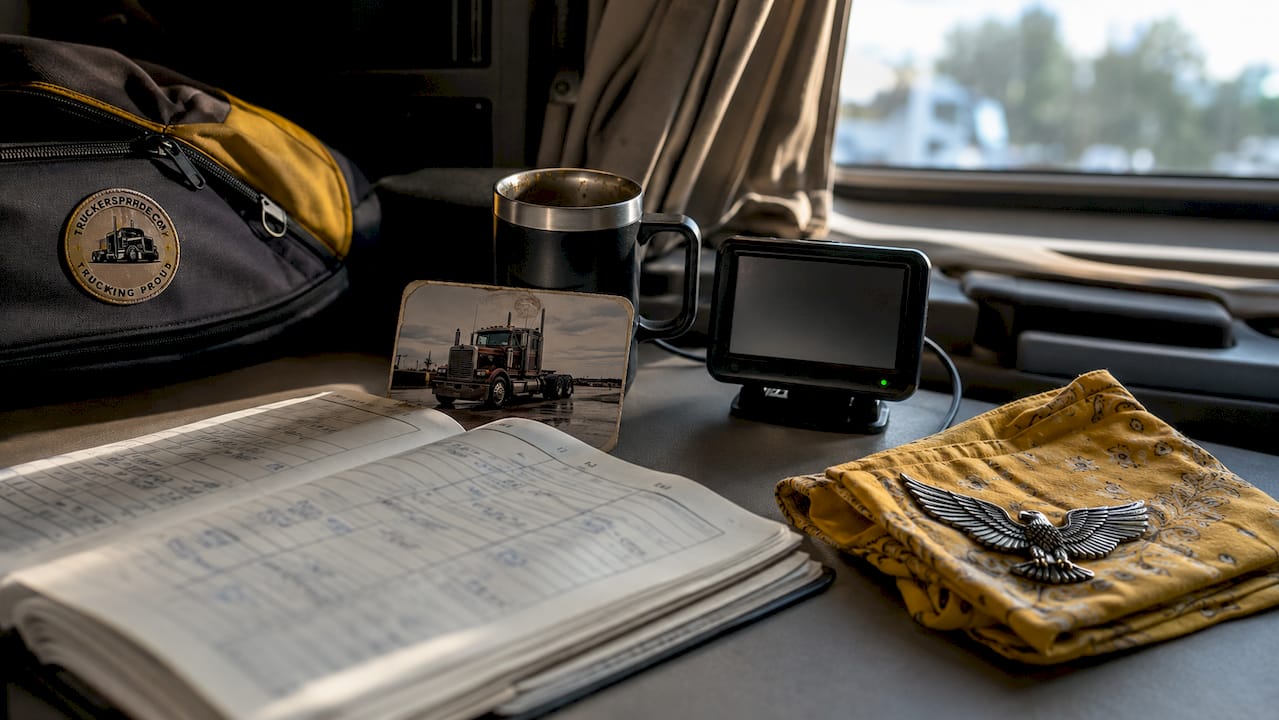
The truck cab is a secondary home. Drivers who spend weeks on the road personalize that space with intention. Long-haul truckers customize their cabs with road-themed graphics and symbols to assert ownership and express pride in their lifestyle. This is not decoration for its own sake. It is identity construction in a space where identity is constantly tested by distance and fatigue.
Apparel plays an equally important role. Truck shirt symbols connect drivers to heritage, values, and professional pride, separating career truckers from temporary operators. A driver who wears a shirt featuring a classic rig silhouette or a highway graphic is making a statement about who they are and how long they have been doing this work.
- Cab customization. Flags, route stickers, religious icons, and rig graphics transform a commercial vehicle into a personal space. Each item placed in the cab reflects a choice about what matters.
- Apparel as uniform. Professional appearance standards in trucking signal pride and differentiate career drivers from less committed operators. Wearing road imagery is part of that standard.
- Truck art as biography. The symbols a driver chooses over a career tell a story. A rig decorated with the routes driven, the rigs owned, and the years logged is a visual resume that other drivers can read at a glance.
- Heritage design clothing. Apparel that references trucking heritage and design preserves the history of the profession while giving drivers a way to wear that history with pride.
Road imagery also preserves trucking history and combats misconceptions about the profession’s value. Every symbol worn or displayed is a quiet argument for the dignity of the work.
Key Takeaways
Road imagery is the primary language of trucker identity, connecting professional pride, emotional resilience, and community belonging through symbols built from real experience on the highway.
| Point | Details |
|---|---|
| Road imagery as identity | Symbols like the narrowing highway and eagle represent the trucker’s worldview, not just aesthetics. |
| Emotional anchoring | Religious, romantic, and national symbols on trucks and apparel directly combat isolation and sustain morale. |
| Practical and cultural weight | Over 400 regulatory road signs carry both legal force and cultural significance for professional drivers. |
| Community signaling | Road imagery separates career drivers from temporary operators and builds unspoken bonds across distances. |
| Apparel as biography | Clothing and cab décor featuring road symbols tell a driver’s story and preserve trucking heritage. |
Road imagery carries more meaning than most people realize
I have spent years paying attention to how truckers talk about the symbols they choose, and the pattern is consistent. Drivers do not pick a highway graphic because it looks good on a shirt. They pick it because it means something specific to them. A Route 66 patch on a jacket is not nostalgia. It is a reference to a stretch of road that shaped who that driver became.
What strikes me most is how road imagery functions as a form of quiet communication. Two drivers at a truck stop do not need to exchange resumes. The symbols on their gear tell the story. The rig silhouette, the route number, the slogan on the back of a cap. These are shorthand for years of discipline, sacrifice, and commitment that most people never see.
The trucking community is also one of the most underestimated cultures in America. The imagery that drivers carry reflects a genuine pride in work that keeps the country running. That pride is not loud or performative. It is built over miles, and it shows up in the details. The symbols truckers choose are the details that matter most.
Highway culture’s influence on clothing design is real, and it is growing. More drivers are seeking apparel that reflects the depth of their experience rather than generic truck graphics. That shift tells me the community is becoming more deliberate about how it represents itself. That is worth paying attention to.
— Sylvain
Truckerspride apparel built for drivers who live the road
Truckerspride designs apparel specifically for drivers who understand that what they wear reflects who they are. Every piece in the lineup draws from real trucking culture, featuring road imagery and symbols that carry genuine meaning for career drivers.

The Everyday Essentials Bundle brings together a hoodie, tee, and cap featuring iconic trucking and road imagery, printed locally in North America for quality that holds up on the road. For drivers who want to wear their pride without compromise, Truckerspride delivers gear that reflects the discipline and commitment the profession demands. This is apparel built from the same values that keep drivers behind the wheel, mile after mile.
FAQ
Why do truckers connect so strongly with road imagery?
Road imagery reflects the trucker’s actual workplace and lived experience. The highway, the horizon, and road signs are not abstract symbols. They are the daily reality of the profession, which makes them powerful markers of identity.
What road symbols are most common in trucking culture?
The narrowing highway perspective, eagles, American flags, manufacturer logos, and legendary route numbers like Route 66 are among the most recognized symbols. Each carries specific meaning tied to freedom, heritage, patriotism, or professional pride.
How does road imagery help truckers deal with isolation?
Symbols on trucks and apparel serve as emotional anchors. Research shows that drivers use religious motifs for protection and romantic inscriptions to maintain connection with home, both of which directly address the psychological weight of long-haul solitude.
Do road signs carry cultural meaning beyond their practical function?
Road signs carry both legal force and cultural weight. Mastering over 400 regulatory signs represents professional discipline, and specific routes or signs tied to a driver’s career history become personal landmarks with real emotional significance.
How does wearing road imagery affect a trucker’s professional identity?
Apparel featuring road and trucking symbols signals membership in a community of career drivers. It separates long-haul professionals from temporary operators and preserves the heritage of a profession that most people take for granted.