

Highway culture inspires clothing design by transforming functional roadwear and automotive imagery into a powerful fashion language that communicates identity, authenticity, and movement. What began as durable workwear for truckers and laborers in the 1970s has grown into one of the most enduring influences in contemporary apparel. Trucker hats, work jackets, and automotive silhouettes now appear on runways and in streetwear collections worldwide. The road is not just a place. It is a symbol, and clothing carries that symbol forward.
Why highway culture inspires clothing design: the functional origins
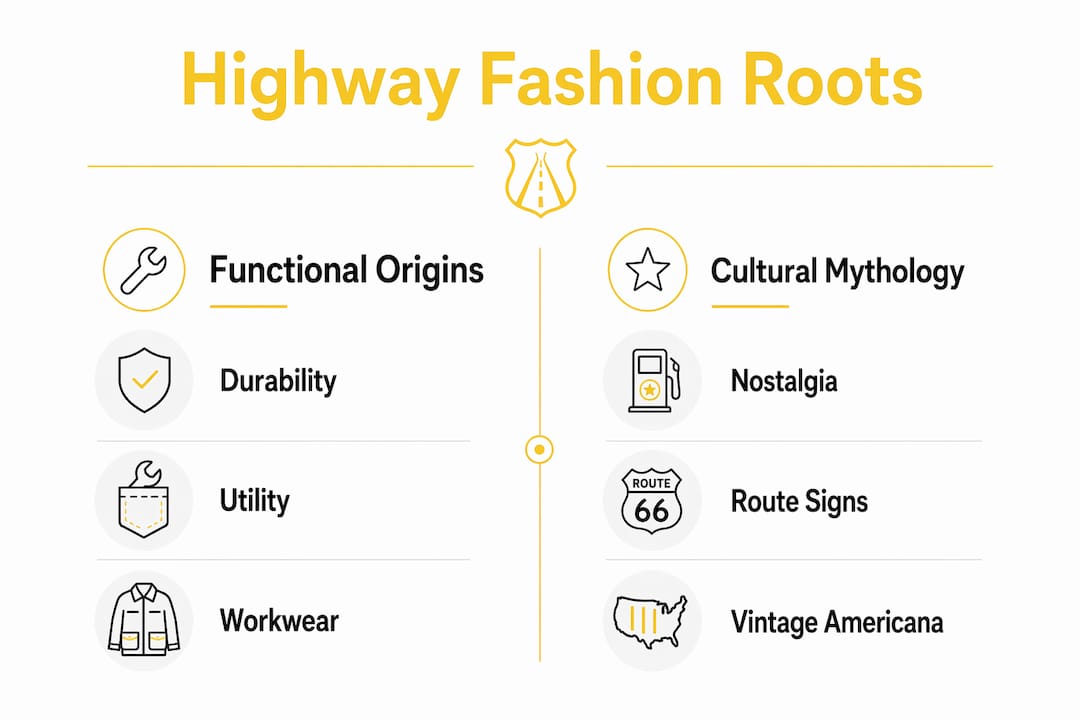
Trucker fashion began as functional workwear in the 1970s, built around durability, affordability, and practicality for people who spent their lives on the road. Garments needed to survive long hauls, engine grease, and unpredictable weather. Style was secondary. Survival was the point.
That changed when urban subcultures discovered the same qualities. Grunge musicians and skateboarders in the 1990s adopted trucker jackets, mesh caps, and heavy denim because those garments projected something real. They looked lived in. They looked earned. Celebrity adoption followed, and what had been workwear became a cultural signal.
The practical design features carried over intact. Patches, reinforced seams, and boxy silhouettes migrated from truck stops to city streets without losing their meaning. Workwear communicates authenticity and effort through visible wear and repair, functioning as a cultural language rather than simple utility. A faded jacket does not look old. It looks like it has been somewhere.
- Durability as design intent: Heavy canvas, reinforced stitching, and fade-resistant dyes were built for the road and became aesthetic markers in fashion.
- Patches and emblems: Originally identifying company affiliation, patches became personal storytelling devices in streetwear.
- Silhouette: The boxy, unstructured cut of trucker workwear translated directly into the oversized fits that define contemporary streetwear.
- Visible aging: Fading, fraying, and repair stitching signal lived experience, which fast fashion cannot replicate.
Pro Tip: When building a highway-inspired look, prioritize garments with visible construction details like exposed seams or contrast stitching. Those details carry the authenticity that makes road culture fashion feel genuine rather than costume.
How does highway mythology shape fashion imagery?
Route 66’s mythology created a visual myth of freedom and escape that fashion designers have recycled for decades. The postwar American highway represented possibility. Films, advertisements, and novels built that image into something almost sacred. Clothing collections borrowed it wholesale.
Hollywood and advertising agencies did much of the heavy lifting. Open roads, desert landscapes, and fading road signs became shorthand for independence. Those images moved from film posters into clothing graphics, print campaigns, and brand identities. The highway became a backdrop for aspiration.
“The road is the great equalizer. It does not care who you are. It only asks how far you are willing to go.”
Nostalgia drives a significant part of this connection. Designers use vintage Americana, mileage markers, and worn typography to evoke a time when the road felt like freedom rather than commute. Fashion exhibitions show highway culture as a symbolic space materialized in clothing through curated urban imagery and movement metaphors. The road trip becomes a narrative device, and the garment becomes the story.
| Design element | Cultural source | Fashion application |
|---|---|---|
| Route signs and mile markers | American highway system | Graphic prints, embroidery, badge details |
| Desert and open road imagery | Route 66 mythology | Campaign photography, print collections |
| Vintage typography | Road signage and truck lettering | Slogan tees, jacket back graphics |
| Automotive logos and badges | Racing and trucking industry | Embroidered patches, woven labels |
In what ways do subcultural codes shape highway-inspired fashion?
Japanese street racing culture borrowed workwear, military garments, and biker jackets as a ready-made library of references that signal subcultural identity through clothing. Patches, mechanic silhouettes, and sponsor jackets expressed belonging and narrative authenticity. That vocabulary transferred directly into global streetwear.
The semiotic function of these garments is precise. A uniform-like jacket does not just look cool. It communicates that the wearer belongs to something with rules, history, and discipline. Subcultural credibility in highway-inspired fashion depends on borrowing specific uniform grammar elements like utility silhouettes and emblematic markings. Generic scenery does not achieve the same effect.
Logos and badges carry particular weight. In motorsport and trucking communities, a logo on a jacket identifies the team, the sponsor, or the route. Fashion designers recognized that weight and preserved it. The badge is not decoration. It is a credential.
- Identify the uniform grammar: Successful highway-inspired designs borrow utility silhouettes, emblematic markings, and narrative textures from real road communities.
- Use community codes deliberately: Patches, sponsor graphics, and route references carry meaning only when placed with intention, not scattered randomly.
- Respect the source: Designs that reference trucking or racing culture without understanding their context read as costume. Designs that honor the source read as tribute.
- Layer the narrative: The most credible highway-inspired garments combine multiple subcultural references, creating depth rather than a single surface image.
Pro Tip: Study actual workwear from trucking and motorsport communities before designing highway-inspired pieces. The specific placement of patches, the weight of the fabric, and the cut of the collar all carry meaning that generic “road aesthetic” designs miss entirely.
What design techniques translate highway movement into clothing?
Translating automotive aesthetics into fashion requires embodying speed and presence in silhouettes, material choice, and graphic placement. Copying imagery is not enough. The garment itself must feel like it belongs in motion.
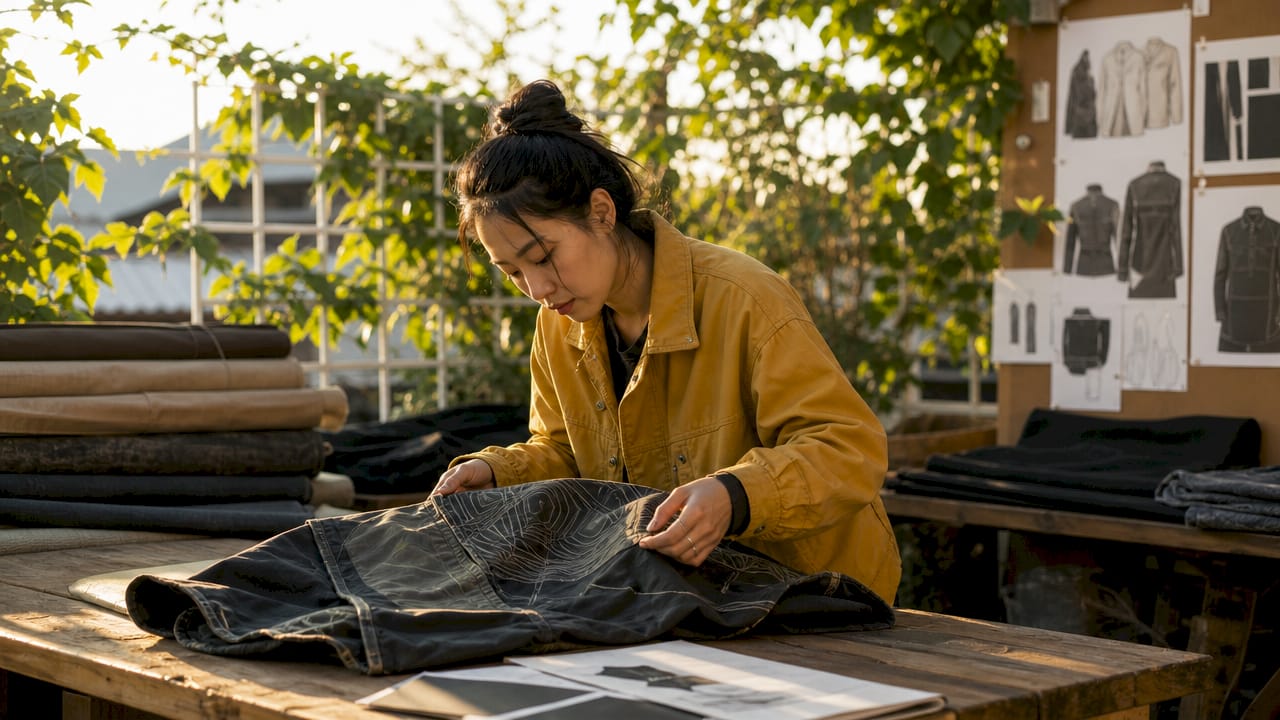
Highway-inspired graphics function as topographic storytelling through the compositional placement of route lines and signage to convey motion and identity. Designers place visual elements for visibility from multiple moving angles, reflecting the wearer in motion rather than standing still. A graphic that reads well from the front and the side communicates differently than one designed only for a hanger.
Fabric choice reinforces the message. Heavy canvas, technical weaves, and washed denim carry physical weight that synthetic fast-fashion fabrics do not. Garment wear patterns like fading and repair serve as evidence of lived distance, enhancing narrative integrity. The garment that ages well tells a better story than the garment that stays pristine.
| Design approach | Highway culture source | Effect on the garment |
|---|---|---|
| Topographic graphic placement | Route maps and road signage | Creates visual motion across the garment |
| Heavy, structured fabric | Trucker and mechanic workwear | Adds physical presence and durability |
| Intentional aging and fading | Road-worn workwear | Builds narrative authenticity over time |
| Boxy, unstructured silhouette | Utility workwear cuts | Signals practicality and subcultural credibility |
The connection between static fashion and dynamic highway identity comes down to intention. A garment designed to age, to move, and to carry meaning over time behaves differently from one designed to photograph well and be discarded. Celebrity collaborations in the 1960s and 1970s cemented automotive style as aspirational, introducing structured silhouettes and logos as design codes that still define the category today.
Key Takeaways
Highway culture inspires clothing design because it fuses functional durability, cultural mythology, and subcultural identity into garments that carry meaning far beyond their original purpose.
| Point | Details |
|---|---|
| Functional origins matter | Trucker workwear’s durability and utility became the aesthetic foundation for highway-inspired fashion. |
| Mythology drives imagery | Route 66 and postwar highway romanticism supply the visual language designers use for graphics and campaigns. |
| Subcultural codes create credibility | Patches, uniform silhouettes, and community emblems signal authentic belonging, not just surface style. |
| Motion shapes design decisions | Graphic placement, fabric weight, and silhouette should reflect a wearer in motion, not standing still. |
| Aging is a design feature | Garments that fade and wear over time carry narrative authenticity that new fast-fashion pieces cannot replicate. |
The road does not lie: my honest view on highway fashion’s staying power
Highway culture has staying power in fashion for one reason. It is honest. The garments it produced were built for real conditions by people who had no interest in trends. That honesty is exactly what fast fashion cannot manufacture, no matter how many distressed finishes it applies.
What I find most compelling is the idea that aging is built into the design. Runway fashion treats the story as something external, a campaign, a lookbook, a press release. Highway apparel integrates the narrative within the garment’s wear. The fading is the story. The repair stitch is the story. That is a fundamentally different relationship between clothing and meaning.
The future of this aesthetic is not nostalgia. It is material honesty. As sustainability pressure grows, designers who build garments meant to age well rather than be replaced quickly will find highway culture’s logic more relevant than ever. The road does not reward waste. Neither will the next generation of fashion consumers.
My advice to designers working in this space: resist the urge to decorate. The most powerful highway-inspired pieces are restrained. They borrow specific, meaningful details from real road communities and let those details do the work. A single well-placed patch on a correctly weighted jacket says more than a jacket covered in generic road graphics.
— Sylvain
Truckerspride: apparel built for the road, not the rack
Truckerspride exists because the road demands more from clothing than most brands are willing to give. The apparel is designed exclusively for truck drivers who spend long hours behind the wheel, facing conditions that generic clothing simply was not built to handle. Every piece reflects the same values that make highway culture compelling in fashion: durability, practicality, and pride built over miles.
Truckerspride prints locally in North America, which means faster delivery and a direct connection to the communities the brand serves. The lineup covers the specific needs of professional drivers, from comfort during long hauls to garments that hold up across demanding schedules. For drivers who want authentic trucker apparel that honors the culture rather than borrows from it, Truckerspride is the place to start.
FAQ
Why does highway culture influence fashion so strongly?
Highway culture combines functional authenticity with powerful cultural mythology, giving designers both practical design logic and rich visual imagery to draw from. The road represents freedom, discipline, and identity, which are values that translate directly into clothing.
What are the most common highway-inspired apparel elements?
Trucker hats, work jackets, heavy denim, patches, and sponsor-style graphics are the most recognized elements. These items originated as practical workwear and became fashion symbols through adoption by urban subcultures and celebrities.
How does road trip fashion differ from general streetwear?
Road trip fashion prioritizes durability, visible aging, and subcultural credibility over trend-driven aesthetics. It borrows specific uniform grammar from trucking, motorsport, and biker communities rather than general street style references.
What role does nostalgia play in highway-inspired clothing design?
Nostalgia connects wearers to the postwar mythology of American highways, particularly Route 66, which represents freedom and escape. Designers use vintage typography, faded color palettes, and road sign imagery to activate that emotional connection.
How do designers authentically translate highway culture into apparel?
Authentic translation requires understanding the source communities, selecting meaningful subcultural codes like patches and utility silhouettes, and choosing fabrics that age well. Copying surface imagery without that foundation produces costume rather than credible design.