

Dark colors are the most practical choice for trucking work attire because they conceal grease, oil, and road grime far better than any light-colored fabric. A driver hauling freight across three states does not have time to worry about whether a smear of hydraulic fluid shows on a shirt. Industry standards as of 2026 favor navy, black, and charcoal as base garments for logistics and towing uniforms precisely because these shades maintain a professional appearance between laundry cycles. Safety is preserved by pairing dark base layers with reflective elements, a system that Truckerspride builds into its apparel philosophy. The result is clothing that works as hard as the driver wearing it.
Why dark colors suit trucking work: durability and appearance
Dark-colored uniforms hold their professional look longer than light alternatives. Grease, diesel residue, and hydraulic fluid are daily realities on the job. A black or charcoal shirt absorbs these marks without broadcasting them to every customer or dispatcher who walks by.
Industry standards favor dark colors like navy, black, and charcoal for logistics and towing base garments specifically to conceal stains and maintain consistent appearances. Uniform programs typically require a rotation of 3–5 base shirts per week to manage wear and odor without sacrificing cleanliness. That rotation keeps a driver looking sharp even when the work is anything but.
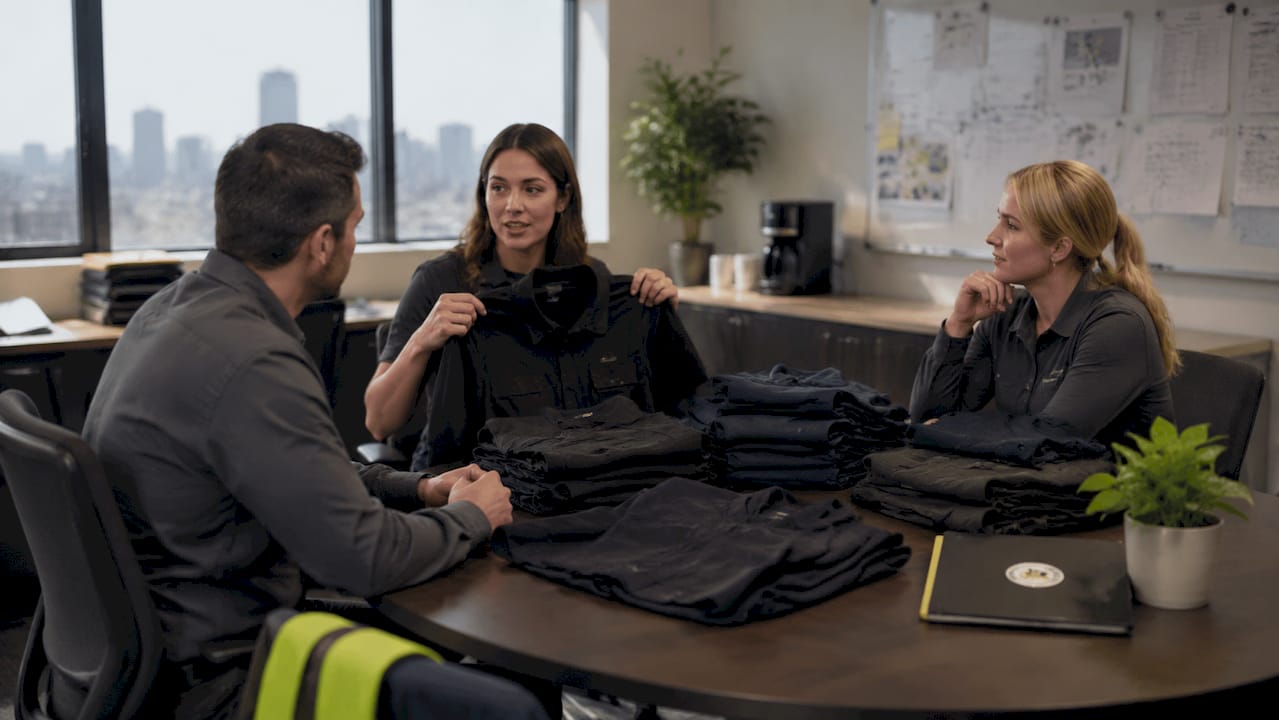
Fabric choice matters as much as color. Heavyweight poly-cotton blends in the 6 oz and above range resist tearing and fabric degradation better than lighter weaves. Ripstop nylon panels add durability at high-wear points like elbows and shoulders. These materials hold dark dyes well, so the color stays deep and consistent wash after wash.
The professional image carries real weight. Uniform programs favor dark base layers under high-visibility outerwear because the combination projects reliability to clients and fleet managers alike. A driver who looks put together signals discipline and attention to detail, qualities that matter in a profession built on responsibility.
Key benefits of dark-colored trucking uniforms at a glance:
- Stain concealment: Black, navy, and charcoal hide grease and oil without visible spotting.
- Fabric longevity: Dark dyes in heavyweight blends resist fading and degradation through repeated industrial washing.
- Professional consistency: Dark base layers maintain a uniform appearance across a full workweek rotation.
- Layering compatibility: Dark shirts pair cleanly under hi-vis outerwear without color clash or visual distraction.
Pro Tip: Layer a dark long-sleeve base shirt under a hi-vis vest or jacket. The dark layer handles the grime; the outer layer handles the safety compliance. Both stay cleaner, longer.
How do dark colors affect visibility and safety on the road?
Dark clothing absorbs light rather than reflecting it. That creates a real visibility deficit in low-light conditions, particularly at night, in loading docks, or during early morning pre-trip inspections on the shoulder of a highway.
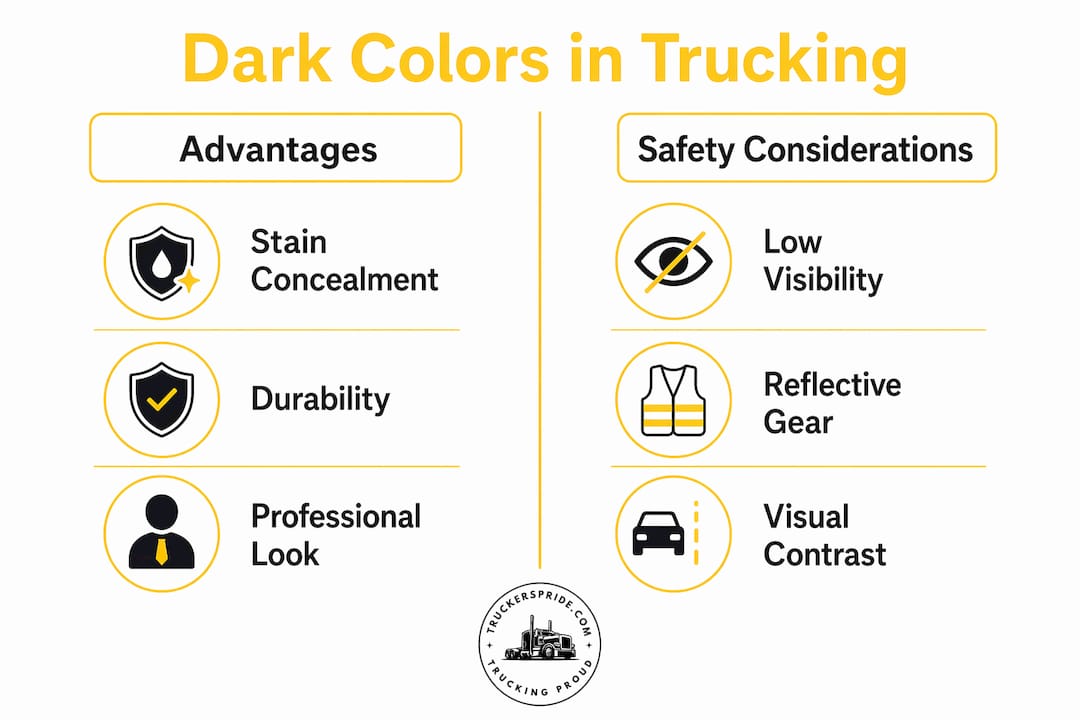
Reflective and retroreflective materials integrated into dark-base trucking apparel counteract this problem directly. Reflective tape and printed retroreflective panels on dark garments improve conspicuity in roadside and loading zone environments, addressing an estimated 10–12% visibility deficit associated with dark-colored clothing in low-light settings. That number is not trivial when a driver is standing roadside at 3:00 AM.
Dark backgrounds reduce visual noise, which makes bright white or reflective logos and safety markings stand out sharply. A white reflective stripe on a black jacket reads clearly to an approaching driver at highway speed. The same stripe on a gray or tan jacket disappears into the background. Dark colors are, counterintuitively, the better canvas for safety visibility when reflective elements are part of the design.
Practitioners in the industry are clear on this point: dark colors must always be paired with hi-vis accents in trucking to avoid safety risks in low light. The two-layer system solves this completely.
Visibility considerations for dark trucking apparel:
- Reflective tape placement: Chest, back, and sleeve bands maximize conspicuity from multiple angles.
- Retroreflective logos: High-contrast branding on dark fabric reads clearly at distance and speed.
- Hi-vis outerwear: A dark base layer under a Class 2 or Class 3 hi-vis jacket meets most roadside safety standards.
- Fleet wraps: Dark truck finishes with reflective striping improve night visibility for the vehicle itself.
Does dark clothing affect comfort in different climates?
Dark colors absorb solar radiation more efficiently than light colors. That is a thermodynamic fact, and it has direct consequences for a driver spending hours in a cab or working outdoors in summer heat.
Dark vehicle colors absorb more solar radiation, increasing cabin temperatures and requiring more cooling effort in hot climates. A black cab parked in direct sun for two hours in July will be significantly hotter inside than a white cab under the same conditions. Sunshades, window tinting, and a strong air conditioning system become practical necessities rather than optional upgrades.
The cold-climate picture flips entirely. Dark-colored vehicle finishes absorb sunlight faster, aiding cabin warm-up and accelerating snow and ice melting on surfaces. A driver in Minnesota or Montana in january spends less time running the engine to warm the cab or scraping ice off a dark hood than one driving a white or silver rig. That time savings adds up across a winter season.
The same logic applies to apparel. Dark base layers worn in cooler months absorb ambient warmth and hold it close to the body. In summer, the calculus changes.
Seasonal guidance for dark uniform choices:
- Winter: Dark base layers under outerwear absorb heat and reduce warm-up time in cold cabs.
- Summer: Switch to lighter base layers under hi-vis outerwear to reduce heat retention against the skin.
- Transitional months: A dark midlayer over a lighter undershirt balances warmth and breathability.
Pro Tip: In summer months, choose a moisture-wicking light base layer under a dark hi-vis shirt rather than a dark base layer directly. The dark outer layer still conceals grime while the inner layer manages sweat.
How to choose and care for dark trucking apparel
Fabric selection is the first decision, and it determines everything else. Heavyweight poly-cotton blends at 6 oz or above hold dark dyes well, resist tearing at stress points, and survive repeated industrial washing without losing shape. Ripstop nylon adds durability where abrasion is heaviest.
Dark truck finishes require careful maintenance to manage visible dust, scratches, and swirl marks that show more prominently on dark surfaces than on lighter ones. The same principle applies to dark apparel. Lint, light-colored dust, and pet hair show clearly on black and navy fabric. Regular brushing and proper storage between shifts extend the life and appearance of dark garments.
Road salts and hydraulic fluids are the two biggest threats to dark fabric longevity. Salt leaves white residue that is visible and corrosive to fibers. Hydraulic fluid degrades synthetic blends if not treated quickly. Washing dark garments inside out in cold water preserves dye depth and reduces pilling.
The following table outlines practical selection and care criteria for dark trucking apparel:
| Factor | Recommendation |
|---|---|
| Fabric weight | 6 oz+ poly-cotton blend or ripstop nylon for durability |
| Washing method | Cold water, inside out, to preserve dye and reduce pilling |
| Rotation schedule | 3–5 base shirts per week to manage wear and odor |
| Stain treatment | Treat hydraulic fluid and road salt immediately after contact |
| Storage | Hang or fold away from direct light to prevent fading |
Maintaining a consistent rotation is not optional. A driver who runs the same two shirts all week will see visible wear and odor build-up that undermines the professional image dark colors are meant to project. The discipline of a proper rotation is part of the uniform program itself.
Key Takeaways
Dark colors suit trucking work because they conceal grease and grime, support reflective safety systems, and maintain a professional appearance across demanding weekly rotations.
| Point | Details |
|---|---|
| Stain concealment | Navy, black, and charcoal hide grease and oil without visible spotting between wash cycles. |
| Safety integration | Pair dark base layers with reflective tape or hi-vis outerwear to meet roadside visibility standards. |
| Climate awareness | Use dark layers in cold months for heat retention; switch to lighter bases in summer heat. |
| Fabric durability | Choose 6 oz+ poly-cotton or ripstop nylon blends to resist tearing and preserve dark dye. |
| Rotation discipline | Maintain a 3–5 shirt weekly rotation to sustain cleanliness and professional appearance. |
What I have learned from watching drivers get this right and wrong
By Sylvain
The drivers who figure out dark uniforms early in their careers tend to carry themselves differently. There is a quiet confidence that comes from knowing your gear is working for you rather than against you. A shirt that hides the morning’s first grease smear does not demand attention. It just does its job.
What I have seen go wrong most often is the assumption that dark means safe from a visibility standpoint. It does not. A driver in an all-black outfit standing roadside at dusk is genuinely harder to see. The fix is simple, but it requires intention. Reflective tape on the back, a hi-vis vest over the dark shirt, a cap with a reflective strip. These are not fashion choices. They are the difference between being seen and not.
The other mistake is treating dark apparel as low-maintenance. Dark fabrics show lint, light dust, and salt residue clearly. A black shirt that has not been properly washed and stored looks worse than a gray shirt that has. The professional image that dark colors promise only delivers when the care routine backs it up.
The two-layer system is the most practical framework I have encountered. Dark base layer for grime control. Hi-vis outer layer for safety compliance. It solves both problems without compromise, and it is the approach that serious uniform programs have landed on for good reason. Invest in quality layers, rotate them properly, and the clothing takes care of the rest.
— Sylvain
Truckerspride apparel built for the miles ahead
Truckerspride designs its apparel around the realities of trucking work, not around what looks good on a hanger. The Everyday Essentials Bundle combines a dark hoodie, tee, and cap in a set built for layering, stain concealment, and daily wear through long hauls and demanding schedules.

Each piece is printed locally in North America, which means faster delivery and consistent quality. The fabrics are chosen for durability and comfort across seasons, so a driver can run a proper weekly rotation without pieces wearing out prematurely. For drivers who want performance fabric specifically, the DryBlend performance tee offers moisture-wicking construction in dark colorways that hold up through the kind of days most people never see. Truckerspride builds gear for the profession, not the occasion.
FAQ
Why do truckers prefer dark-colored uniforms?
Dark colors like navy, black, and charcoal conceal grease, oil, and road grime effectively, maintaining a professional appearance between laundry cycles. Industry uniform programs favor these shades specifically for their stain-concealing properties in physically demanding work environments.
Are dark colors safe for truck drivers to wear at night?
Dark clothing reduces visibility in low-light conditions, but reflective and retroreflective materials integrated into dark garments counteract this deficit. Pairing a dark base layer with hi-vis outerwear or reflective tape meets roadside safety standards and restores conspicuity.
Do dark vehicle colors affect cab temperature?
Dark vehicle finishes absorb more solar radiation, raising cabin temperatures in hot climates and requiring stronger air conditioning or sunshade use. In cold climates, the same absorption accelerates cabin warm-up and helps melt ice and snow from surfaces faster.
What fabric works best for dark trucking shirts?
Heavyweight poly-cotton blends at 6 oz or above and ripstop nylon fabrics hold dark dyes well and resist tearing at high-wear points. These materials also survive repeated industrial washing without significant fading or shape loss.
How many dark shirts should a truck driver rotate weekly?
Uniform programs recommend a rotation of 3–5 base shirts per week to manage wear, odor, and cleanliness effectively. A proper rotation extends the life of each garment and sustains the professional appearance that dark colors are chosen to project.