

Trucker apparel is defined by function, safety certification, and durability. Not by fashion trends. The common trucker clothing myths debunked in this guide expose misunderstandings that cost drivers comfort, professional credibility, and in some cases, real safety. Aspiring truckers and long-haul veterans alike carry trucker clothing misconceptions picked up from pop culture, fast fashion, and outdated advice. The truth is that proper trucker apparel has always been built around the demands of the road, not the runway.
1. Common trucker clothing myths debunked: safety gear is just about looking tough
The biggest trucker attire myth is that any rugged-looking workwear provides real protection. It does not. EN ISO 20471 is the international standard for high-visibility safety clothing. Only garments certified to this standard deliver the reflective intensity and material durability required in active work zones.
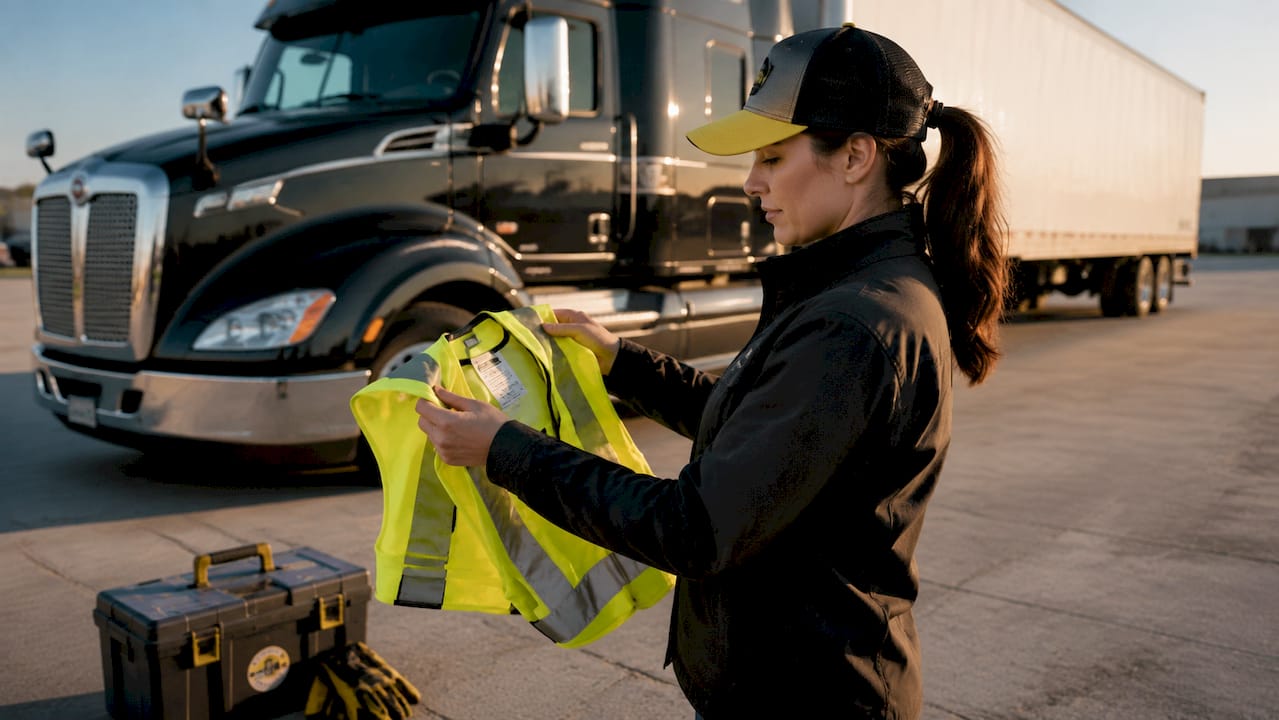
The rise of “tradie core” fashion made this confusion worse. A $5,625 fashion jacket can mimic the look of hi-vis workwear without carrying a single safety certification. That gap between appearance and function is dangerous for anyone stepping outside the cab near traffic or loading docks.
Certified hi-vis gear uses mandatory reflective materials designed to withstand industrial abuse. Fashion imitations lack this protection entirely, regardless of how rugged they look on the shelf.
- Certified garments carry a visible EN ISO 20471 label with a class rating (Class 1, 2, or 3)
- Class 3 offers the highest visibility and is required in high-speed traffic environments
- Fashion workwear items rarely list reflective intensity or wash-durability ratings
- Non-certified gear may fade or lose reflectivity after a few washes
Pro Tip: Before buying any hi-vis piece, check the label for the EN ISO 20471 class rating. If it is not printed on the garment, the item is not certified safety clothing.
2. Vintage trucker gear is cheap or low quality
Authentic vintage trucker apparel is the opposite of cheap. Genuine 1970s promotional trucker hats and heritage denim jackets are collector items with real market value, often selling for $50 to $200 or more depending on condition and brand origin.
The construction quality of vintage pieces explains that value. Denim jackets from that era were built with 12+ ounce denim, a weight rarely found in modern mass-market clothing. Thick flannel shirts and canvas work coats were made to last years of hard use, not a single season.
The confusion comes from modern fast fashion reproducing the trucker aesthetic with inferior materials. A thin, pre-distressed denim jacket sold at a mall chain shares nothing with an original piece except the silhouette.
| Feature | Authentic vintage gear | Modern fast fashion reproduction |
|---|---|---|
| Denim weight | 12+ ounce | 6–8 ounce |
| Construction | Reinforced seams, bar tacks | Single-stitched, minimal reinforcement |
| Fabric aging | Natural wear over years of use | Artificial distressing applied at factory |
| Collector value | $50–$200+ for deadstock pieces | Minimal resale value |
- Original logos on vintage caps were promotional items from feed companies and farm suppliers
- Deadstock pieces in original condition command the highest prices
- Authentic flannel shirts used tightly woven cotton that resisted pilling and tearing
- Heritage construction details like chain stitching are rarely replicated today
Pro Tip: When evaluating vintage trucker gear, check the inside seams. Original pieces use heavier thread and show bar tack reinforcement at stress points. Reproductions skip these details.
3. Trucker hats are just an ironic fashion statement
Trucker hats became a pop culture joke in the early 2000s. That era is over. The rehabilitation of trucker hats into understated, functional pieces has moved them firmly back into professional utility territory.
The modern trucker hat favors a mid-profile structure with a mesh back for ventilation. That design solves a real problem: all-day wear in a cab where temperature regulation matters. The high-profile, foam-front hats of the 2000s caused pressure points and headaches during long shifts. Mid-profile mesh-back designs eliminate that discomfort.
Styling has shifted too. Tonal or blank designs are preferred over loud, oversized logos. A hat worn level with a slight brim curve reads as intentional and clean, not ironic or costume-like.
- Mid-profile crowns sit closer to the head and reduce wind resistance
- Mesh panels allow airflow that solid-back caps block entirely
- Smaller or embroidered logos age better and look less dated over time
- Wearing the hat level, not tilted, signals a functional rather than fashion intent
Pro Tip: Choose a trucker cap with a structured but not rigid front panel. A panel that is too stiff creates forehead pressure during long hauls. A slightly flexible front distributes pressure more evenly.
4. All trucker clothing is bulky and impractical
The myth that trucker clothing is inherently bulky comes from confusing workwear with safety gear. Most of what a driver wears inside the cab prioritizes comfort and temperature regulation, not bulk. Trucker style prioritizes functional fabrics suited to varied climates and hours behind the wheel.
The practical layering formula used by experienced drivers is straightforward:
- A moisture-wicking base layer T-shirt manages sweat and keeps the driver dry during long stretches
- An open flannel or cotton-polyester blend shirt adds warmth without restricting movement
- A vest provides core insulation without limiting arm mobility at the wheel
- A certified hi-vis jacket or vest goes over this system when the driver steps outside
Trucker style was born from pure functional necessity, not fashion trends. That origin makes it authentically practical rather than performative. Clothing designed to solve real physical problems carries a durability and purpose that mainstream fashion rarely replicates.
Heavy cotton and cotton-polyester blends dominate because they balance breathability, durability, and stain concealment. Moisture-wicking fabrics in base layers are a critical but often overlooked element. A driver who manages temperature well stays more alert and comfortable across a full shift.
5. How drivers dress has no impact on professional image
Professional truckers link appearance directly to work ethic and professional image. Research from the University of Kentucky in early 2026 found that most drivers want to defend the profession’s reputation through clean, intentional dress rather than casual or unsafe choices like flip-flops in fuel bays. That finding matters because it reflects a real industry standard, not just personal preference.
Shippers and receivers form quick judgments. A driver who arrives at a dock in clean, appropriate clothing signals discipline and reliability. A driver in worn-out flip-flops and a stained shirt signals the opposite, regardless of how skilled they are behind the wheel.
The difference between “just a job” and a career built on pride shows up in the details. Dark colors in trucking apparel serve a practical purpose too: they conceal the inevitable grime of a working day without looking unkempt.
- Closed-toe footwear is a safety requirement in most dock and fuel bay environments
- Clean, fitted clothing reads as professional even without a uniform
- Avoiding overly casual items like athletic shorts or beachwear signals respect for the job
- A consistent, intentional look builds trust with dispatchers, shippers, and receivers over time
6. Seasonal clothing choices are purely weather-driven
Trucker clothing choices are not always rational responses to temperature. Drivers sometimes wear spring or summer styles prematurely, a pattern described as “aggressive hope” in seasonal dressing. That behavior shows the psychology behind apparel choices runs deeper than weather comfort alone.
This matters because premature seasonal shifts can leave drivers underprepared for cold snaps, early morning loading dock conditions, or unexpected weather changes mid-route. A seasonal clothing checklist built around actual route conditions serves drivers better than dressing for the season they want.
The practical answer is layering. A driver who carries a packable insulating layer handles a 40-degree temperature swing between a warm cab and a cold dock without needing a wardrobe change.
Key Takeaways
Trucker apparel choices that prioritize EN ISO 20471 certification, functional fabric layering, and intentional styling protect both driver safety and professional reputation.
| Point | Details |
|---|---|
| Safety certification is non-negotiable | Only EN ISO 20471 certified garments provide real hi-vis protection outside the cab. |
| Vintage gear holds real value | Authentic 1970s trucker pieces use 12+ ounce denim and sell for $50–$200 or more. |
| Modern trucker hats are functional | Mid-profile mesh-back designs reduce pressure and improve ventilation during long shifts. |
| Layering beats bulk | A T-shirt, open shirt, and vest combination handles temperature swings without restricting movement. |
| Appearance reflects professionalism | Clean, intentional dress signals discipline to shippers, receivers, and the broader industry. |
What I’ve learned about trucker clothing after years on the road
The most persistent trucker clothing misconception I encounter is the idea that function and style are opposites. They are not. The best trucker apparel has always been both. A well-chosen flannel shirt, a mid-profile mesh-back cap, and a certified hi-vis vest worn over a moisture-wicking base layer is a complete, practical outfit. It also looks right. That is not a coincidence. It is the result of clothing designed around real work.
What I find genuinely frustrating is the influence of fashion industry “tradie core” on how people perceive workwear. A luxury brand slapping reflective tape on a $5,000 jacket does not make it safety gear. It makes it a costume. Drivers who understand the difference between certified protection and aesthetic imitation are making smarter, safer choices every time they step outside the cab.
The trucker style truths that matter most are simple: buy certified gear for any work outside the cab, choose fabrics that manage moisture and temperature, and dress with the discipline the profession deserves. Pride built over miles shows up in how a driver carries themselves, and that starts with what they wear.
— Sylvain
Gear that reflects the work you put in
The myths around trucker clothing often come down to one thing: not knowing what to look for. Truckerspride builds apparel specifically for long-haul drivers, with road-proven comfort and materials that hold up across full shifts and full seasons.

The Everyday Essentials Bundle brings together the core pieces a driver needs, built with the comfort and durability that generic brands skip. For drivers who want a cap that fits all day without pressure or distraction, the Pride in Every Mile Trucker Cap delivers exactly that. Truckerspride prints locally in North America, which means faster delivery and quality you can count on. Every piece is made for the profession, not just the look.
FAQ
What is EN ISO 20471 and why does it matter for truckers?
EN ISO 20471 is the international standard for high-visibility safety clothing. Only garments certified to this standard provide the reflective intensity and durability required when working near traffic or in industrial environments.
Are vintage trucker hats worth buying?
Authentic vintage trucker hats from the 1970s carry real collector value, often selling for $50 to $200 or more. Their value comes from original logos, durable construction, and historical authenticity that modern reproductions do not replicate.
Do truckers need to dress professionally on the job?
Research shows that professional drivers link clean, intentional dress to work ethic and industry reputation. Appropriate clothing signals discipline to shippers and receivers and counters negative stereotypes about the profession.
What fabrics work best for long-haul driving comfort?
Heavy cotton, cotton-polyester blends, and moisture-wicking base layers work best for long-haul comfort. These fabrics balance breathability, durability, and temperature regulation across variable shift conditions.
How should a trucker hat fit for all-day wear?
A mid-profile trucker hat with a mesh back and a slightly flexible front panel distributes pressure evenly and allows airflow. Worn level with a slight brim curve, it stays comfortable across a full shift without causing headaches.