

Roadside culture is defined as the collection of vernacular architecture, novelty attractions, and social interactions that grew alongside automobile travel in the United States, primarily from the 1920s through the 1980s. It is one of the most distinctly American cultural traditions ever produced. Giant fiberglass statues, family-owned diners, hand-painted signs, and quirky roadside stops were not accidents. They were expressions of a democratic, imaginative spirit that said: this place matters, and so do the people passing through. Understanding roadside culture means recognizing it as both a social history and a living tradition that still shapes how travelers connect with the land and each other.
What is roadside culture explained through its key components?
Roadside culture is best understood through its physical landmarks and the human stories behind them. Over 1,500 documented roadside attractions exist across the United States, ranging from giant novelty objects to historic diners that served generations of families. That number represents only the catalogued sites. Countless others have vanished without record.
Vernacular architecture and novelty structures
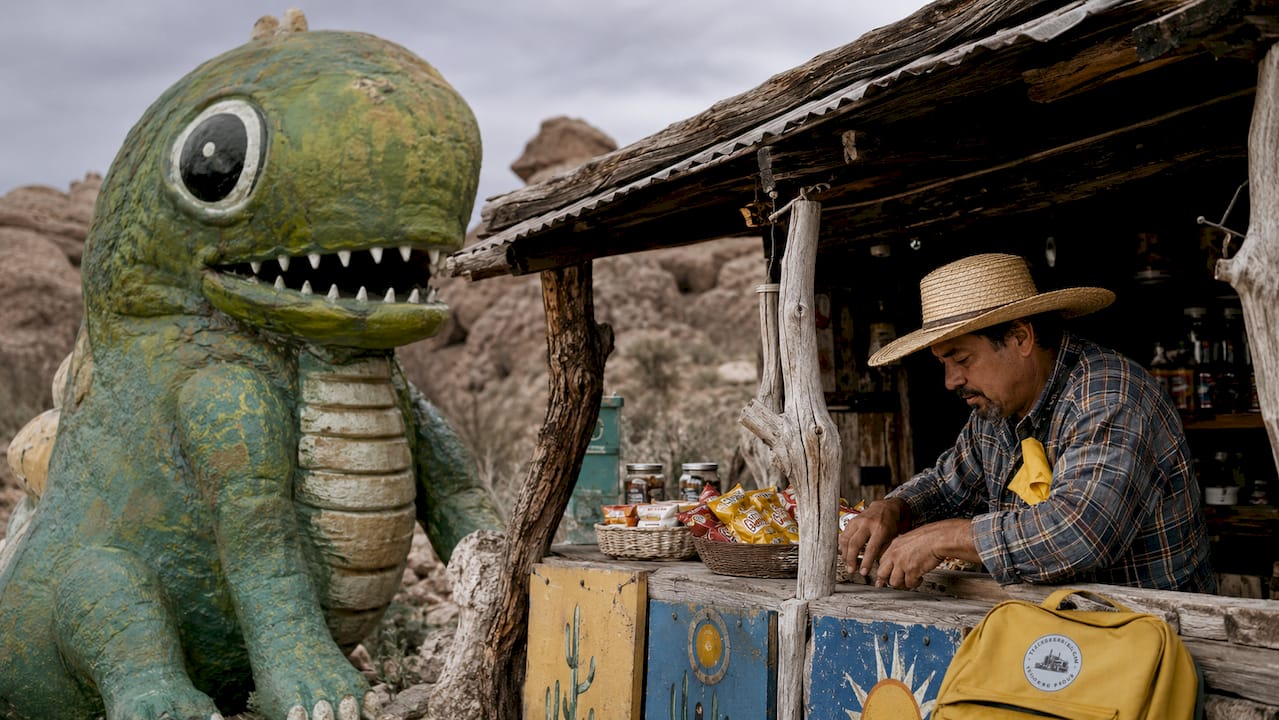
Vernacular architecture is the term scholars use for buildings designed by local builders without formal training, shaped by regional materials and community needs. On the American roadside, this produced some of the most memorable structures in the country. Think of a diner built to look like a coffee pot, a motel shaped like a wigwam, or a gas station with a rooftop dinosaur. These were not accidents of bad taste. They were deliberate acts of creativity designed to pull a driver’s eye off the highway.
Novelty structures served a clear commercial purpose. A family running a roadside stand needed to compete with every other stop on a 200-mile stretch. A giant mailbox or an oversized ear of corn did that job better than any sign. The world’s largest mailbox in Casey, Illinois, stands as one of the most photographed roadside attractions in the Midwest. It draws travelers who would otherwise pass through without stopping.
The social fabric of roadside stops
Beyond the architecture, roadside culture examples include the human interactions that happened at these stops. Family-owned businesses were the backbone of the roadside economy. A gas station owner knew the regulars by name. A diner cook knew which truckers wanted their coffee black. These were not transactional spaces. They were community anchors.
The table below captures the main categories of roadside culture and what defines each one:
| Category | Defining Feature | Classic Example |
|---|---|---|
| Novelty structures | Oversized or themed buildings | Giant fiberglass animals, themed diners |
| Vernacular architecture | Locally built, regionally distinctive design | Wigwam motels, coffee pot gas stations |
| Family-owned stops | Personal service, community ties | Independent diners, roadside fruit stands |
| Quirky landmarks | Humorous or surprising attractions | World’s largest objects, folk art installations |
| Cultural hubs | Social gathering spaces | Gas station lots, roadside dance halls |
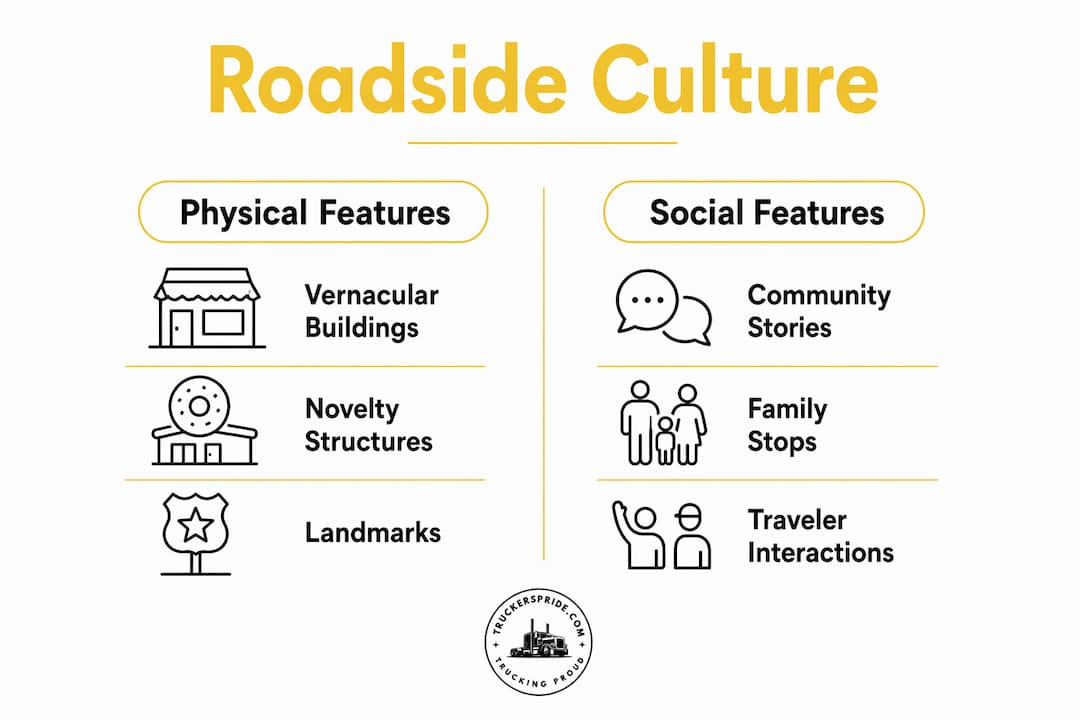
Each category fed the others. A quirky landmark drew travelers. Those travelers stopped at the family diner next door. The diner owner sponsored the local dance at the gas station lot on Saturday night. The roadside was a system, not a series of isolated stops.
How did roadside culture shape marginalized communities?
Roadside culture carried a social weight that went far beyond tourism. For communities excluded from mainstream American life, the roadside was often the only space available. Native American communities along Route 66 transformed traditional crafts into travel-sized souvenirs, creating real economic opportunity from the flow of automobile traffic. Mid-20th-century Pueblo artists adapted their pottery into miniature forms suited for tourist markets. That adaptation was not a compromise. It was survival and ingenuity working together.
For Black Americans, the stakes were even higher. Black-owned gas stations and cafes served as lifelines during segregation, offering safe places to refuel, eat, and rest when most public facilities refused entry. The Threatt Filling Station in Oklahoma hosted dances and barbecues, becoming a genuine social center for the surrounding community. It was not just a place to buy gas. It was a place to belong.
Gas station parking lots functioned as informal town squares, hosting cultural movements and community gatherings that had no other venue. This pattern repeated across the country wherever marginalized groups needed space that mainstream institutions denied them. The roadside filled that gap with remarkable consistency.
- Economic empowerment: Native American artisans built sustainable income streams by selling adapted crafts directly to passing travelers.
- Safe passage: Black-owned stops gave travelers dignity and safety during an era when the wrong turn could be dangerous.
- Cultural expression: Music, food, and community events at roadside stops preserved traditions that formal institutions ignored.
- Community resilience: These spaces gave marginalized groups a place to gather, celebrate, and support one another.
Pro Tip: When traveling historic routes like Route 66, seek out stops with family names on the sign. Those are the places most likely to carry a real community story behind the counter.
Why did roadside culture decline, and what is being preserved?
The interstate highway system changed everything. When the Federal Aid Highway Act of 1956 funded a national network of high-speed roads, it redirected traffic away from the two-lane routes where roadside culture had flourished. Corporate chains moved in with standardized designs, predictable menus, and national marketing budgets that small family operations could not match. The quirky and the personal gave way to the uniform and the efficient.
Storms, urban development, and simple neglect took care of what the interstates missed. Structures built from wood, tin, and local materials did not survive decades of weather without someone who cared enough to maintain them. Many iconic roadside landmarks disappeared without documentation.
“Photographer John Margolies spent decades driving American highways with a camera, capturing roadside architecture before it vanished. His archives now serve as one of the most important records of vernacular American design, preserving what the bulldozer and the franchise could not.”
Margolies’s work reframed roadside architecture as legitimate cultural expression rather than commercial kitsch. Architectural critics followed his lead, recognizing that these structures reflected a postmodern creativity that blended humor, irony, and democratic imagination. Museums and preservation societies now document roadside icons with the same seriousness once reserved for formal architecture.
The contrast between authentic and corporate roadside stops is sharp and worth naming directly:
| Feature | Authentic roadside stop | Corporate chain stop |
|---|---|---|
| Design | Locally built, owner-driven | Standardized, brand-mandated |
| Community ties | Deep, generational | Minimal or absent |
| Cultural value | High, often irreplaceable | Low, interchangeable |
| Economic impact | Stays local | Leaves the community |
| Survival | Fragile, visitor-dependent | Stable, corporate-backed |
The survival of authentic roadside culture depends on travelers choosing the hand-painted sign over the familiar logo.
How does roadside culture stay relevant for travelers today?
Roadside culture remains alive because the hunger for genuine experience never left. Authentic roadside stops survive on the passion of individuals and families who build and maintain quirky landmarks, and on the small purchases of travelers who choose them over corporate alternatives. That relationship is fragile. A slow season can close a stop that took a lifetime to build.
Modern travelers engage with roadside culture through photography, road trip planning, and a growing appreciation for local identity. Social media has given obscure roadside attractions a global audience. A folk art installation in rural Texas or a hand-built museum in New Mexico can draw visitors from across the country because someone posted a photograph. The automobile’s role as a symbol of freedom connects directly to this impulse. The road trip is not just transportation. It is a statement about who you are and what you value.
Roadside stops also function as what sociologists call “third spaces,” places that are neither home nor work but essential to community life. These informal gathering points carry cultural value that formal guides and maps often miss entirely. The unplanned stop at a roadside stand run by a 70-year-old who has been selling the same hot sauce recipe for 40 years is not on any app. That is exactly what makes it worth stopping for.
The connection between roadside culture and highway-inspired clothing design shows how deeply this tradition has shaped American identity beyond the road itself. The aesthetic of the open highway, the pride of the working driver, and the grit of the long haul have all found their way into how people dress and present themselves.
- Photography and documentation: Travelers now actively record roadside stops, creating a distributed preservation effort.
- Road trip culture: Planned routes around historic highways keep traffic flowing to small, independent stops.
- Local tourism: Quirky landmarks drive regional tourism in ways that no corporate attraction can replicate.
- Cultural nostalgia: The roadside aesthetic influences art, fashion, and design in ways that keep the tradition visible.
Pro Tip: Before any road trip, check local historical society websites for documented roadside attractions in the area. Many of the best stops are not listed on mainstream travel apps.
Key Takeaways
Roadside culture is a distinctly American tradition built on vernacular architecture, community resilience, and the democratic creativity of individuals who shaped the highway experience from the 1920s onward.
| Point | Details |
|---|---|
| Core definition | Roadside culture blends vernacular architecture, novelty attractions, and social hubs tied to automobile travel. |
| Social significance | Black-owned and Native American-run stops served as economic lifelines and cultural sanctuaries for marginalized communities. |
| Decline and preservation | The interstate highway system accelerated decline, but photographers like John Margolies and museum archives keep the record alive. |
| Modern relevance | Authentic roadside stops survive on visitor support and individual passion, making every small purchase a cultural act. |
| Ongoing identity | Roadside culture continues to shape American travel, local tourism, and even fashion rooted in highway and trucking traditions. |
Why roadside culture deserves more than a glance through the windshield
I have pulled off the highway for a lot of roadside stops over the years. Some were famous. Most were not. The ones I remember most clearly are the ones where someone’s whole life was on display in a converted barn or a hand-lettered sign. There is a particular kind of pride in those places that no chain restaurant has ever managed to manufacture.
What strikes me most about 18-wheeler and road culture is how it mirrors the roadside tradition. Both are built on discipline, presence, and the quiet satisfaction of doing something hard and doing it well. The trucker who has logged a million miles and the family that has run the same roadside diner for three generations share the same fundamental value: the work matters, and so does the person doing it.
Roadside culture is not nostalgia for its own sake. It is a record of how ordinary people built extraordinary things with limited resources and unlimited imagination. The fact that so many of those things are gone makes the ones that remain more precious, not less. Slow down. Pull over. Buy the hot sauce. That stop may not be there next year.
— Sylvain
Gear that carries the spirit of the road
Truckerspride was built on the same values that made roadside culture worth preserving: pride in the work, respect for the road, and quality that holds up mile after mile.
The Everyday Essentials Bundle brings together a hoodie, tee, and cap designed specifically for drivers who live the highway life. Every piece is printed locally in North America, which means faster delivery and a direct investment in the communities that roadside culture always championed. The DryBlend Performance T-Shirt and the Everyday Trucker Cap round out a lineup built for comfort on long hauls and pride at every stop. Wear what the road earned you.
FAQ
What is roadside culture in simple terms?
Roadside culture is the collection of quirky attractions, family-owned businesses, and social gathering spots that grew alongside automobile travel in the United States, primarily from the 1920s through the 1980s. It represents a uniquely American blend of vernacular architecture, community life, and creative expression tied to the open road.
What are the best-known roadside culture examples?
Classic examples include giant novelty structures like oversized fiberglass animals, themed diners, wigwam motels, and historic gas stations. Route 66 remains the most recognized corridor for roadside culture, with over 1,500 documented attractions across the country.
Why did roadside culture decline?
The Federal Aid Highway Act of 1956 funded the interstate highway system, which redirected traffic away from the two-lane routes where roadside culture thrived. Corporate chains replaced family-owned stops, and many iconic structures were lost to storms, neglect, and urban development.
How did roadside culture support marginalized communities?
Black-owned gas stations and cafes served as safe havens for Black travelers during segregation, while Native American artisans built economic opportunity by selling adapted crafts at highway stops. These spaces functioned as community centers when mainstream institutions excluded these groups entirely.
How can travelers support roadside culture today?
The most direct way is to stop, spend money, and share the experience. Authentic roadside stops survive on small purchases from visitors, and a single social media post can bring a struggling attraction a season’s worth of new visitors.