

Performance apparel trucking refers to specialized workwear engineered for the physical demands of professional truck driving, built around moisture-wicking fabrics, mechanical stretch, and safety compliance. The industry term for this category is “high performance workwear,” and it covers everything from base layers to outer shells designed for drivers who spend 10 or more hours a day behind the wheel. Unlike standard clothing, this gear addresses the specific stresses of long-haul driving: prolonged sitting, temperature swings, and in some sectors, genuine hazard exposure. Performance apparel for truckers combines moisture-wicking, mechanical stretch, and safety compliance to suit the unique demands of the job. Truckerspride builds its entire product line around these principles, with gear tested for the road rather than the showroom.
What is performance apparel trucking, and what defines it?
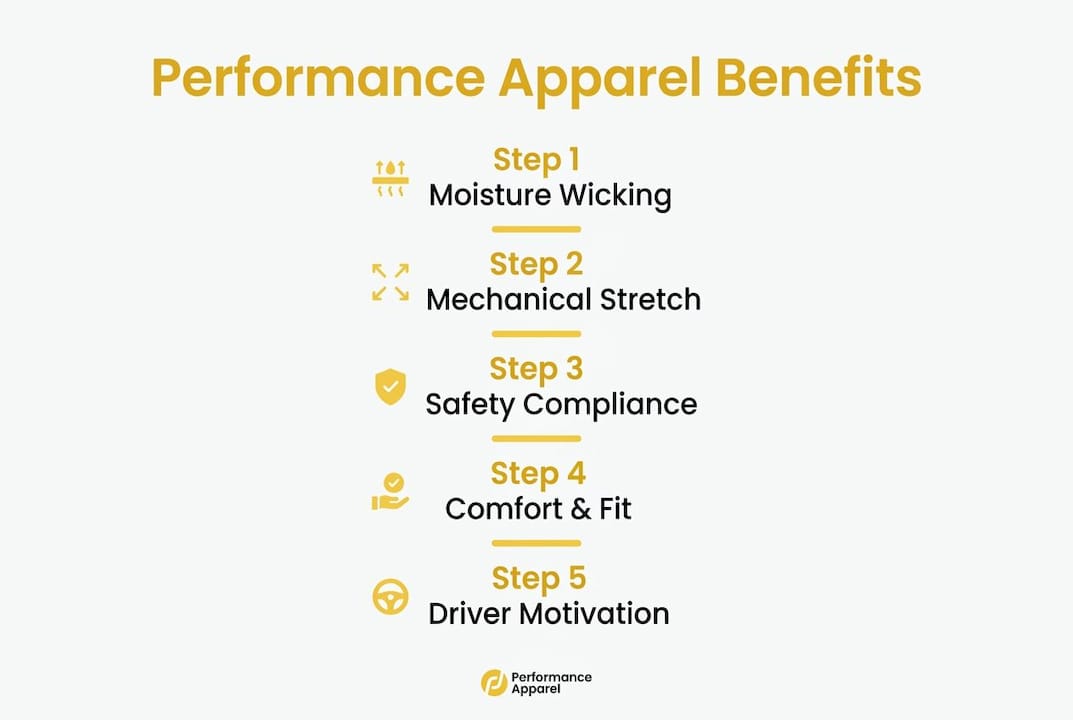
Performance apparel for trucking is defined by three core properties: moisture management, freedom of movement, and safety compliance. These are not marketing terms. They are functional requirements that directly affect how a driver feels and performs across a full shift.
Moisture-wicking fabrics pull sweat away from the skin and allow it to evaporate. Moisture-wicking fabrics reduce intra-clothing humidity by up to 4.3% during outdoor activity. That reduction matters because excess humidity against the skin raises body temperature, increases fatigue, and causes irritation over long hours.
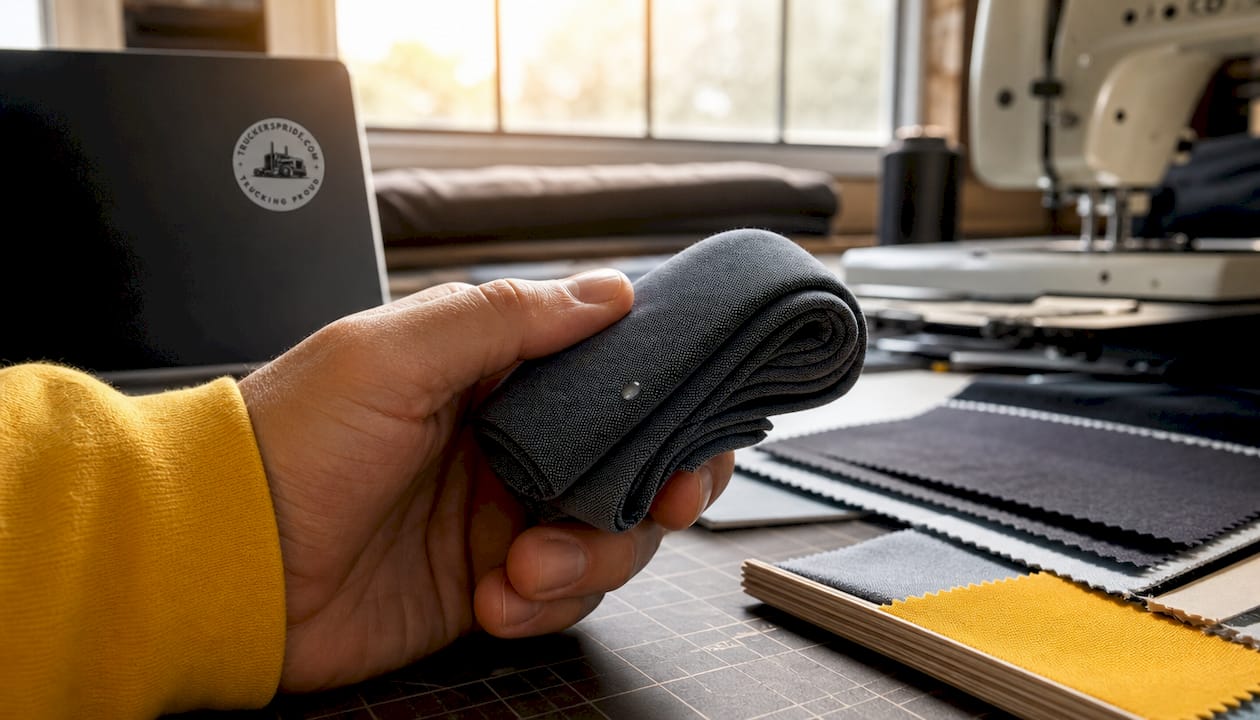
Mechanical stretch is the second defining feature. Stretch fabrics are woven with elastane or similar fibers that allow the garment to move with the body. Mechanical stretch in trousers prevents discomfort, promotes circulation, and reduces fatigue during extended seated driving. A driver who spends eight hours in rigid denim feels that restriction in the hips, lower back, and legs. Stretch fabric removes that friction entirely.
Safety compliance is the third pillar, and it separates performance workwear from athletic wear. Drivers in specialized sectors must meet ANSI/ISEA 107 Class 3 visibility standards or NFPA 2112 flame-resistant ratings depending on their freight and route. Performance apparel in trucking integrates these requirements without sacrificing comfort or mobility.
- Moisture-wicking fabrics: Move sweat away from skin, reduce humidity, and support thermoregulation.
- Mechanical stretch: Allow full range of motion, reduce pressure points, and support circulation during seated work.
- High-visibility materials: Meet ANSI/ISEA 107 Class 3 ratings for drivers working near traffic or loading zones.
- Flame-resistant construction: Required for hazmat and fuel transport roles under NFPA 2112 standards.
- Layering compatibility: Base layers, mid-layers, and outer shells designed to work together across temperature ranges.
Pro Tip: When selecting performance gear, check the fabric composition label. A blend of polyester and elastane (typically 90/10 or 95/5) delivers both moisture management and stretch. Pure cotton, no matter how soft, does neither.
How does performance apparel benefit truck drivers during long hauls?
The benefits of performance apparel go well beyond staying dry. They reach into how a driver thinks, reacts, and sustains focus across a full shift.
Moisture-wicking apparel helps maintain a stable heart rate and mental alertness by reducing the body’s thermoregulatory energy expenditure. When the body works less to regulate temperature, more energy stays available for concentration and decision-making. For a driver managing traffic, weather, and a loaded trailer, that reserve matters.
“Functional apparel impacts drivers beyond comfort. It influences motivation, fatigue levels, and professional appearance. Well-fitted, comfortable performance gear can improve drivers’ cognitive focus and reduce fatigue during long shifts.” Source: Transportation Uniform Program Research
Stretch fabrics address a different but equally real problem. Restricted blood flow from tight or rigid clothing builds up fatigue in the lower body over hours. Drivers who switch to stretch trousers often report feeling less stiff at the end of a shift. The benefits of performance apparel compound over a full week on the road, not just a single run.
There is also a psychological dimension that gets overlooked. Comfortable, well-fitted gear improves motivation and comfort perception during demanding work. A driver who feels good in what they are wearing carries a different posture and attitude into every delivery. That is not a small thing when the job demands discipline and mental toughness mile after mile.
What safety standards and regulations influence trucking performance apparel?
Safety standards in trucking apparel are not optional guidelines. They are legal requirements in specific work contexts, and choosing the wrong garment can create real liability.
ANSI/ISEA 107 Class 3 is the highest visibility rating for workers near traffic moving faster than 50 mph. Drivers who load or unload near active roadways, work in rail yards, or operate in low-light conditions must meet this standard. Class 3 garments require a minimum amount of fluorescent background material and retroreflective striping arranged to make the human form recognizable at distance.
Flame-resistant standards apply to drivers handling fuel, chemicals, or other hazardous materials. NFPA 2112 governs industrial flame-resistant garments, and arc ratings measure protection against electrical arc flash. FR hoodies can carry ratings such as 8.7 cal/cm² CAT 2 while still offering 4-way stretch and moisture-wicking properties. That combination proves that safety compliance and performance comfort are not mutually exclusive.
| Standard | Application | Key Requirement |
|---|---|---|
| ANSI/ISEA 107 Class 3 | High-traffic road work and loading zones | Fluorescent material and retroreflective striping |
| NFPA 2112 | Fuel and chemical transport | Flame-resistant fabric construction |
| Arc Rating CAT 2 | Electrical hazard environments | Minimum 8 cal/cm² protection |
Hazard assessments drive garment selection. A driver hauling dry goods on an interstate has different requirements than one delivering propane to residential sites. Apparel selection for hazardous roles must integrate flame-resistance with performance fabrics to avoid compromising mobility or comfort.
Pro Tip: Ask your fleet manager or safety officer for the written hazard assessment for your route before buying performance gear. The assessment tells you exactly which standards apply, so you do not overspend on FR gear you do not need or underspend on visibility gear you do.
How to build an effective wardrobe using performance trucking apparel?
A practical performance wardrobe for trucking does not require a large investment all at once. It requires the right pieces in the right order, chosen for the routes and conditions a driver actually faces.
Start with the seasonal clothing checklist approach: identify the climate range of your regular routes, then build from the skin out. The layering system is the foundation of any effective trucking wardrobe.
- Moisture-wicking base layer: A performance tee or polo in a polyester-elastane blend. This is the most important piece because it sits against the skin all day.
- Stretch work trousers: Look for a 4-way stretch construction with reinforced knees and a gusseted crotch for full range of motion in and out of the cab.
- Fleece mid-layer: A zip-up fleece or insulated vest for temperature drops during loading and unloading. Choose one that fits over the base layer without restricting arm movement.
- Water-resistant outer shell: A lightweight jacket that blocks wind and rain without trapping heat. Layering moisture-wicking base layers with fleece mid-layers and water-resistant outer shells helps drivers adapt to diverse climates.
- High-visibility vest or layer: If your route or freight requires ANSI compliance, choose a breathable mesh vest. High-visibility vests can trap heat inside the cab, so a breathable, moisture-wicking base layer underneath is not optional.
| Wardrobe Item | Key Feature | When to Prioritize |
|---|---|---|
| Performance base tee | Moisture-wicking, stretch | All routes, all seasons |
| Stretch work trousers | 4-way stretch, durable | Long-haul, extended seated driving |
| Fleece mid-layer | Insulation, packable | Cold climates, overnight routes |
| Water-resistant shell | Wind and rain protection | Variable weather, open-country routes |
| High-visibility vest | ANSI/ISEA 107 Class 3 | Loading zones, road work, rail yards |
Transportation uniform programs that address visibility, comfort, weather exposure, and customer interaction through tailored apparel choices see better adoption and fewer compliance issues. The same logic applies to individual drivers building their own wardrobe. Choose gear that fits the actual job, not a generic workwear catalog.
Maintenance matters as much as selection. Performance fabrics lose their moisture-wicking properties when washed with fabric softener, which coats the fibers and blocks moisture transfer. Wash performance gear in cold water without softener, and air dry when possible to preserve stretch and shape.
Key Takeaways
Performance apparel trucking works because it combines moisture management, mechanical stretch, and safety compliance into gear built specifically for the physical demands of professional driving.
| Point | Details |
|---|---|
| Core definition | Performance apparel for trucking combines moisture-wicking, stretch fabrics, and safety compliance for driver-specific demands. |
| Physiological benefit | Moisture-wicking fabrics reduce intra-clothing humidity, lower thermoregulatory strain, and support sustained mental focus. |
| Safety compliance | ANSI/ISEA 107 Class 3 and NFPA 2112 standards dictate garment requirements based on route and freight type. |
| Layering system | Base layer, mid-layer, and outer shell work together to adapt to climate changes across a full shift. |
| Wardrobe maintenance | Washing without fabric softener and air drying preserves moisture-wicking and stretch properties over time. |
What I’ve learned watching drivers choose the wrong gear
Most drivers I’ve observed make the same mistake: they treat workwear as an afterthought and buy whatever is cheapest or most familiar. They grab a cotton tee because it feels soft in the store. They pick up rigid denim because that is what they have always worn. By mile 400, the cotton is soaked and the denim is cutting off circulation at the hip. The discomfort is so gradual that drivers often attribute the fatigue to the drive itself rather than the clothing.
The second mistake is ignoring the layering principle entirely. Drivers either overdress and overheat, or they underdress and spend energy fighting the cold. Neither state supports the focus that long-haul driving demands. A proper three-layer system takes about ten minutes to understand and changes the experience of a full week on the road.
What I find most compelling about the direction trucking apparel is heading is the integration of safety and performance. FR hoodies with 4-way stretch and moisture-wicking used to be a contradiction in terms. Now they are a standard product category. That shift reflects a genuine understanding that drivers should not have to choose between staying safe and staying comfortable. The functional trucking apparel conversation has matured considerably, and drivers who pay attention to it are better for it.
The one piece of advice I would give any driver building a performance wardrobe: start with the base layer. Get that right first. Everything else builds on it.
— Sylvain
Truckerspride gear built for the road, not the rack
Truckerspride designs performance clothing for truckers who take their work seriously. Every piece in the lineup reflects what drivers actually need: moisture management for long shifts, stretch for comfort in the cab, and construction that holds up across thousands of miles.

The Everyday Essentials Bundle brings together the core pieces a driver reaches for every day, printed locally in North America and built to last. For drivers who want a single high-performance base layer, the DryBlend performance tee delivers moisture-wicking comfort at a price that makes stocking up practical. Truckerspride backs every product with the understanding that the road is demanding enough. The gear should not add to that.
FAQ
What is performance apparel in trucking?
Performance apparel in trucking is specialized workwear that combines moisture-wicking fabrics, mechanical stretch, and safety compliance to meet the physical demands of professional driving. It is the industry-recognized term for high performance workwear designed specifically for long-haul and commercial drivers.
What fabrics are used in performance clothing for truckers?
Polyester-elastane blends are the most common fabric in performance clothing for truckers because polyester wicks moisture and elastane provides stretch. Some garments add flame-resistant fibers for drivers working in hazardous freight sectors.
Do truck drivers need ANSI-rated high-visibility apparel?
Truck drivers who work near active traffic, in loading zones, or in rail yards must meet ANSI/ISEA 107 Class 3 visibility standards. Drivers who remain in the cab during all loading and unloading may not require rated visibility gear, depending on their specific route and freight.
How does moisture-wicking apparel reduce driver fatigue?
Moisture-wicking apparel reduces intra-clothing humidity, which lowers the body’s thermoregulatory energy expenditure and helps maintain a stable heart rate. That energy savings translates directly into sustained mental alertness during long shifts.
How should performance trucking apparel be washed?
Performance trucking apparel should be washed in cold water without fabric softener, which coats fibers and blocks moisture transfer. Air drying preserves both the stretch and wicking properties of the fabric over repeated use.