

Functional trucking apparel is defined as clothing engineered with performance characteristics like moisture management, thermal regulation, antimicrobial protection, and mechanical support to meet the specific demands of professional truck drivers. The industry term for this category is “performance workwear,” and it goes far beyond what generic clothing brands offer. For drivers and fleet managers who understand what is functional trucking apparel, the difference shows up in every shift: less fatigue, better safety compliance, and clothing that holds up mile after mile. This guide covers the key features, safety standards, and practical choices that matter most for long-haul work in 2026.
What is functional trucking apparel and why does it matter?
Functional apparel is defined by garments engineered with specific performance outcomes in mind, not just appearance. The focus sits on fabric selection and garment construction that achieves results like sweat transport, temperature control, and physical support. For truck drivers, this distinction is not abstract. A driver spending 10 or more hours in a cab, then stepping out to handle freight in freezing rain or summer heat, needs clothing that works as hard as they do.
Performance workwear integrates textile science and human physiology to optimize mobility and environmental adaptability. That means articulated joints, gusseted construction, and stretch panels placed where the body bends and reaches. Generic clothing restricts movement. Functional trucking apparel moves with the driver. Fleet managers who outfit their teams in purpose-built gear also reduce the risk of clothing-related safety incidents at loading docks and delivery sites.

The trucking apparel community has shifted steadily toward performance workwear over the past decade. Drivers who once wore standard jeans and cotton T-shirts now recognize the practical advantages of gear built for the road. That shift reflects both better product availability and a growing awareness of how clothing affects daily performance and long-term health.
Key fabric technologies in durable trucking apparel
The fabric is where functional workwear earns its name. Technical fabrics like nylon and spandex blends provide stretch and moisture-wicking properties that heavy cotton simply cannot match. Synthetic moisture-wicking fabrics dry faster and support better hygiene during long shifts. That matters when a driver cannot change clothes for eight or more hours.
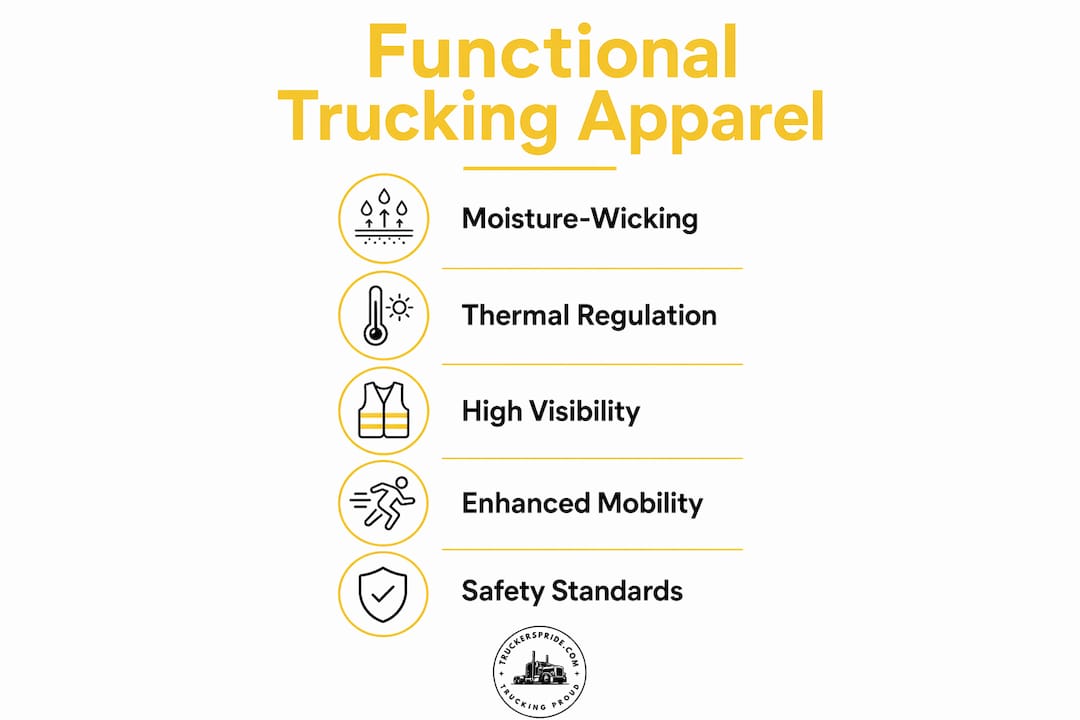
The core technologies found in the best functional workwear include:
- Moisture-wicking fabrics: Pull sweat away from the skin and move it to the outer layer of the garment, where it evaporates. This keeps the driver dry and reduces chafing.
- Thermal regulation: Fabrics engineered to trap warmth in cold conditions and release heat in warm ones. Merino wool blends and hollow-core synthetic fibers both achieve this.
- Antimicrobial treatment: Applied to fibers or woven into the fabric structure, these treatments suppress odor-causing bacteria. Useful for multi-day hauls where laundry access is limited.
- Four-way stretch construction: Allows full range of motion when climbing into the cab, lifting cargo, or crouching to inspect tires.
- Reinforced stress points: Double stitching or bartack reinforcement at pockets, knees, and seat panels extends garment life under daily physical stress.
Clothing engineered with articulated joints and gusseted construction reduces physical restriction and enhances mobility during active trucking tasks. This is not a minor comfort upgrade. It directly affects how safely and efficiently a driver can move around the truck and freight.
Pro Tip: When selecting fabrics for varied climates, choose a moisture-wicking base layer that works year-round, then build outward with season-specific mid and outer layers. A seasonal clothing checklist helps drivers plan for temperature swings without overpacking.
What safety standards apply to trucking clothing features?
High-visibility clothing protects truck drivers working near traffic and heavy machinery by making them visible to equipment operators and motorists. Hi-vis garments use fluorescent colors and retroreflective striping conforming to ANSI/ISEA 107 standards for worker visibility. EN ISO 20471 is the parallel international standard, and both are widely referenced in industrial and logistics environments across North America.
High-visibility apparel is often mandatory at customer sites. Carrying mandatory hi-vis gear onboard avoids denied entry and operational delays. A driver turned away from a delivery site for missing PPE loses time, and the fleet loses money. Compliance is not optional in most industrial zones.
Common hi-vis apparel types for truck drivers include:
- Safety vests: Class 2 or Class 3 rated, worn over outerwear for roadside or dock work
- Hi-vis jackets: Provide warmth and visibility in one garment, rated for ANSI/ISEA 107 Class 3
- Hi-vis caps and hats: Add overhead visibility without replacing other gear
- Hi-vis pants: Required in some high-risk zones where full-body visibility is mandated
The table below summarizes the key safety gear categories and their applicable standards:
| Apparel Type | Standard | Primary Use |
|---|---|---|
| Hi-vis safety vest | ANSI/ISEA 107 Class 2/3 | Roadside stops, dock work |
| Hi-vis jacket | ANSI/ISEA 107 Class 3 / EN ISO 20471 | Cold weather, high-traffic zones |
| Slip-resistant footwear | ASTM F2913 | Wet docks, loading areas |
| Compression socks | Medical-grade compression | Long-haul fatigue reduction |
| Hi-vis cap | ANSI/ISEA 107 supplemental | General site visibility |
Reflective striping on jackets and vests works by bouncing light from headlights and work lamps back toward the source. This retroreflective effect is most critical at night and in low-light loading environments. Drivers who skip hi-vis gear at these sites are not just breaking rules. They are creating genuine risk for themselves and the equipment operators around them.
Practical apparel choices for long-haul truck drivers
Layering with moisture-wicking base layers and insulated outerwear is the most effective strategy for managing temperature fluctuations across a long haul. A driver might leave a warm terminal in the morning, cross a mountain pass in cold rain, and arrive at a sun-baked delivery yard by afternoon. No single garment handles all of that. A layering system does.
Maintaining a dedicated in-cab wardrobe separate from street clothes keeps the cab cleaner and allows quick changes for professional appearance at delivery sites. Having a spare clean set of clothes available supports professionalism and meets dress codes without mixing outdoor dirt with the cab environment. This is a small habit with a real impact on how drivers are perceived at customer sites.
Footwear deserves the same attention as clothing. Slip-resistant soles, ankle support, and waterproof construction are the three features that matter most for drivers who step in and out of trucks dozens of times per day. Steel-toed boots are required at many industrial sites. Composite-toe options offer similar protection with less weight.
A practical long-haul wardrobe covers these essentials:
- Moisture-wicking base layer T-shirts (2–3 units for rotation)
- Mid-layer fleece or insulated vest for temperature control
- ANSI/ISEA 107 Class 2 or 3 hi-vis vest or jacket
- Durable work pants with stretch construction (cargo or tactical style)
- Slip-resistant, waterproof work boots
- Compression socks (2–3 pairs minimum)
- Trucker cap or beanie depending on season
- Spare clean outfit stored separately in the cab
Pro Tip: Drivers building their first professional wardrobe should start with the starter wardrobe guide before buying individual pieces. A planned kit costs less and covers more situations than buying items one at a time.
How functional apparel improves driver safety and professionalism
Proper PPE and functional clothing are critical safety tools that go beyond comfort, actively reducing injury risks and fatigue during long hours. Compression socks, for example, combat leg swelling on long shifts by improving circulation. Swollen legs increase fatigue and reduce focus. Addressing that with the right gear is a practical safety measure, not a luxury.
Professional appearance positively influences client and employer perception and supports securing better contracts. Clothes free of stains or excessive wear project safety-consciousness and reliability. Fleet managers who standardize driver uniforms report fewer issues at customer sites and a stronger company image. That translates to real business value.
The benefits of wearing purpose-built trucking apparel include:
- Reduced fatigue: Compression socks and ergonomic construction reduce physical strain over long shifts
- Safety compliance: Hi-vis and PPE-compliant gear meets site requirements without last-minute scrambling
- Temperature comfort: Layering systems prevent overheating and chilling across varied conditions
- Professional image: Clean, fitted, and appropriate clothing builds trust with clients and dispatchers
- Longer garment life: Reinforced construction and quality fabrics outlast generic workwear, reducing replacement costs
- Hygiene on the road: Antimicrobial fabrics and moisture management reduce odor and skin irritation during multi-day hauls
Understanding the value in trucking apparel means looking past the price tag. A garment that lasts three years and performs every day costs less per mile than a cheap shirt replaced every few months. Durability is part of the function.
Key Takeaways
Functional trucking apparel is performance workwear engineered with moisture management, thermal regulation, high visibility, and durable construction to meet the safety and comfort demands of professional truck drivers.
| Point | Details |
|---|---|
| Core definition | Functional trucking apparel is engineered workwear built for moisture control, thermal regulation, and mobility. |
| Safety compliance | Hi-vis gear meeting ANSI/ISEA 107 or EN ISO 20471 is mandatory at most industrial and delivery sites. |
| Fabric technology | Nylon and spandex blends outperform cotton for moisture-wicking, stretch, and long-shift hygiene. |
| Layering strategy | A base layer, mid layer, and hi-vis outer layer system handles the temperature swings of a long haul. |
| Professional value | Clean, fitted, and compliant apparel builds driver credibility and supports contract opportunities. |
Why I think most drivers underestimate their gear
Drivers spend years mastering their routes, their rigs, and their schedules. Clothing rarely gets the same attention. That is a mistake I have seen play out in real ways: a driver turned away from a site for missing hi-vis gear, another dealing with chronic leg fatigue that compression socks would have addressed in a week.
The biggest misconception is that functional workwear is only for drivers who work in extreme conditions. Every driver faces temperature swings, physical exertion, and client-facing moments. The gear that handles those situations well is not specialized. It is just the right choice for the job.
Another mistake is buying cheap and replacing often. A well-built moisture-wicking shirt or a pair of reinforced work pants costs more upfront. Over a year of daily use, the math favors quality every time. The fabric holds, the fit stays true, and the driver is not shopping for replacements every few months.
The industry is moving toward more technical and safety-compliant apparel, and that shift reflects something real. Drivers who invest in the right gear show up ready. That readiness is visible to dispatchers, clients, and fellow drivers. Pride is built over miles, and the right clothing is part of how that pride shows.
— Sylvain
Gear built for the road, from Truckerspride
Truckerspride designs apparel specifically for truck drivers who know the difference between clothing that looks fine and clothing that performs. Every piece is comfort-tested and road-proven, printed locally in North America for quality and faster delivery.

The Everyday Essentials Bundle brings together core functional pieces in one kit, covering the base layer, outerwear, and cap that drivers reach for every day. For drivers who want a moisture-wicking performance option, the DryBlend Performance T-Shirt delivers all-day comfort during long hauls. Truckerspride builds gear that earns its place in the cab, shift after shift.
FAQ
What is functional trucking apparel?
Functional trucking apparel is clothing engineered with performance features like moisture-wicking, thermal regulation, and high-visibility compliance to meet the safety and comfort demands of professional truck drivers. It differs from generic workwear by prioritizing specific outcomes over appearance alone.
Do truck drivers need hi-vis clothing?
Hi-vis clothing meeting ANSI/ISEA 107 or EN ISO 20471 standards is required at most industrial delivery sites and strongly recommended for any roadside or dock work. Drivers without compliant hi-vis gear risk being denied site entry and causing operational delays.
What fabrics work best for long-haul comfort?
Nylon and spandex blends outperform cotton for long-haul comfort because they wick moisture faster, dry quicker, and allow greater range of motion. Antimicrobial-treated synthetics also reduce odor during multi-day trips when laundry access is limited.
How do compression socks help truck drivers?
Compression socks improve circulation in the legs during long seated shifts, reducing swelling and fatigue. Drivers who wear them consistently report less leg discomfort and better focus during extended hauls.
How should drivers manage an in-cab wardrobe?
Keeping a dedicated set of work clothes separate from street clothes in the cab allows quick changes for client-facing stops and keeps the cab environment cleaner. A spare clean outfit stored in a bag or organizer is the simplest and most effective system.