

Dressing comfortably on multi-day hauls is defined as a system of layering breathable fabrics, choosing stretch-friendly clothing, and using practical accessories to maintain comfort throughout extended travel. This is not a fashion challenge. It is a functional one, requiring planning for temperature swings, body swelling, and hours of continuous wear. The three-layer clothing system and medical-grade compression socks are two industry standards that experienced travelers rely on. Getting this system right means arriving at each destination feeling ready, not worn down.
What are the best fabrics and clothing types for multi-day travel comfort?
The foundation of any comfortable travel wardrobe is fabric choice. The wrong material turns a long trip into an endurance test. The right one makes hours in a seat feel manageable.
Merino wool stands out as the top performer for multi-day wear. It resists odor naturally, regulates body temperature, and stays comfortable after multiple days without washing. That last quality matters more than most travelers realize until they are three days into a trip with limited laundry access.

Cotton blends and bamboo fabrics follow closely. They breathe well, feel soft against skin during long periods of sitting, and hold up to repeated wear. The key is avoiding anything stiff or structured. Soft stretch pants with elastic waistbands, wide-leg trousers, and joggers consistently outperform rigid denim on journeys lasting more than six hours. Denim restricts movement, compresses the waist, and becomes genuinely uncomfortable after the first few hours.
Wrinkle resistance is another quality worth prioritizing. Arriving at a meeting or a family gathering in a creased shirt after a long haul is avoidable with the right fabric selection.
Pro Tip: Pack at least one merino wool base layer, even in warm weather. It handles both heat and cold better than cotton alone, and it stays fresh long enough to reduce how much you need to pack.
- Choose merino wool, bamboo, or cotton blends for base layers
- Avoid stiff denim, structured blazers, and tight waistbands for travel days
- Prioritize four-way stretch fabrics for seated comfort
- Select wrinkle-resistant materials to maintain a clean appearance on arrival
- Opt for dark or mid-tone colors to hide minor stains across multi-day wear
Building a starter travel wardrobe around these fabric principles reduces decision fatigue and keeps packing light and practical.
How does layering regulate temperature during long trips?
Layering is the most effective method for managing temperature changes during extended travel. Airline cabins, for example, maintain temperatures around 20–24°C, but conditions shift between the warm boarding phase and the colder cruise altitude stage. A single outfit cannot handle both without adjustment.
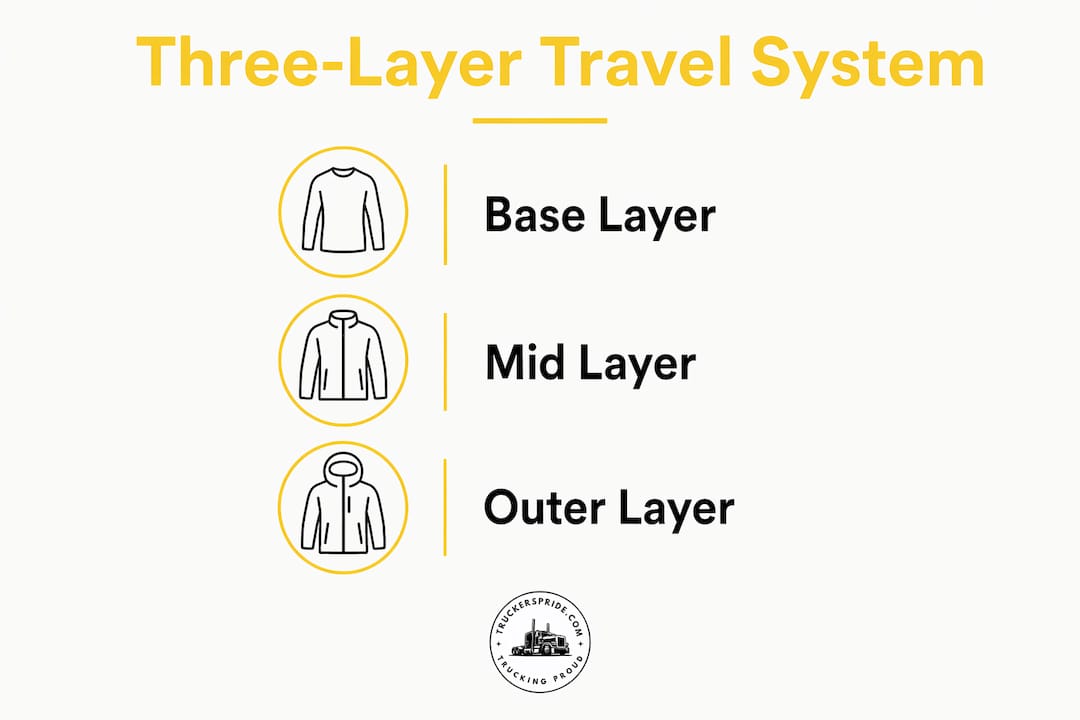
The three-layer system addresses this directly. A breathable base layer sits closest to the skin and manages moisture. A warm mid-layer, such as a lightweight fleece or hoodie, adds insulation when temperatures drop. A large scarf or wrap serves as the top layer, functioning as a blanket, a pillow, and an extra layer of warmth without adding bulk to a bag.
Layering order changes throughout a trip. During boarding, the mid-layer often comes off. During the cruise phase, it goes back on. The scarf handles the in-between moments. This system works because each piece serves a specific function and can be adjusted while seated without disrupting other passengers.
Pro Tip: Choose a mid-layer with a zip front rather than a pullover. Zip fronts are easier to add or remove in a cramped seat without standing up.
| Layer | Function | Best garment type |
|---|---|---|
| Base | Moisture management, skin comfort | Merino wool tee, bamboo tank |
| Mid | Warmth, insulation | Lightweight hoodie, fleece zip |
| Top | Versatility, wind and chill buffer | Oversized scarf, wrap, light jacket |
The seasonal clothing checklist approach applies here too. Thinking in layers rather than single outfits is the mindset shift that separates prepared travelers from uncomfortable ones.
What accessories and footwear optimize comfort during multi-day hauls?
Accessories carry more weight in travel comfort than most people expect. The right ones prevent real physical problems. The wrong ones create them.
Medical-grade compression socks rated at 20–30 mmHg reduce swelling and venous pressure during journeys over six hours. Sitting still for extended periods slows circulation in the legs, and compression socks counteract that directly. They are one of the most cost-effective comfort investments available for long-haul travel.
Footwear choice follows the same logic. Feet can swell up to half a shoe size during flights due to cabin pressure and immobility. Slip-on shoes with a roomy fit accommodate that swelling and speed up the security screening process. New shoes should never make their debut on a travel day. Break them in first.
Hygiene habits around footwear matter too. Never walk barefoot to lavatories, even with thick socks. Dedicated slip-on shoes or travel sandals kept in the personal bag solve this cleanly.
Anti-chafe balm applied before travel prevents skin irritation in high-friction areas like inner thighs, under the bust, and around heels. Hours of sitting amplify friction that would be unnoticeable during a normal day.
Pro Tip: Apply anti-chafe balm before boarding, not after discomfort starts. Prevention takes seconds; recovery takes days.
Essential accessories to keep in a personal bag for quick access:
- Compression socks (20–30 mmHg rating)
- Slip-on travel shoes or sandals for lavatory use
- Anti-chafe balm
- Lip balm and a small facial mist for skin hydration
- A lightweight eye mask and earplugs for rest during long legs
How to pack and organize a versatile travel wardrobe for multi-day hauls
Packing for multi-day travel requires separating what is needed immediately from what is needed at the destination. Keep passports, phones, and lip balm in pockets. Store scarves, extra socks, and destination-specific clothing in the personal item bag. This separation reduces the number of times a traveler digs through luggage mid-trip.
A capsule wardrobe built on multi-use items cuts packing volume significantly. Three or four base pieces in neutral colors can combine into multiple outfits across a week. Merino wool tees, one versatile mid-layer, two pairs of stretch pants, and a scarf that doubles as a wrap cover most scenarios without overpacking.
Adaptable silhouettes like wrap dresses and relaxed trousers accommodate the body changes that happen during long travel, including bloating and swelling. Rigid fits do not.
| Item category | Function | Packing tip |
|---|---|---|
| Merino wool tee | Base layer, odor resistance | Roll to save space, pack first |
| Stretch pants or joggers | Seated comfort, versatility | Wear on travel day |
| Lightweight hoodie or fleece | Mid-layer warmth | Carry in personal bag |
| Large scarf or wrap | Top layer, blanket, pillow | Wear or drape over carry-on |
| Compression socks | Circulation support | Pack in shoe or top of bag |
| Slip-on shoes | Swelling accommodation, security ease | Wear on travel day |
Investing in quality apparel upfront reduces the need to replace items mid-trip and keeps the wardrobe functional across multiple days without compromise.
What are common mistakes when dressing for long trips?
The most common mistake is wearing stiff jeans and tight footwear on a travel day. Both cause compounding discomfort over hours. Jeans restrict the waist and hips during prolonged sitting. Tight shoes become painful as feet swell, and removing them mid-flight can make them impossible to put back on comfortably.
Failing to plan for body changes is the second major error. Bloating, swelling, and temperature sensitivity all increase during long travel. Clothing that fits perfectly at departure may feel restrictive four hours in. Elastic waistbands and stretch fabrics absorb these changes without creating pressure points.
Temperature fluctuations catch travelers off guard when they pack a single outfit without layers. A warm departure city and a cold cabin create a gap that one layer cannot bridge. Re-layering in a cramped seat is awkward but manageable with the right garments. Pullovers and structured jackets make it harder. Zip fronts and wraps make it easy.
Pro Tip: Remove shoes shortly after takeoff and put them back on before landing, not at the gate. Feet swell most during the flight and begin to reduce after landing. Timing the reapplication correctly prevents the painful struggle of forcing swollen feet back into shoes.
- Never wear new shoes on a travel day
- Avoid tight waistbands, underwire, and structured collars for long hauls
- Pack a mid-layer even when departing from a warm location
- Plan for bloating by choosing high-waist stretch fabrics over low-rise rigid cuts
- Keep a change of socks in the personal bag for freshness on long legs
What I’ve learned about dressing for the long haul
The travelers who arrive in the best shape are not the ones who packed the most. They are the ones who thought in systems. A breathable base, a warm mid-layer, a versatile wrap, and the right footwear cover almost every scenario a multi-day trip throws at a person.
What took me time to accept is that comfort and appearance are not opposites. Merino wool looks clean and put together. Stretch trousers in a tailored cut read as professional. The discipline is in choosing fabrics and fits that serve the body first, then the eye. Fashion-first packing almost always leads to regret somewhere around hour five.
The mindset shift that matters most is treating a travel wardrobe the way a professional treats a toolkit. Every piece has a job. If it cannot do that job across multiple days and conditions, it does not earn a spot in the bag. That thinking removes the guesswork and builds real confidence before a long haul even begins.
— Sylvain
Truckerspride gear built for the long road
Comfort on a multi-day haul starts with what is worn closest to the body. Truckerspride builds apparel for people who spend serious time on the road, and that experience shows in every piece.

The Everyday Essentials Bundle brings together a hoodie, tee, and cap in one package built for extended wear. The DryBlend Performance T-Shirt delivers breathable comfort across long days, handling heat and movement without clinging or fading. Printed locally in North America, Truckerspride gear ships fast and holds up mile after mile. For anyone building a wardrobe that works as hard as they do, the full range is worth a look.
FAQ
What fabrics work best for multi-day travel wear?
Merino wool, bamboo, and cotton blends perform best for extended wear. They resist odor, regulate temperature, and stay comfortable across multiple days without frequent washing.
How do compression socks help during long hauls?
Medical-grade compression socks rated at 20–30 mmHg reduce leg swelling and support circulation during journeys over six hours. They are one of the most effective and affordable comfort tools for long-distance travel.
What should stay in pockets versus a personal bag during travel?
Keep passports, phones, and lip balm in pockets for immediate access. Store scarves, extra socks, and destination clothing in the personal item bag to reduce mid-trip digging.
Why do feet swell during flights and what helps?
Cabin pressure and immobility slow circulation, causing feet to swell up to half a shoe size. Slip-on shoes with a roomy fit accommodate this change and make security screening faster.
Is the three-layer system necessary for shorter multi-day trips?
The three-layer system applies to any trip where temperatures vary between departure, transit, and destination. Even a two-day road trip benefits from a breathable base, a warm mid-layer, and a versatile wrap for temperature shifts.
Key Takeaways
Dressing comfortably on multi-day hauls requires a system built on breathable fabrics, the three-layer method, and accessories that manage swelling and friction across extended travel days.
| Point | Details |
|---|---|
| Fabric choice is foundational | Merino wool, bamboo, and cotton blends resist odor and regulate temperature across multiple days. |
| The three-layer system works | A breathable base, warm mid-layer, and versatile wrap handle cabin temperature swings without a full outfit change. |
| Compression socks prevent swelling | Medical-grade socks rated 20–30 mmHg reduce leg swelling on journeys over six hours. |
| Footwear must accommodate swelling | Slip-on shoes with a roomy fit handle foot expansion and speed up security screening. |
| Packing by access priority saves effort | Keep immediate-need items in pockets and destination clothing in the personal bag for a smoother trip. |