

A trucker’s starter wardrobe is defined as a curated set of versatile, comfortable, and function-focused clothing built to handle long hours behind the wheel and active work outside the cab. Building a starter wardrobe for new truckers means thinking beyond personal style. It means selecting gear that moves with the body, holds up across seasons, and meets real safety requirements at loading docks and DOT inspections. Brands like Carhartt and Wrangler have long served this community, but the right wardrobe goes deeper than a brand name. It starts with understanding what the road actually demands.
What does building a starter wardrobe for new truckers really involve?
A practical trucker wardrobe is a system, not just a pile of packed clothes. It balances comfort during long drives, function during loading and unloading, and compliance with visibility requirements at facilities and inspections. New truckers often underestimate how many roles their clothing must fill across a single day. Getting this right from the start saves money, frustration, and space in the sleeper berth.
The sleeper berth is roughly the size of a walk-in closet. That physical constraint shapes every packing decision a driver makes. Clothing must earn its place by being versatile enough to serve multiple purposes without taking up unnecessary room.
How do fabric and layering choices affect comfort on the road?
Breathable, stretchy fabrics are the foundation of any functional trucker wardrobe. Cotton and cotton blends remain the most popular choices because they breathe well and feel comfortable against the skin during long sitting periods. Moisture-wicking synthetic blends add value in summer heat or during physical work at stops. Non-breathable fabrics cause real discomfort over a ten-hour shift, and that discomfort compounds over days on the road.
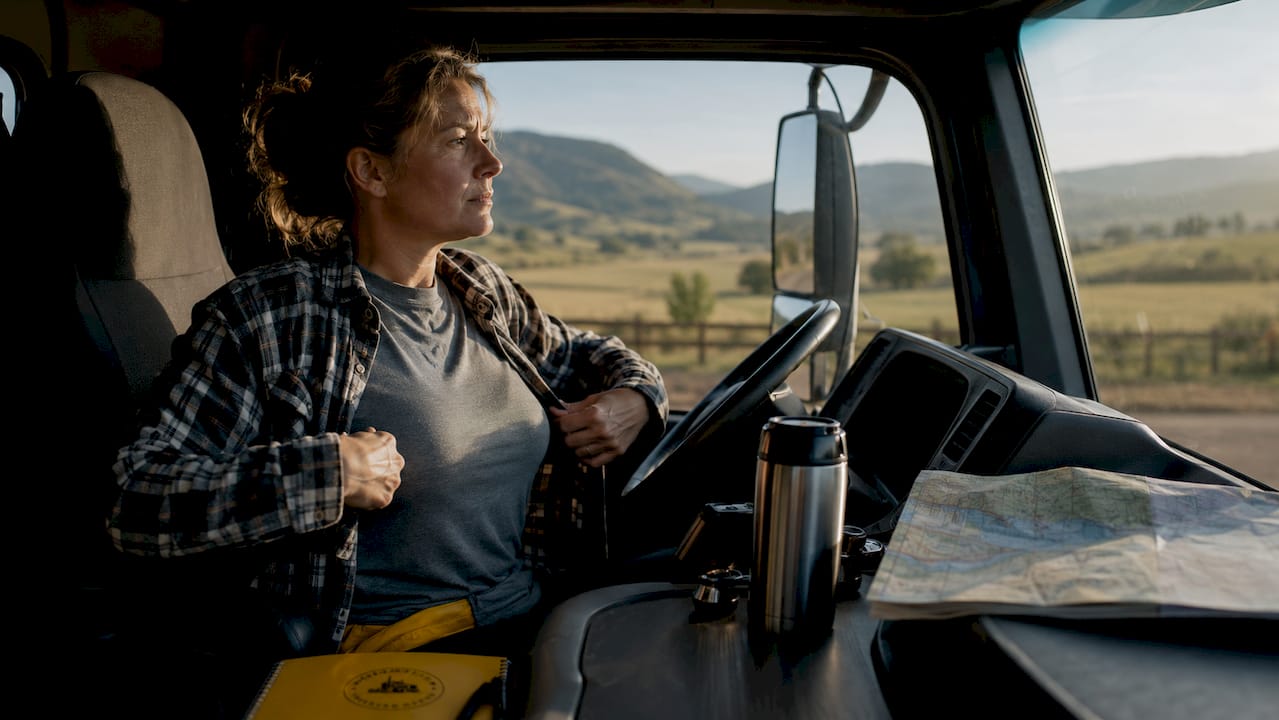
Layering solves the temperature problem that every long-haul driver faces. Cab temperatures shift with weather, cargo requirements, and time of day. A base T-shirt, open shirt, and lightweight vest or jacket covers most conditions without requiring a full wardrobe change. This three-layer system adapts from a warm afternoon delivery to a cold predawn fuel stop.
For summer routes, lightweight cotton tees and breathable work pants handle the heat. For winter or northern routes, a thermal base layer under a flannel shirt and a quilted vest adds warmth without bulk. Fabrics that resist wrinkles and dry quickly are worth the extra attention when choosing pieces, since laundry facilities on the road are not always available on demand.
- Base layer: Moisture-wicking or cotton T-shirts for daily wear
- Mid layer: Flannel or chambray button-up shirts for temperature control
- Outer layer: Lightweight vest or zip-up jacket for cold snaps and early mornings
- Bottoms: Stretch-waist work pants or jeans with room to move
- Rain gear: A packable rain jacket takes up minimal space and handles unexpected weather
Pro Tip: Choose fabrics that dry overnight. Quick-dry cotton blends and synthetic tees can be washed at a truck stop laundry and worn again the next morning, cutting down on how much you need to pack.
What footwear do truckers actually need?
Footwear is one area where new truckers consistently underinvest. Slip-resistant soles are a must for any shoe or boot worn outside the cab. Loading docks, fuel islands, and truck stop parking lots present real slip hazards, especially in wet or icy conditions. The right footwear prevents injuries that can end a driving career before it starts.
Steel-toed work boots offer the highest level of protection and are required at many facilities. Western-style boots with leather construction and a stacked heel are a traditional choice that provides ankle support and durability. Athletic shoes with aggressive traction soles work well for lighter duty stops but lack the protection of a proper work boot. Drivers who spend significant time on foot during deliveries benefit most from a dedicated pair of work boots.
- Steel-toed work boots: Best for facilities requiring foot protection
- Western-style leather boots: Durable, supportive, and road-proven
- Athletic shoes with traction: Comfortable for shorter stops and rest areas
- Sandals or slip-ons: Acceptable inside the cab for long driving stretches only
Pro Tip: Invest in quality insoles from the start. Brands like Superfeet or Dr. Scholl’s Work add meaningful cushioning to any boot and reduce foot fatigue during long standing periods at docks and inspections.
Why is high-visibility gear a non-negotiable wardrobe item?
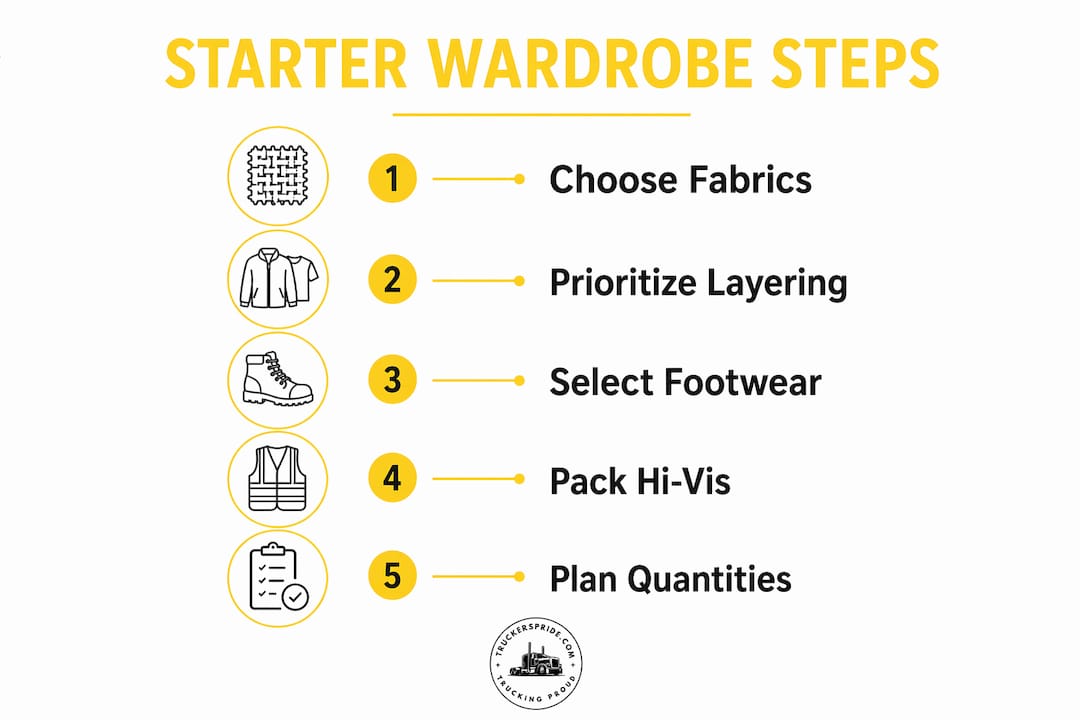
EN ISO 20471-certified hi-vis clothing is the standard for high-visibility garments used in professional driving contexts. This certification means the garment meets tested reflectivity and color brightness requirements that make a driver visible to other vehicles in low-light conditions. Wearing uncertified gear at a DOT inspection or a regulated facility is not just a safety risk. It can result in compliance issues that delay a load.
Hi-vis vests are mandatory at many loading docks, distribution centers, and during roadside inspections. New truckers sometimes treat a hi-vis vest as an afterthought, but it belongs in the front pocket of a bag or hanging behind the seat for instant access. The faster a driver can put it on when stepping out of the cab, the lower the risk exposure at every stop.
High-visibility clothing should be easily accessible to encourage quick changes when leaving the cab. Storing a certified vest within arm’s reach of the driver’s door reduces the temptation to skip it during short stops.
Choosing a hi-vis vest that layers cleanly over a flannel shirt or jacket matters. Bulky vests that fight with outer layers get left behind. A well-fitted, lightweight certified vest from a supplier like Truckerspride or a safety-focused workwear brand becomes a habit rather than a hassle.
How much clothing should new truckers pack for a long haul?
Packing 7–10 days of work clothes covers the typical laundry interval for an over-the-road driver without overwhelming the limited storage space in a sleeper berth. Most experienced drivers settle into a rhythm of washing clothes at truck stop laundry facilities every week or so. Packing more than ten days of clothing creates storage problems and adds weight without adding value.
Overpacking is the most common mistake new truckers make when building their first road wardrobe. The instinct to prepare for every scenario leads to bags stuffed with items that never get worn. A smarter approach is to pack conservatively for the first trip, note what actually gets used, and adjust from there.
- Count out 7 sets of work clothes: T-shirts, pants, socks, and underwear
- Add 2–3 mid layers for temperature variation
- Pack one outer layer appropriate for the season
- Include one set of casual clothes for rest days
- Add rain gear and a hi-vis vest as non-negotiables
- Leave room for one or two items picked up on the road
| Category | Recommended quantity | Notes |
|---|---|---|
| T-shirts | 7–8 | Mix of work and casual |
| Work pants | 3–4 | Durable, stretch-waist preferred |
| Mid layers | 2–3 | Flannel shirts or zip-ups |
| Socks and underwear | 7–10 pairs | Pack generously |
| Outer layer | 1–2 | Seasonal appropriate |
| Hi-vis vest | 1–2 | Certified, easy to access |
Pro Tip: After your first two or three trips, do a honest audit of what you actually wore. Most drivers find they used about half of what they packed. That audit shapes a leaner, smarter wardrobe going forward.
What mistakes do new truckers make when starting their wardrobe?
New truckers repeat a predictable set of wardrobe errors, and most of them are avoidable with a little planning. The first is overpacking, which fills the sleeper berth with clothes that never get worn and makes finding what you need harder. A planned laundry strategy replaces the need for a month’s worth of clothing with a practical weekly cycle.
The second mistake is ignoring visibility requirements until a facility turns a driver away or a supervisor flags the issue. Certified hi-vis gear is not expensive, and it belongs in the wardrobe from day one. The third mistake is choosing clothing based on appearance rather than function. Non-breathable fabrics, stiff jeans with no stretch, and fashion-forward shoes with smooth soles all create problems that compound over a ten-hour shift.
- Overpacking: Pack 7–10 days, not a month. Plan for laundry stops.
- Skipping hi-vis gear: Keep a certified vest accessible at all times.
- Wrong fabrics: Choose breathable, stretch-friendly materials over stiff or synthetic-only options.
- Poor footwear: Never wear smooth-soled shoes outside the cab on a dock or fuel island.
- No rain gear: A packable rain jacket weighs almost nothing and prevents a miserable stop.
Pro Tip: Buy one quality item in each category rather than several cheap ones. A single pair of well-made work boots outlasts three pairs of budget options and causes far less foot pain over a long haul.
Key takeaways
A practical trucker wardrobe requires breathable fabrics, certified hi-vis gear, slip-resistant footwear, and a 7–10 day packing strategy built around regular laundry stops.
| Point | Details |
|---|---|
| Fabric and layering | Choose cotton blends and moisture-wicking fabrics; layer a tee, shirt, and vest for temperature control. |
| Footwear safety | Wear slip-resistant, steel-toed boots outside the cab at docks, fuel islands, and inspections. |
| Hi-vis compliance | Pack an EN ISO 20471-certified vest and store it within arm’s reach of the driver’s door. |
| Packing quantity | Limit clothing to 7–10 days and plan weekly laundry stops to avoid overfilling the sleeper berth. |
| Wardrobe evolution | Audit what you actually wear after the first few trips and cut what you never touched. |
What I’ve learned about building a trucker wardrobe that actually works
The first thing most new drivers get wrong is treating their wardrobe like a suitcase for a vacation. The road is not a vacation. It’s a workplace that changes temperature, terrain, and physical demand several times a day. The drivers who figure this out early stop packing for every scenario and start packing for the most likely ones.
Layering is the single most underrated wardrobe decision a new trucker can make. A good flannel over a moisture-wicking tee handles more situations than any single heavy jacket. It’s a lesson that sounds simple but takes a few cold mornings at a fuel island to fully appreciate.
Footwear is where I’ve seen drivers suffer the most. A pair of quality work boots with a proper insole is not a luxury. It’s a tool. The same goes for a certified hi-vis vest. Keeping it clipped to the back of the seat means it gets worn every single time, not just when someone is watching.
The wardrobe gets better with miles. The first trip reveals what was missing and what was unnecessary. That feedback is honest and specific in a way no checklist can replicate. Trust the process, pack light, and let the road teach the rest.
— Sylvain
Truckerspride gear built for the road from day one
New truckers deserve clothing that was designed with their reality in mind, not adapted from a generic workwear catalog. Truckerspride builds apparel specifically for drivers who spend long hours behind the wheel and step out into demanding conditions.

The Everyday Essentials Bundle from Truckerspride pairs a premium pullover hoodie, a performance tee, and a classic trucker cap into one ready-to-go starter set. The DryBlend performance T-shirts are built for breathability and daily wear, making them a natural base layer for any layering system. Every piece is printed locally in North America, which means faster delivery and consistent quality. For drivers starting their first wardrobe, these pieces cover the essentials without overcomplicating the process.
FAQ
What is the best fabric for truck driver clothing?
Cotton blends and moisture-wicking fabrics are the best choices for truck drivers. They breathe well during long sitting periods and hold up through physical work at stops and deliveries.
How many days of clothes should a new trucker pack?
New truckers should pack 7–10 days of work clothing and plan for laundry stops at truck stop facilities. Packing more than ten days creates storage problems in the limited space of a sleeper berth.
Is a hi-vis vest required for truck drivers?
Hi-vis vests are mandatory at many loading docks, distribution centers, and during DOT roadside inspections. Drivers should carry an EN ISO 20471-certified vest and keep it accessible at all times.
What boots are best for truck drivers?
Steel-toed work boots with slip-resistant soles offer the best protection for truck drivers. Western-style leather boots are a proven alternative that provides durability and ankle support across varied terrain.
What is the biggest wardrobe mistake new truckers make?
Overpacking is the most common mistake among new truckers. Packing conservatively, planning laundry stops, and adjusting the wardrobe after real trips produces a far more practical and manageable clothing system.