

Celebrating miles driven is the defining tradition of trucking culture, honoring a driver’s commitment to safety, endurance, and professional excellence. The industry’s premier benchmark, the million-mile safe driving milestone, typically takes nearly 10 years for the average long-haul trucker to reach. That number is not just a distance. It is proof of discipline, mental toughness, and a career built on responsibility. For drivers and trucking enthusiasts alike, understanding why mileage milestones matter reveals something deeper about the people who keep America’s supply chain moving.
Why truckers celebrate miles driven: the core reason
Miles driven in trucking are not the same as miles driven by anyone else. The average motorist covers about 14,000 miles per year. A professional long-haul trucker averages 100,000–115,000 miles annually. That gap explains why the trucking community treats mileage milestones with a level of reverence that outsiders rarely understand.
The significance of miles in trucking goes beyond raw distance. Every mile logged under a clean safety record represents a deliberate choice: to stay alert, to manage risk, and to protect everyone else on the road. Recognition programs motivate drivers to maintain that discipline across decades, not just months. The celebration, then, is not about the odometer. It is about the character behind it.
What are the major mileage milestones truckers aim to achieve?
The trucking industry defines mileage milestones with strict standards. Million-mile status requires a documented, clean safety record with no DOT-reportable preventable accidents. Reaching that mark is rare. It places a driver firmly in the top 10% of the industry, according to Stevens Transport.
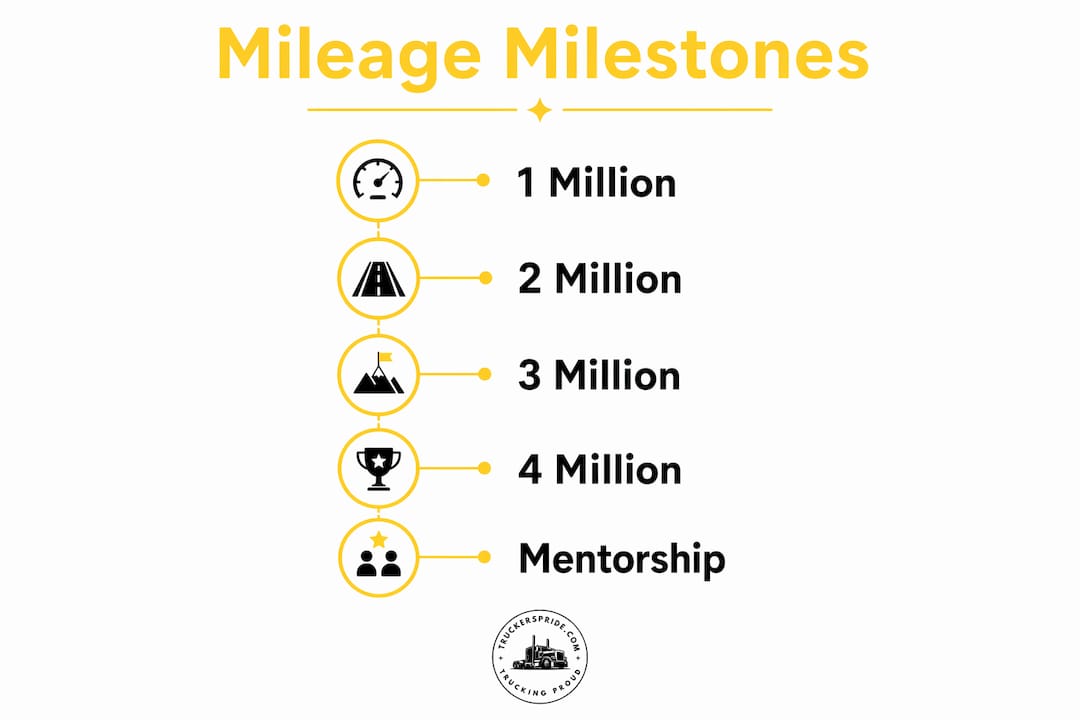
Higher milestones, such as 2 million, 3 million, and even 4 million safe miles, reflect careers spanning 20 to 35 years of consistent, professional driving. H-E-B truck driver Jaramillo reached 4 million consecutive safe miles in 2026, a feat that underscores just how rare and respected these achievements are.
| Milestone | Approximate time to reach | Safety standard | Industry recognition |
|---|---|---|---|
| 1 million miles | ~7–10 years | Zero DOT-reportable preventable accidents | Million Mile Club membership, awards |
| 2 million miles | ~17–20 years | Continued clean record | Enhanced awards, public ceremonies |
| 3 million miles | ~25–30 years | Sustained accident-free career | Elite status, company-wide recognition |
| 4 million miles | ~35+ years | Exceptional career-long discipline | Rare public honor, industry-wide attention |
Key facts about what these milestones require:
- A clean safety record with no preventable accidents at any point in the qualifying period
- Consistent professional judgment across diverse road and weather conditions
- Sustained mental focus over careers that span multiple decades
- Compliance with federal Hours of Service regulations throughout
How do companies and organizations recognize these achievements?
Formal recognition programs are the backbone of celebrating trucking milestones. Companies like PGT Trucking, J.B. Hunt, and Stevens Transport have built structured programs that go well beyond a handshake and a plaque.
PGT Trucking recognized 50 million-mile drivers at its 2026 annual celebration, marking 45 years in business. The grand prize winner received a 2026 Ford F-150. That kind of reward signals to every driver in the company that safety is not just expected. It is celebrated publicly and rewarded substantially.
J.B. Hunt has run its Million Mile program for 30 years. The company structures recognition as multi-day gatherings where drivers meet company leadership, share best practices, and build lasting connections. These events serve a dual purpose: honoring the past and reinforcing the safety culture for the future.
“These celebrations are not just awards banquets. They are public opportunities to honor extraordinary skill, professionalism, and safety commitment that keeps our roads safer for everyone.” Shannon Newton, Arkansas Trucking Association
The most common forms of recognition at trucker recognition events include:
- Cash bonuses tied directly to mileage thresholds
- Luxury watches engraved with the driver’s name and milestone
- Vehicles awarded to top performers at annual celebrations
- Walk of Fame ceremonies where drivers are publicly acknowledged before peers and leadership
- Million Mile Club membership with exclusive benefits and ongoing recognition
Pro Tip: If a driver is approaching a major mileage milestone, they should document every clean inspection and safety record carefully. Companies require verified, clean records to qualify for formal recognition programs.
Why do mile-based achievements matter beyond the numbers?
The importance of miles driven in trucking culture runs deeper than any award or ceremony. These milestones symbolize a lifestyle. The road becomes routine only for those who have mastered it. Reaching a million safe miles means a driver has navigated ice storms in Montana, construction zones in Texas, and dense urban traffic in Chicago, all without a preventable accident.
Celebrations have grown more vital as roadway congestion and aggressive driving behavior have increased. PGT Trucking CEO Pat Gallagher has noted that these events highlight perseverance amid tougher driving conditions than any previous generation of truckers faced. That context matters. Achieving a million miles today is harder than it was 20 years ago.
The significance of miles in trucking also shapes professional identity in lasting ways:
- Milestones validate years of sacrifice, including missed holidays, long nights, and time away from family
- They provide a concrete measure of professional standing that drivers can point to with pride
- They motivate younger drivers to adopt safe habits early, knowing the long-term recognition is real
- They create a shared language within the trucking community, a shorthand for respect
Veteran drivers who reach elite mileage status often transition into mentorship roles. Veteran drivers become mentors, training hundreds of new drivers and passing down safety habits as part of their legacy. The miles, in that sense, multiply. One driver’s discipline shapes the careers of dozens who follow.
Pro Tip: Drivers who actively mentor newer colleagues often find that teaching safe habits reinforces their own discipline. The act of passing on road wisdom keeps veteran drivers sharp.
How do truckers personally commemorate their mileage landmarks?
Personal celebration is as much a part of trucking culture as the formal ceremonies. Drivers mark their milestones in ways that are visible, wearable, and shareable. Specialized apparel, patches, and keepsakes are among the most common ways drivers express their achievements and connect with the broader community.
Common personal traditions include:
- Custom patches sewn onto jackets or vests, each representing a specific mileage achievement
- Engraved watches or trophies received at company ceremonies and displayed at home or in the cab
- Milestone-specific hats that signal a driver’s status within the community, with designs that reflect trucking heritage
- Online communities and forums where drivers share photos, stories, and congratulations when peers hit major marks
- Family celebrations where spouses, children, and close friends join in honoring the achievement
The role of apparel in this culture is not superficial. A jacket covered in patches tells a story at a glance. Other drivers read those patches and understand immediately what years of discipline look like. That shared recognition builds camaraderie without a single word being spoken.
Collecting memorabilia is another strong tradition. Watches, belt buckles, and personalized plaques from company ceremonies often occupy a place of honor in a driver’s home. These objects carry weight because they represent something that cannot be faked or shortcut. The miles have to be driven, one at a time, safely.
Key Takeaways
Truckers celebrate miles driven because these milestones represent documented safety excellence, professional identity, and a legacy of discipline that defines the best careers in the industry.
| Point | Details |
|---|---|
| Million-mile status is rare | Reaching 1 million safe miles takes roughly 7–10 years and requires a clean DOT safety record throughout. |
| Companies invest in formal recognition | Programs like Million Mile Clubs include cash, vehicles, and multi-day events that honor drivers publicly. |
| Milestones build professional identity | Elite mileage status places drivers in the top 10% of the industry and shapes how peers and employers view them. |
| Personal traditions reinforce pride | Patches, apparel, and keepsakes let drivers carry their achievements visibly and share them with their community. |
| Veteran drivers become mentors | High-mileage drivers pass down safety culture to new drivers, extending the impact of their miles far beyond the road. |
Miles matter more than most people realize
Trucking milestones are not a niche tradition. They are one of the most honest forms of professional recognition in any industry. A million safe miles cannot be bought, inherited, or faked. Every driver who earns that status has made thousands of correct decisions under pressure, in conditions most people will never face.
What strikes me most is how these celebrations counterbalance the solitary nature of long-haul trucking. Drivers spend weeks alone in a cab, far from family and friends. The recognition events, the ceremonies, the handshakes from company leadership, these moments matter precisely because the work is so often invisible. The freight arrives. Nobody asks how.
The trucking community has built something worth preserving here. These traditions create continuity between generations of drivers. A veteran who earned his million-mile patch in 2005 and a driver chasing that same mark today share a common standard. That shared standard is what keeps the roads safer for everyone. Losing these traditions would cost the industry something it cannot easily rebuild: a culture where safety is genuinely celebrated, not just required.
— Sylvain
Gear that honors every mile you’ve driven
Every mile a driver logs is a statement about who they are. Truckerspride builds apparel that carries that same weight, gear made specifically for the demands of long-haul driving, printed locally in North America for quality that holds up on the road.

The Pride in Every Mile bundle brings together a hoodie, tee, and hat designed for drivers who want to wear their commitment every day, not just at ceremonies. Each piece is comfort-tested and road-proven, built for the hours behind the wheel that most people never see. For drivers who have earned their miles, the right gear is more than clothing. It is a statement that travels with them.
FAQ
What is the million-mile milestone in trucking?
The million-mile milestone is a premier industry benchmark requiring a driver to log 1 million safe miles with no DOT-reportable preventable accidents. It typically takes 7–10 years for a long-haul trucker to achieve.
How do trucking companies reward million-mile drivers?
Companies award cash bonuses, luxury watches, vehicles, and public recognition at formal ceremonies. PGT Trucking, for example, gave a 2026 Ford F-150 to a grand prize winner at its annual million-mile celebration.
Why do mileage milestones matter for a trucker’s career?
Million-mile status places a driver in the top 10% of the industry, signaling elite professionalism and safety commitment to employers, peers, and the broader trucking community.
How do drivers personally mark their mileage achievements?
Drivers use custom patches, milestone hats, engraved watches, and trucking apparel to express their achievements. Many also share their stories in online trucking communities and at industry events.
Are mileage celebrations becoming more or less common?
Celebrations are growing more significant as road conditions become more demanding. Industry leaders note that achieving major mileage milestones today requires greater perseverance than in previous decades, making the recognition more meaningful, not less.