

Good apparel is defined as clothing engineered to meet the physical and professional demands of a specific occupation. For new truckers, understanding why new truckers invest in good apparel is not just about comfort. It is about safety, credibility, and long-term financial sense. Professional appearance influences how DOT officers and clients treat drivers, establishing trust at every delivery point. Clothing that fits well, breathes properly, and holds up through hard use is not a luxury. It is a tool of the trade, as essential as a logbook or a reliable pair of hands on the wheel.
Why new truckers invest in good apparel from day one
The trucking industry uses the term “occupational apparel” to describe clothing selected for job-specific performance rather than general wear. New drivers often underestimate how much their clothing affects their daily experience on the road. A shirt that traps heat during an August run through Texas, or boots that fail after three months of loading dock work, costs more in discomfort and replacement than a quality purchase would have upfront.
Occupational apparel for truckers differs from regular clothes in three core ways: fabric performance, construction durability, and professional signaling. Each of these factors shapes how a driver feels, how long the clothing lasts, and how others perceive them at weigh stations, customer sites, and truck stops across the country.
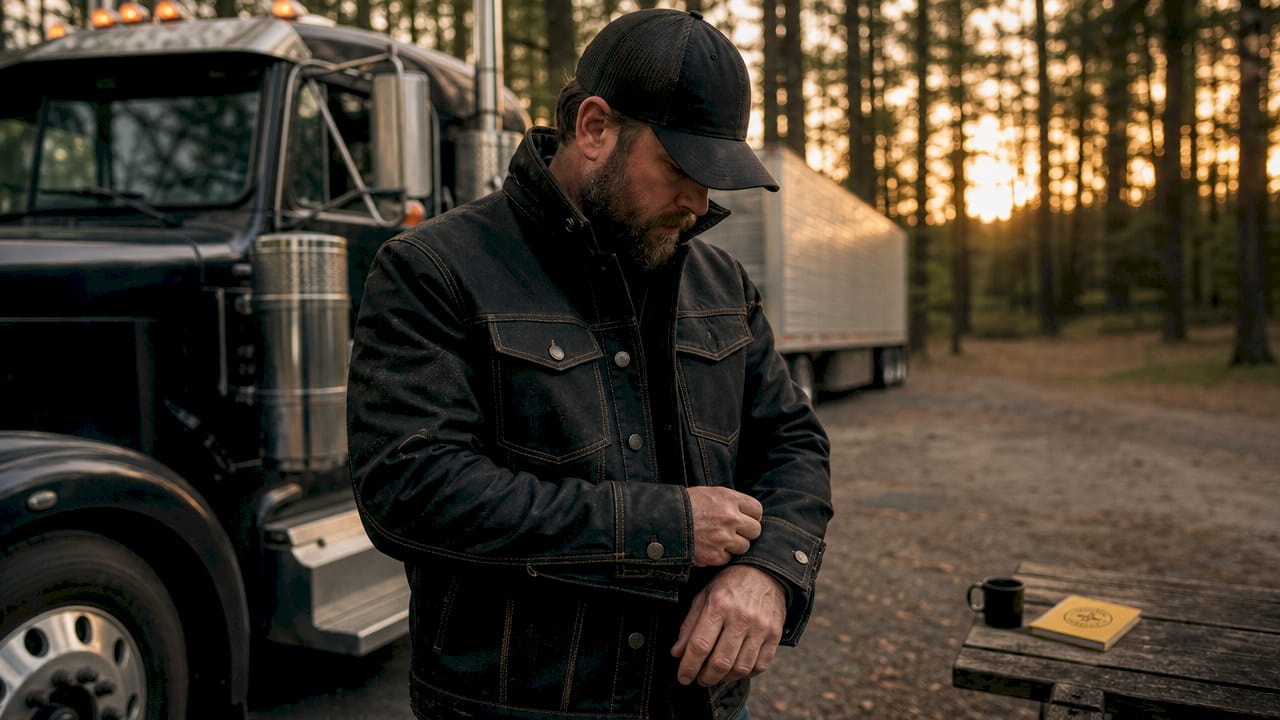
What features make trucker apparel comfortable and safe for long hauls?
Comfort in trucker clothing is a direct safety factor. Restrictive or unbreathable apparel causes distractions during long 11-hour shifts. That distraction is not trivial. A driver adjusting a collar or shifting in a seat because of pressure points is a driver whose attention is divided.
The features that matter most for long-haul comfort include:
- Moisture-wicking fabrics: Synthetic blends like polyester-cotton DryBlend move sweat away from the skin. This keeps body temperature stable during both summer heat and heated cab environments in winter.
- Proper fit: Clothing that is too tight restricts movement during loading and unloading. Clothing that is too loose catches on equipment. A fitted but relaxed cut serves both driving and physical work.
- Reinforced seams: Truckers sit for hours, then lift, climb, and pull. Seams at the shoulders and seat take repeated stress. Double-stitched construction prevents early failure.
- Visibility-ready design: Drivers working flatbed or open cargo routes benefit from apparel that accommodates high-visibility vests without bulk underneath.
Pro Tip: Pack a base layer made from a lightweight synthetic fabric. It adds warmth in cold docks without the bulk of a heavy sweatshirt, and it peels off easily when the cab heats up.
Layering strategies with cotton blends and synthetic fabrics help drivers manage wide temperature swings on varying routes. A driver leaving a cold Chicago morning and arriving at a warm Houston afternoon needs clothing that adapts, not a full wardrobe change at every stop.
How does investing in durable apparel protect your long-term health and budget?
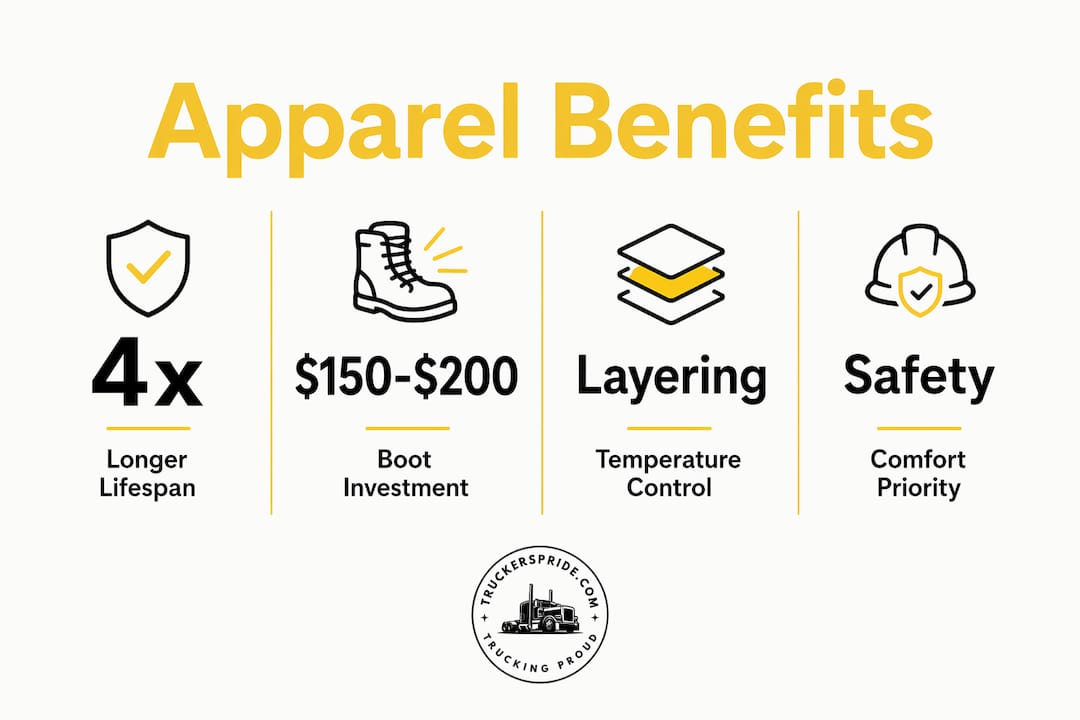
The “buy once, cry once” philosophy is well known among veteran drivers, and it applies directly to footwear. Quality boots invested in at $150–$200 can last 2–4 years with proper care. Cheap boots fail within months and contribute to foot fatigue, knee strain, and back problems that accumulate over a career.
| Apparel Category | Budget Option | Quality Investment | Typical Lifespan |
|---|---|---|---|
| Work boots | Under $60 | $150–$200 | 3–6 months vs. 2–4 years |
| Performance shirts | Under $15 | $22–$35 | Months vs. 1–2 years |
| Work pants | Under $25 | $50–$80 | 6 months vs. 2+ years |
The numbers above tell a clear story. A driver who buys cheap boots twice a year spends more over four years than one who buys quality boots once. The physical cost is harder to measure but just as real. Foot and back injuries are among the most common health complaints in the trucking profession.
Material durability also matters for shirts and pants. Fabrics that pill, fade, or tear after a few washes force constant replacement. Mid-range performance fabrics hold color, resist shrinking, and survive repeated industrial laundering. For a driver rotating several shirts daily for hygiene on long hauls, that durability compounds into real savings.
Pro Tip: Before spending on premium gear, build a starter wardrobe with mid-range pieces. Learn your route conditions first, then upgrade the specific items that take the most wear.
Why does professional appearance matter for new truckers on the road and at customer sites?
First impressions in trucking carry weight. A driver who arrives at a shipper’s dock looking clean and put together signals discipline and reliability before saying a word. Veteran drivers emphasize that clean, well-maintained clothing signals strong work ethic to shippers and partners. That perception affects how quickly a driver gets loaded, how much patience a dispatcher extends, and whether a customer requests the same driver again.
The professional signals that apparel sends include:
- Cleanliness: A fresh shirt at a delivery site communicates that the driver respects the customer’s space and their own profession.
- Branded or uniform-style gear: Organized branded gear correlates with career professionalism and increased pride. A driver wearing a company shirt is immediately identifiable and accountable.
- Appropriate footwear: Steel-toed or slip-resistant boots at a warehouse site show awareness of safety protocols. Showing up in sandals signals the opposite.
- Layered, coordinated clothing: A driver who moves from the cab to a customer meeting without looking disheveled demonstrates preparation.
“What people don’t see is the discipline it takes to show up looking professional after 600 miles and four hours of sleep. That discipline shows in how you dress, and people notice it whether they say so or not.”
Personalized apparel with company branding can also act as mobile marketing, generating business leads at truck stops. A shirt with a company name and contact information turns every fuel stop into a networking opportunity. For owner-operators especially, that visibility has real business value.
How much should new truckers budget for quality apparel?
New truckers typically spend $22–$35 per quality shirt and $150–$200 on durable footwear. Veteran drivers recommend starting at the mid-range before committing to premium items. Route conditions, cargo type, and climate all affect which pieces wear out fastest. Spending on the right categories first prevents waste.
A practical starter wardrobe for a new trucker looks like this:
- Five to seven performance shirts: Enough to rotate daily without running out between laundry stops. Choose moisture-wicking blends in neutral colors that stay presentable.
- Two to three pairs of durable work pants: Cargo-style or reinforced denim holds up through loading and unloading. Avoid thin cotton that tears at the knees.
- One quality pair of work boots: This is the single most important investment. Prioritize slip resistance, ankle support, and comfort for standing on concrete.
- A mid-weight jacket or hoodie: Useful for cold docks, early morning pre-trips, and customer sites with aggressive air conditioning.
- A cap for sun protection: Drivers log significant time outside during pre-trip inspections and loading. Sun protection is practical, not cosmetic.
Apparel budgeting for a trucking career also has a tax dimension. Work-specific clothing that is not suitable for everyday wear qualifies as a deductible business expense in most cases. Drivers should keep receipts and consult a tax professional familiar with trucking deductions.
Cab space constraints force truckers to optimize clothing choices for multi-functionality. A capsule wardrobe approach, where every piece works with every other piece, maximizes utility without filling the sleeper with bags of clothes.
How do climate and operational factors influence trucker clothing choices?
Climate is one of the most underestimated variables in trucker apparel selection. A driver running the Pacific Northwest in november faces cold rain and loading docks that stay damp all day. A driver on a southern route in july deals with heat, humidity, and the shock of walking from 95-degree heat into a refrigerated trailer. The seasonal clothing checklist for these conditions looks very different.
Operational role also shapes apparel needs:
- Flatbed drivers work outside more than any other driver type. They need sun protection, durable gloves, and clothing that accommodates safety harnesses and high-visibility vests without restricting movement.
- Reefer drivers move in and out of refrigerated trailers repeatedly. A lightweight insulating layer worn under a work shirt handles the temperature shock without adding bulk.
- OTR drivers on solo runs prioritize comfort above all else. Soft fabrics, relaxed fits, and breathable materials matter more than appearance during a 10-hour stretch.
- Local and regional drivers with daily customer contact need clothing that looks professional at 7:00 AM and still looks acceptable at 4:00 PM after physical work.
The best temperature regulating trucker apparel uses a layering system rather than a single heavy garment. Three lighter layers outperform one thick layer because each layer can be added or removed as conditions change throughout a shift.
Key Takeaways
Quality apparel is the single most cost-effective investment a new trucker makes because it improves safety, reduces long-term spending, and builds the professional reputation that opens doors throughout a career.
| Point | Details |
|---|---|
| Comfort is a safety issue | Restrictive or unbreathable clothing causes distractions during 11-hour shifts. |
| Durable boots save money | Quality footwear at $150–$200 lasts 2–4 years; cheap boots fail in months. |
| Appearance builds trust | Clean, professional clothing signals work ethic to shippers, customers, and DOT officers. |
| Start mid-range, upgrade later | Learn your route conditions before committing to premium gear in every category. |
| Climate drives apparel choices | A layered system adapts to temperature swings better than any single heavy garment. |
What I’ve learned watching new drivers get apparel wrong
Sylvain here. After years of observing how drivers enter this profession, the most consistent mistake is treating apparel as an afterthought. New drivers spend months researching trucks, routes, and regulations. Then they show up to their first week in a cotton t-shirt that soaks through by noon and boots from a discount bin that leave their feet aching by day three.
The drivers who build strong reputations fast share one habit. They dress like professionals before they feel like professionals. That sounds simple, but it takes real discipline when you are tired, running behind, and the last thing on your mind is whether your shirt is clean. The ones who maintain that standard earn a different kind of respect at the dock.
My honest observation is that branded apparel matters more than most new drivers expect. It is not about vanity. Wearing gear that reflects the trucking profession builds a sense of identity that carries a driver through the hard stretches. Pride is built over miles, and the clothing a driver wears is part of how that pride takes shape. Truckerspride understands this, which is why their gear is built around what drivers actually need, not what looks good in a catalog photo.
— Sylvain
Gear built for the road, not just the rack
Truckerspride designs apparel specifically for drivers who take their work seriously. Every piece is comfort-tested and road-proven, printed locally in North America for faster delivery and consistent quality.

The Everyday Essentials Bundle combines a hoodie, performance tee, and cap into a practical starting kit that covers the core wardrobe needs covered in this article. For drivers who want a standalone performance option, the DryBlend Performance T-Shirt delivers moisture-wicking comfort through full shifts. Both pieces reflect the same principle that veteran drivers have always known: the right gear makes the work easier, and the work deserves gear that holds up.
FAQ
Why does trucker apparel differ from regular clothes?
Trucker apparel is built for occupational demands including moisture management, reinforced seams, and durability through physical work. Regular clothing is not engineered for the stress of long-haul driving combined with loading and unloading.
What is the most important apparel investment for a new trucker?
Quality work boots are the single most critical purchase. Boots in the $150–$200 range last 2–4 years and prevent the foot, knee, and back fatigue that cheap footwear causes within months.
How does climate affect trucker clothing choices?
Temperature swings across routes require a layered system rather than a single heavy garment. Flatbed and reefer drivers face the most extreme conditions and need fabrics that handle both heat and cold exposure within the same shift.
Can truckers deduct apparel expenses on their taxes?
Work-specific clothing not suitable for everyday wear qualifies as a deductible business expense in most cases. Drivers should keep receipts and consult a tax professional familiar with trucking industry deductions.
How many shirts should a new trucker pack for a long haul?
Veteran drivers recommend rotating five to seven shirts to maintain hygiene across multiple days without relying on laundry access at every stop.