

Limited-edition trucker apparel is defined as scarce, purposefully produced clothing that honors the working-class heritage of North America’s professional driving community. These pieces carry real collector value. Vintage promotional caps from the 1970s command $50–$200 on the secondary market, while premium collaborations like the Wrangler x Avirex collection reach $1,699.99. The role of limited-edition trucker apparel goes far beyond fashion. Each piece functions as a cultural artifact, a statement of identity, and a tribute to the 3.5 million professional drivers who keep North America moving.
How does limited-edition trucker apparel preserve trucking heritage?
Trucker apparel did not start as fashion. It started as workwear. Caps, jackets, and tees were given away by fuel companies, tire brands, and agricultural suppliers as promotional items in the 1960s and 1970s. Drivers wore them because they were practical and free. Over time, those same pieces became symbols of an entire way of life.
The shift from utility to cultural icon happened quietly, built over miles and decades. Authentic vintage designs keep that history tangible. A cap from a defunct grain elevator or a jacket patch from a regional fuel company tells a story that no mass-produced item can replicate. These pieces connect drivers and their families to a specific time, place, and profession.
“Limited-edition trucker apparel preserves working-class artifacts as fashion that withstands long-term rugged use, honoring the trucking lifestyle in a way that mass production simply cannot.”
Heritage brands that adopt a “buy it for life” philosophy produce limited runs designed for durability, not disposability. The emotional resonance runs deep. A driver who wears a piece tied to a real company, a real route, or a real era is not just wearing clothing. He is carrying a piece of history on his back.
- Authentic vintage caps from defunct regional businesses carry documented provenance.
- Heritage-inspired designs reference real mascots, real routes, and real company histories.
- Limited production honors the scarcity of the original promotional items.
- Families of drivers often collect these pieces as personal and professional mementos.
What design elements make limited-edition trucker apparel authentic?
Authenticity in trucker apparel is not a feeling. It is a set of specific, verifiable details that collectors and enthusiasts learn to read. Generic clipart and stock imagery signal a lack of care. Genuine designs use symbols with documented histories, mascots tied to real companies, and patriotic themes that resonate with professional drivers’ lived experience.
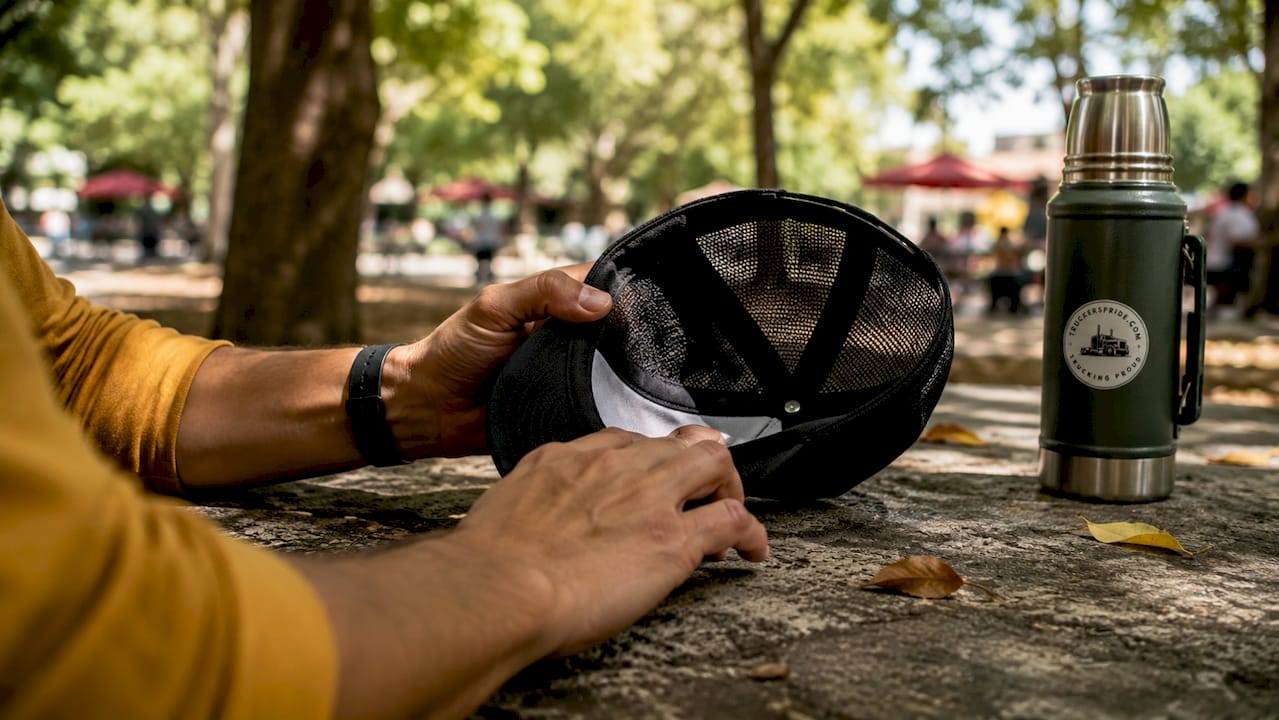
Construction quality separates collectible pieces from commodity items. The blank itself matters enormously. The Richardson 112 is the industry standard for structured, collectible trucker hats. Its shape retention and premium feel make it the preferred base for serious limited-edition work. Nine out of ten orders at Griwolfe use the Richardson 112 across patch types.
Patch material is another insider signal. Leather patches on structured hats indicate premium intent. PVC patches suggest durability for working wear. Woven patches carry a softer, more vintage feel. The color and design of a mascot patch, such as a bulldog in a specific colorway, can indicate production era and rarity. Collectors read these details the way others read a wine label.
Here is what to look for when evaluating a limited-edition piece:
- Blank quality. Structured hats built on recognized blanks like the Richardson 112 signal serious production intent.
- Patch material. Leather patches indicate premium collectible status. PVC and woven patches serve different aesthetic and durability purposes.
- Mascot documentation. Designs tied to real companies or real trucking history carry more weight than invented imagery.
- Run size disclosure. Legitimate limited editions state their production numbers clearly.
- Construction finish. Stitching quality, snap closures, and mesh panel weight all reflect the care put into the piece.
Pro Tip: When collecting limited-edition trucker hats, check the inside label for blank manufacturer information. A Richardson 112 base with a leather patch and a documented mascot history is the gold standard for serious collectors.
How does scarcity create value around limited-edition trucker gear?
Scarcity is not an accident in limited-edition trucker apparel. It is a deliberate design choice. Brands that restrict production runs to as few as 144 units create genuine collector demand. That number is not arbitrary. It reflects the economics of small-batch production and the psychology of exclusivity.
When a piece is genuinely rare, it rewards the enthusiast who pays attention. The casual buyer misses the drop. The dedicated fan gets the piece. That dynamic builds loyalty and community in a way that mass production never can. Collectors talk about their finds. They trade information about upcoming drops. The apparel becomes a reason to connect.
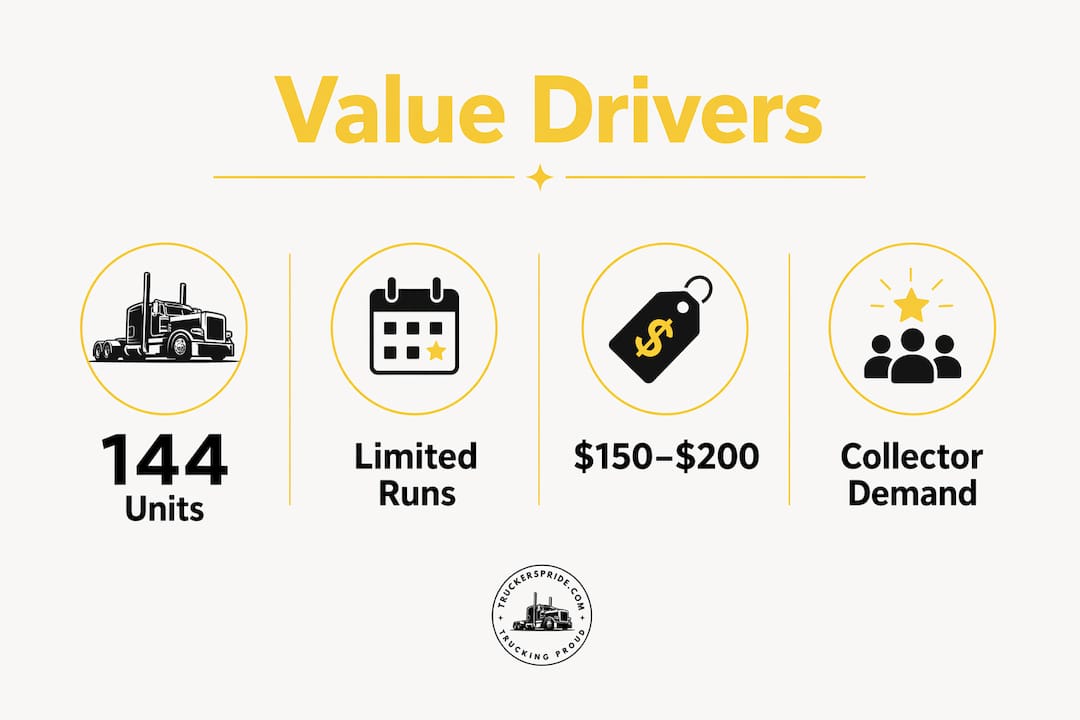
Authentic promotional apparel from defunct companies commands $150–$200 on the collector market. Reproductions of the same designs, even well-made ones, lack that value entirely. The difference is provenance. A hat that was actually worn by a driver in 1974, given out by a real fuel company, carries a story that cannot be manufactured.
The price range across the limited-edition trucker apparel market reflects this spectrum clearly:
| Category | Price Range | Value Driver |
|---|---|---|
| Vintage promotional caps (1970s) | $50–$200 | Authentic provenance, defunct company origin |
| Deadstock authentic caps | $150–$200 | Unworn condition, documented history |
| Premium modern collaborations | $129.99–$1,699.99 | Brand heritage, limited production, dual branding |
| Small-batch collector drops | Varies by run size | Scarcity, community recognition |
The Mack Trucks and Wrangler collaboration illustrates how dual branding amplifies cultural resonance. A limited-edition denim trucker jacket co-branded with the Mack Bulldog, an icon since 1932, carries the weight of two heritage brands in a single piece. That is not just apparel. That is a wearable piece of American industrial history.
What types of limited-edition trucker apparel do collectors seek?
The collector market for trucker branded gear spans several distinct categories, each with its own appeal and price dynamics. Understanding these types helps enthusiasts make informed decisions about what to pursue and what to wear.
- Vintage promotional caps. The original limited-edition trucker item. Given away by fuel companies, tire brands, and agricultural suppliers in the 1960s and 1970s. Authentic examples from real businesses are the most sought-after pieces in the collector market.
- Premium collaboration jackets. Co-branded pieces from heritage partnerships like Mack x Wrangler or Wrangler x Avirex. These combine brand equity with limited production to create high-value collectibles.
- Limited-edition tees and hoodies. Small-batch graphic tees and hoodies featuring documented trucking imagery. Wearable daily but produced in numbers low enough to retain collector interest.
- Structured patch hats. Modern limited-edition caps built on premium blanks with leather or woven patches. The Richardson 112 base with a mascot patch is the most recognized format among serious collectors.
- Suede and denim trucker jackets. Heritage-style outerwear that references the workwear origins of trucker fashion. Premium construction and limited runs make these long-term wardrobe investments.
Construction quality determines wearability and longevity. A piece built to last honors the “buy it for life” standard that serious collectors apply. Apparel that falls apart after a season is not a collectible. It is a disappointment.
How can enthusiasts wear limited-edition trucker gear with respect?
Wearing limited-edition trucker apparel well requires more than putting on a hat. It requires understanding what the piece represents. Authentic storytelling through apparel connects more deeply with drivers and their families than nostalgia bait ever will. A piece worn with knowledge of its history becomes a conversation starter. A piece worn without that context is just clothing.
Combining vintage and contemporary pieces works when the pairing is intentional. A 1970s promotional cap worn with a modern heritage-inspired tee from a brand like Truckerspride creates a coherent visual story. The vintage piece anchors the look in history. The contemporary piece shows that the tradition is alive and evolving.
Gender-neutral silhouettes and sustainable production methods align naturally with the trucker apparel ethos. The original workwear was built for function, not fashion. Modern limited-edition pieces that honor that principle, using durable materials and honest construction, carry the same spirit forward. Enthusiasts who understand this become cultural ambassadors, not just consumers.
Pro Tip: Avoid pieces that use generic truck imagery with no documented origin. The best limited-edition trucker apparel references real history. If a brand cannot tell you the story behind its design, the design probably does not have one.
Key Takeaways
Limited-edition trucker apparel functions as a cultural artifact, a collector asset, and a community signal, making authenticity and scarcity the two non-negotiable standards for any serious piece.
| Point | Details |
|---|---|
| Scarcity drives real value | Production runs as small as 144 units create genuine collector demand and community loyalty. |
| Design authenticity is verifiable | Richardson 112 blanks, leather patches, and documented mascots are the measurable signals of a legitimate piece. |
| Provenance separates collectibles | Authentic vintage caps from real defunct companies command $150–$200; reproductions hold no collector value. |
| Heritage collaborations amplify significance | Dual-branded pieces like Mack x Wrangler carry the weight of two heritage identities in a single garment. |
| Wearing with knowledge matters | Enthusiasts who understand a piece’s history become cultural ambassadors, not just wearers. |
Why authentic design is the only standard worth keeping
I have spent years watching the trucker apparel market split into two very different directions. One direction chases nostalgia with generic imagery and mass production dressed up as limited editions. The other direction does the harder work: researching real company histories, commissioning designs tied to documented mascots, and restricting production to numbers that actually mean something.
The second direction is the only one worth respecting. Trucker culture is not a costume. It represents the discipline and quiet pride of people who drive through the night so the rest of the country wakes up to full shelves. When a piece of apparel honors that reality with genuine design and honest scarcity, it earns its place in a collection. When it exploits that reality with stock imagery and inflated “limited edition” claims, it disrespects the community it pretends to celebrate.
What I find most compelling about the collector culture around trucker apparel is how seriously enthusiasts take authenticity. They check blank manufacturers. They research mascot histories. They know the difference between a Richardson 112 and a generic foam-front cap. That level of engagement is not obsessive. It is respectful. It says that the history behind the piece matters as much as the piece itself.
Truckerspride understands this standard. The brand prints locally in North America, uses authentic trucking imagery, and builds pieces designed to last. That is not a marketing claim. It is a commitment to the same values that made the original promotional caps worth collecting in the first place.
— Sylvain
Truckerspride’s collection built for drivers who know the difference
Truckerspride designs apparel for professional drivers and trucking enthusiasts who understand what authentic means. Every piece reflects the pride, discipline, and road-tested resilience of the trucking community.

The Pride in Every Mile bundle brings together a hoodie, tee, and cap in a curated set that honors trucking culture with honest design and North American production. For drivers who want a single piece that speaks clearly, the everyday trucker cap delivers authentic trucking pride in a structured, wearable format. Truckerspride prints locally, ships fast, and builds gear that holds up mile after mile. That is the standard the trucking community deserves.
FAQ
What is the role of limited-edition trucker apparel in trucking culture?
Limited-edition trucker apparel serves as a cultural artifact and identity symbol, honoring the working-class heritage of professional drivers through authentic design and deliberate scarcity.
What types of limited-edition trucker apparel are most collectible?
Vintage promotional caps from defunct companies, premium collaboration jackets, and small-batch structured patch hats built on blanks like the Richardson 112 are the most sought-after categories among serious collectors.
How do collectors identify authentic limited-edition trucker hats?
Collectors look for premium blanks like the Richardson 112, leather or woven patches with documented mascot histories, and disclosed production run numbers as the primary signals of authenticity.
Why do authentic vintage caps hold more value than reproductions?
Authentic 1970s promotional caps from real businesses carry documented provenance and genuine history, commanding $150–$200, while mass-produced reproductions hold no meaningful collector value.
How does scarcity affect the value of limited-edition trucker gear?
Restricting production to small runs, sometimes as few as 144 units, creates genuine collector demand, rewards dedicated enthusiasts, and builds community around each drop.