

Professional trucking dress code, or workwear discipline as veterans call it, is defined by three non-negotiable criteria: comfort for long sedentary shifts, durability for active outdoor duties, and compliance with safety standards like EN ISO 20471. First trucking job clothing best practices start with understanding that what a driver wears directly affects physical health, site access, and first impressions. New drivers also face real constraints: limited sleeper berth storage, irregular laundry access, and varying weather across routes. Getting the wardrobe right from day one saves money, prevents injuries, and builds the kind of quiet confidence that carries a driver through the first hard year.
1. How to build a versatile starter wardrobe for your first trucking job
A starter wardrobe for new truckers works best when it follows a modular layering strategy. Modular means each piece serves more than one purpose and layers with others to handle temperature swings from a warm dock in Texas to a cold morning in Minnesota.
The core items every new driver needs:
- Moisture-wicking base layers (3–4 shirts): These pull sweat away from skin during loading and unloading. Cotton holds moisture; synthetic blends or merino wool release it.
- Durable work pants (3 pairs): Reinforced-knee cargo pants or heavy-duty jeans handle both cab sitting and physical site work.
- Polo shirts or neat T-shirts (4–5): These cover orientation days, weigh scales, and shipper meetings where a clean appearance matters.
- A mid-layer fleece or zip-up hoodie: Temperatures inside docks and warehouses vary widely. A mid-layer solves that without bulk.
- A waterproof outer shell: Rain does not stop deliveries. A packable rain jacket takes almost no space.
Packing 7–10 days worth of clothes is the standard recommendation for balancing laundry needs against sleeper berth storage. That number gives a driver enough rotation to go a full week without laundry while keeping the cab organized.
Pro Tip: Prioritize function over quantity. Ten versatile pieces outperform twenty single-purpose items every time. A driver who packs light moves faster and lives cleaner.
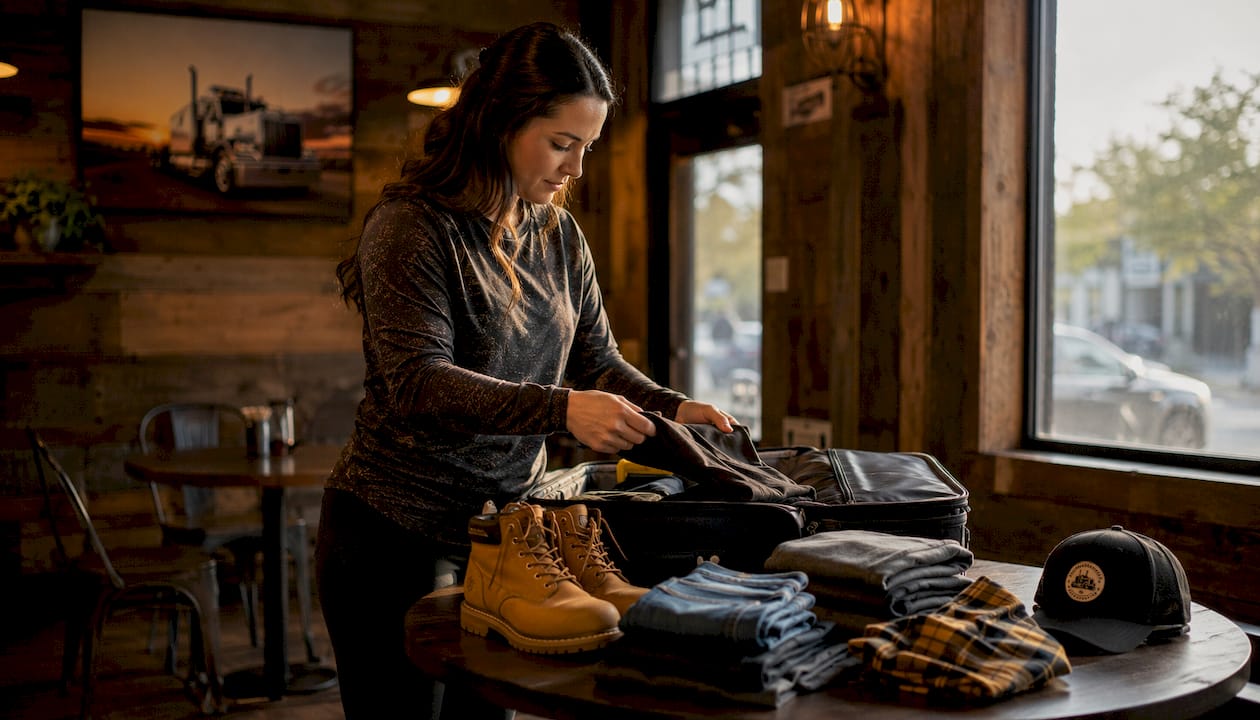
2. What footwear and safety gear are critical for new truck drivers
Footwear is the most underestimated category in a new driver’s gear list. Quality work boots with ankle support reduce injury risk and protect long-term physical health in a job that demands constant standing, climbing, and walking on uneven surfaces.
The non-negotiable footwear features:
- Steel-toed protection: Required at most loading docks and during pre-trip inspections at many carriers.
- Slip-resistant soles: Dock plates, wet pavement, and oily surfaces are daily realities.
- Ankle support: Hours of stepping in and out of a cab add up. Weak ankle support leads to chronic strain.
Beyond boots, high-visibility clothing meeting EN ISO 20471 is mandatory or strongly required at industrial sites. This standard defines the reflective tape placement and fluorescent background material needed for a driver to be seen by moving equipment. Non-compliance can mean denied access to a loading dock. Truckerspride’s guide on high-vis fleet gear breaks down the certified options worth considering.
Additional safety accessories worth packing:
- Work gloves for securing loads and handling straps
- Safety glasses for dusty or industrial delivery environments
- A basic hard hat if routes include construction or lumber yards
Pro Tip: Keep two separate footwear sets: one pair of comfortable driving shoes for the cab, and one pair of steel-toed safety boots for site work. Separating these two sets extends the life of both pairs significantly.
3. How to balance comfort with durability for long-haul trucking apparel
Long-haul driving is a sedentary job interrupted by physically demanding bursts. A driver sits for hours, then climbs under a trailer, walks a dock, or secures a load in cold wind. Effective trucker clothing balances sedentary comfort with practical ruggedness, and favoring one at the expense of the other creates real problems.
Fabric choices drive this balance. Stretch-woven fabrics, like those with a small percentage of elastane blended into cotton or polyester, move with the body without restricting circulation during long sitting periods. Stiff denim or rigid work pants cause pressure points after four hours in a seat.
Key comfort and durability principles:
- Breathable fabrics: Polyester-cotton blends or performance synthetics regulate temperature better than pure cotton in a heated cab.
- Layering for temperature control: A base layer, mid-layer, and outer shell system lets a driver adapt in minutes without carrying separate “warm weather” and “cold weather” wardrobes.
- Moisture-wicking base layers: These prevent the discomfort of sweat buildup during active work and keep the cabin environment cleaner.
- A dedicated dirty clothes bag: Separating worn clothes from clean ones in a confined sleeper berth is a discipline that pays off in hygiene and mental clarity.
The functional trucking apparel guide for 2026 covers specific fabric standards worth reviewing before making purchases.
4. Common mistakes new truck drivers make with work clothing
New drivers make predictable clothing errors. Knowing them in advance prevents wasted money and avoidable discomfort.
-
Overpacking the cab. Cab storage is roughly the size of a walk-in closet. Overpacking restricts that space and creates clutter that affects sleep quality and daily organization. The fix is a disciplined laundry routine and a firm limit on clothing volume.
-
Ignoring safety standards. Drivers who skip high-vis gear or arrive without steel-toed boots get turned away from sites. EN ISO 20471 compliance is not optional at many industrial customer locations. Check route requirements before the first dispatch.
-
Choosing only comfort or only ruggedness. Sweatpants are comfortable but unprofessional and impractical on a dock. Heavy canvas work pants are durable but punishing during a 10-hour drive. The right answer is always both.
-
Underpreparing for orientation. Business-casual attire during orientation is the standard expectation. Jeans or khakis with a polo or clean T-shirt make the right impression. Flip-flops and athletic shorts signal that a driver has not taken the role seriously.
-
Buying cheap boots. Boots are the single item where cutting costs causes the most physical damage. Inferior ankle support and thin soles lead to fatigue and injury over months of daily use.
-
Skipping dark colors. Light-colored clothing shows grease, oil, and dock grime immediately. Dark colors suit trucking work for practical reasons, not just aesthetics.
5. How to adapt your trucking wardrobe over time
What works on day one rarely works perfectly by month three. Routes change, seasons shift, and a driver learns what actually gets worn versus what takes up space. A modular, flexible wardrobe strategy handles this evolution better than a static bulk approach.
Seasonal adaptation principles:
- Winter routes: Add thermal base layers and insulated work gloves. A heavyweight hoodie or insulated vest replaces the light mid-layer.
- Summer routes: Swap heavyweight fabrics for lightweight performance shirts. Sun protection matters on routes through open desert or plains.
- Rain-heavy regions: A packable waterproof jacket earns its space every single week.
- Mixed freight routes: Drivers hauling hazmat, lumber, or food-grade loads often face site-specific PPE requirements. Check those requirements before the season starts.
The seasonal clothing checklist for new truckers provides a route-by-route breakdown worth bookmarking.
| Season | Key additions | Items to reduce |
|---|---|---|
| Winter | Thermal base layers, insulated gloves, heavyweight hoodie | Light shorts, thin socks |
| Summer | Lightweight performance shirts, sun cap, UV-protective sleeves | Heavy flannels, thick mid-layers |
| Rainy season | Packable waterproof jacket, waterproof boot covers | Canvas-only outer layers |
| Mixed/transitional | Zip-up fleece, versatile work pants | Single-purpose seasonal items |
Reassessing the wardrobe after the first three months on the road is a habit that experienced drivers develop naturally. The first months reveal what actually gets used and what just adds weight.
Key takeaways
First trucking job clothing best practices require balancing safety compliance, comfort for long shifts, and durable fabrics that hold up across seasons and site demands.
| Point | Details |
|---|---|
| Pack 7–10 days of clothes | This range balances laundry access with limited sleeper berth storage. |
| Meet EN ISO 20471 standards | High-vis compliance determines site access at industrial docks and fleet yards. |
| Separate driving and safety footwear | Two dedicated pairs extend gear life and improve daily comfort. |
| Use modular layering | Versatile layers adapt to climate shifts without overpacking the cab. |
| Dress business-casual for orientation | Clean jeans, a polo, and steel-toed boots make the right first impression. |
What I’ve learned about gear after years watching drivers start out
The drivers who struggle most in their first year are not the ones who picked the wrong route or the wrong carrier. They are the ones who showed up unprepared in the small ways. Worn-out boots by month two. No rain jacket. A cab so packed with clothes they cannot find anything. These are not dramatic failures. They are slow drains on comfort and discipline.
The comfort-versus-safety trade-off is real, but it is also a false choice most of the time. A well-chosen pair of stretch-woven work pants is both comfortable for a 10-hour drive and appropriate on a loading dock. The problem is that new drivers often buy for one scenario and forget the other exists.
Laundry discipline is something nobody talks about enough. A dedicated bag for dirty clothes, a consistent stop schedule, and a firm 7–10 day clothing rotation are not glamorous habits. They are the habits that keep a driver healthy, organized, and professional across a full year on the road.
Invest in quality gear early. The cost of replacing cheap boots twice is higher than buying one good pair. The same logic applies to every item in the wardrobe. Quality built for trucking holds up. Generic gear does not.
— Sylvain
Gear built for drivers who take the road seriously
New drivers deserve clothing that was designed for the job, not adapted from it. Truckerspride builds apparel specifically for the demands of long-haul trucking: durable fabrics, comfortable fits, and designs that carry the pride of the profession.

The Everyday Essentials Bundle includes a hoodie, tee, and cap built for daily wear on and off the road. It is a practical starting point for any new driver building a wardrobe from scratch. The premium pullover hoodie works as a reliable mid-layer through every season, and the everyday trucker cap handles sun protection on long hauls through open country. Truckerspride prints locally in North America, which means faster delivery and consistent quality from the first order.
FAQ
What should a new truck driver wear on the first day of orientation?
Business-casual attire is the standard for orientation: clean jeans or khakis with a polo or neat T-shirt. Steel-toed boots are often required for training and inspection walks.
How many days of clothing should a new trucker pack?
Packing 7–10 days of clothes balances laundry access with the limited storage space in a sleeper berth. More than that creates clutter; less creates stress.
Is high-visibility clothing required for truck drivers?
High-vis clothing meeting the EN ISO 20471 standard is mandatory or strongly required at most industrial loading docks and fleet yards. Non-compliance can result in denied site access.
What type of boots do truck drivers need?
Truck drivers need boots with steel-toed protection, slip-resistant soles, and ankle support. These features reduce injury risk during daily climbing, walking, and dock work.
Why should new drivers separate driving shoes from safety boots?
Keeping two dedicated footwear sets prevents premature wear on both pairs. Driving shoes prioritize comfort for long cab hours, while safety boots handle the physical demands of site work.