

A trucker hat is defined as a structured cap with a foam or fabric front panel and a ventilated mesh back, designed to carry both identity and function through long hours on the road. Choosing hats that represent the trucking lifestyle means selecting gear that does more than shade your eyes. The right hat signals who you are, holds up through heat and miles, and fits well enough that you forget it’s there. This guide covers the features, fit, decoration, and sun protection that separate a hat worth wearing from one that ends up on the floor of the cab.
What are the key features to look for in truck driver hats?
The structured front panel is the most important feature on any trucker hat. It holds its shape through heat, sweat, and storage, keeping logos and slogans crisp after months of daily wear. A front panel made from foam or stiff woven fabric resists sagging in ways that soft unstructured caps simply cannot match.
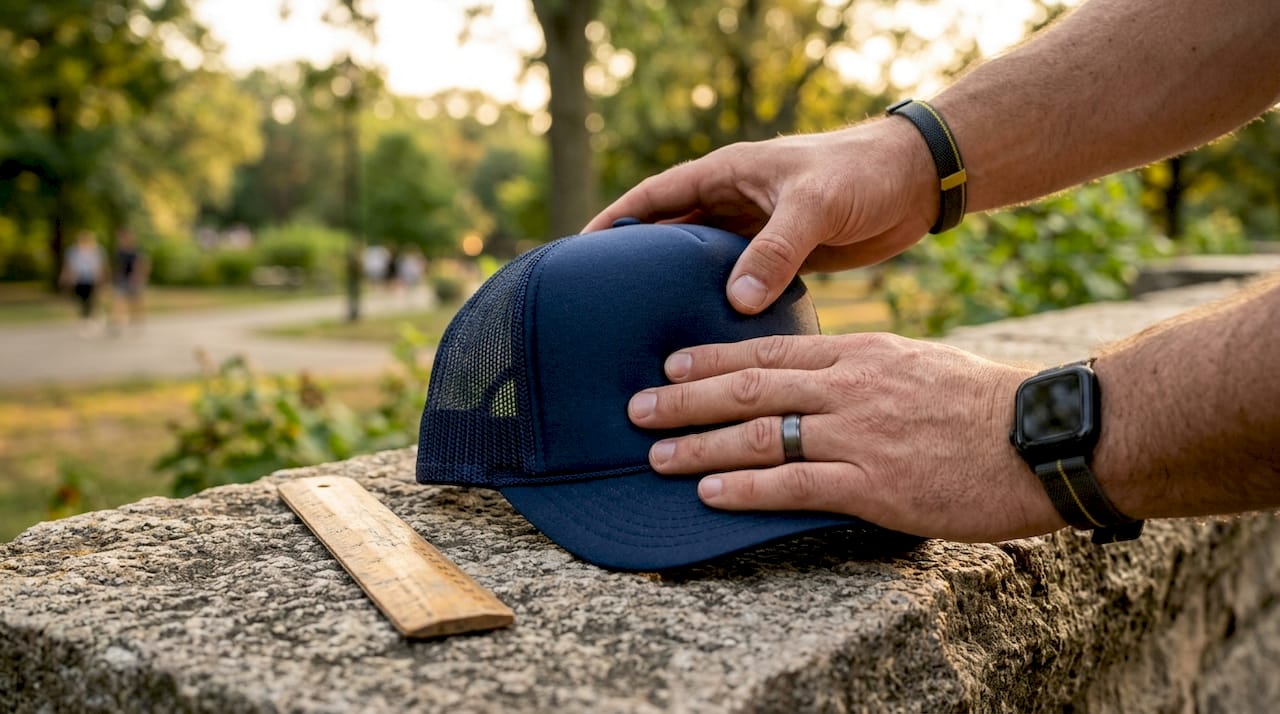
The ventilated mesh back is what separates a trucker hat from every other cap style. It creates airflow across the crown, pulling heat away from the scalp during long hauls in warm weather. Without that mesh, heat builds up fast, and comfort drops with it.
Key features to evaluate before buying any trucker hat:
- Structured front panel: Foam or stiff fabric maintains shape and supports logo display without warping.
- Mesh back: Six-panel or five-panel mesh construction allows air to circulate and reduces sweat buildup.
- Snapback or adjustable strap: A plastic snapback or fabric strap lets drivers dial in the fit without needing a specific hat size.
- Brim length: A brim of at least 2.5 inches provides meaningful sun coverage for the face and eyes.
- Material breathability: Cotton-blend fronts breathe better than pure polyester, especially in summer heat.
Pro Tip: Squeeze the front panel before buying. A panel that collapses easily will warp after a few weeks of wear and make any logo look sloppy.
How to find the right fit and comfort for hats symbolizing trucking pride
A hat that fits well disappears. A hat that fits poorly is all you think about. Getting the fit right matters more than any logo or color choice, because a driver who is constantly adjusting a hat is a driver who is distracted.
Follow these steps to find the right fit:
- Measure your head. Wrap a soft tape measure around your head about 1 inch above your eyebrows. That number is your baseline for comparing sizing charts.
- Check crown comfort. Put the hat on and press gently on the crown. It should rest without pinching the sides of your head or sitting too loosely on top.
- Check brim position. The brim should sit just above your eyebrows, not tilted back or pushed down over them.
- Test stability. Give your head a gentle shake. A well-fitted hat stays in place without gripping too tight.
- Adjust the snapback. Move the closure one notch at a time until the hat sits level and secure.
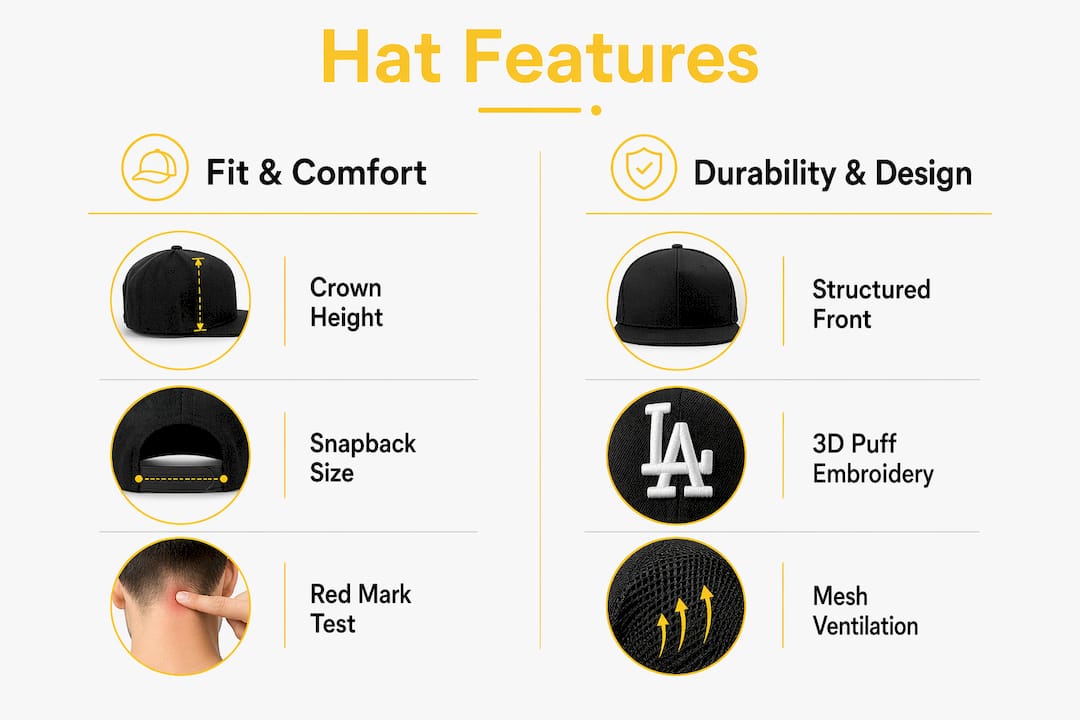
Crown height matters more than most drivers realize. A crown that is too tall catches wind at highway speed and shifts during mirror checks. A crown that is too low can press on the forehead during long hours in the seat. The ideal crown height allows full head movement without discomfort, which is critical for the constant mirror checks and cab adjustments that define a driver’s day.
Pro Tip: If the hat leaves a red mark after 20 minutes, it is too tight. Go up one snapback notch and test again.
Which decoration methods best reflect trucking lifestyle durability and identity?
The logo on a trucker hat is a statement. How that logo is applied determines how long the statement lasts. Two methods dominate the market: embroidery and flat ink printing. They are not equal.
| Feature | 3D puff embroidery | Flat ink printing |
|---|---|---|
| Lifespan | 5–7 years | 1–2 years |
| Durability on curved surfaces | Excellent | Poor |
| Crack resistance | High | Low |
| Visual depth | Raised, dimensional | Flat |
| Best for | Long-term identity wear | Short-term or budget use |
Flat ink, specifically plastisol-based screen printing, lacks the elasticity needed to survive repeated flexing on a foam front panel. The ink develops spider-web cracks after exposure to heat and movement. That cracking is not a sign of a cheap hat. It is a structural limitation of flat ink on curved, rigid surfaces.
“Embroidery becomes part of the hat’s architecture. Flat ink sits on top of it.” This distinction explains why embroidered trucking caps outlast printed ones by years, not months.
3D puff embroidery raises the design off the surface, giving logos a bold, dimensional look that holds up through washing, sun exposure, and daily wear. For a hat that represents trucking pride over the long haul, embroidery is the clear choice.
What practical sun protection and heat management features should truck drivers prioritize?
Sun exposure is a real occupational concern for truck drivers. Hours behind glass do not eliminate UV risk, and time spent outside during loading, fueling, or inspections adds up. A hat that manages heat and blocks sun is not a comfort accessory. It is a health tool.
The mesh back ventilation on a trucker hat directly reduces heat buildup in the crown. Heat stress is influenced by modifiable factors including cooling access and breathable clothing, and a well-ventilated hat is one of the simplest interventions a driver can make. Clinical guidance on heat illness prevention consistently points to airflow and UV protection as front-line strategies for outdoor workers.
Brim length and fabric rating both contribute to sun protection. The Outdoor Research Astroman Sun Cape Cap, for example, offers UPF 30 protection with a 2.6-inch bill, balancing coverage with breathability. That combination of a rated fabric and a wide brim is the standard worth measuring other hats against.
| Feature | What to look for | Why it matters |
|---|---|---|
| Mesh back panels | Full rear coverage | Reduces crown heat buildup |
| Brim length | 2.5 inches or more | Shades face and eyes |
| UPF fabric rating | UPF 30 or higher | Blocks UV radiation |
| Crown ventilation eyelets | 2 or more | Adds airflow at the top |
Balancing identity and health protection is not a compromise. A hat with a bold embroidered logo on a structured front and a full mesh back delivers both. Drivers do not have to choose between looking like a trucker and staying cool.
How to evaluate and avoid common mistakes when choosing trucking lifestyle hats
Most hat regrets come from skipping the basics. A driver buys a hat that looks right in a photo and discovers within a week that it pinches, fades, or loses its shape. These mistakes are avoidable.
Follow this process before committing to any hat:
- Test the front panel stiffness. Press it with two fingers. It should resist, not fold.
- Check the mesh quality. Thin, loosely woven mesh tears faster and ventilates worse than tightly constructed panels.
- Read the decoration method. If the product listing says screen print or flat ink, expect a shorter lifespan on a foam front.
- Verify the closure type. Snapback closures offer more precise adjustment than elastic bands, which stretch out over time.
- Look for North American printing. Brands that print locally, like Truckerspride, tend to use better quality control processes and faster turnaround, which reflects in the finished product.
Pro Tip: Search for hats described as “foam front” or “structured front” rather than just “trucker hat.” That specific language filters out the unstructured caps that look similar but perform differently.
Avoiding inferior materials is not about spending more. It is about knowing what to look for. A hat that costs a little more and lasts five years is a better investment than one that fades in a season.
Key takeaways
Choosing hats that represent the trucking lifestyle requires structured construction, proper fit, durable embroidery, and ventilation features that protect health and express identity over years of wear.
| Point | Details |
|---|---|
| Structured front panel | Foam or stiff fabric fronts hold logo shape and resist warping through daily wear. |
| Fit before style | Measure head circumference and use the 5-second test before committing to any hat. |
| Embroidery over flat ink | 3D puff embroidery lasts 5–7 years; flat ink typically cracks within 1–2 years. |
| Ventilation and sun protection | Mesh backs and UPF-rated brims reduce heat stress and UV exposure on the road. |
| Avoid common mistakes | Test panel stiffness, mesh quality, and closure type before purchase. |
Why the hat on your head says more than you might think
There is something honest about a trucker hat. It does not pretend to be anything other than what it is. A structured front, a mesh back, a logo that means something to the person wearing it. That simplicity is part of why drivers have worn them for decades.
What I have noticed, watching drivers choose hats and then wear them for years, is that the ones who choose well tend to think about it the same way they think about their rigs. They want something that holds up. They want something that represents them accurately. They are not interested in flash that fades.
The mistake most people make is treating the hat as an afterthought. They grab whatever is available, skip the fit check, and end up with something that sits wrong or falls apart inside a year. The drivers who get it right treat the hat as part of their kit. They check the construction. They pick embroidery over printing. They make sure it fits before they commit.
A hat built over miles of thought lasts longer than one picked in a hurry. That is true of most things in trucking, and it is certainly true of the cap on your head.
— Sylvain
Truckerspride hats built for the road and the pride behind it

Truckerspride designs trucker hats specifically for drivers who spend real time behind the wheel. Every hat in the lineup features the structured front panels and ventilated mesh backs that long-haul driving demands. The embroidery is built to last, and the fit options cover a wide range of head sizes through adjustable snapback closures. Truckerspride prints locally in North America, which means tighter quality control and faster delivery than overseas alternatives. For drivers who want a hat that holds up as long as their commitment to the road, the full collection is available at Truckerspride.
FAQ
What makes a hat a true trucker hat?
A trucker hat is defined by its structured foam or fabric front panel and ventilated mesh back. These two features distinguish it from baseball caps and snapbacks.
How should a trucker hat fit for long-haul driving?
The crown should rest without pinching, the brim should sit just above the eyebrows, and the hat should stay in place during gentle head movement. Adjust the snapback one notch at a time for the right fit.
Is embroidery better than printing on trucker hats?
Embroidery lasts 5–7 years on trucker hats, while flat ink printing typically degrades within 1–2 years due to cracking on curved foam surfaces. Embroidery is the better choice for long-term wear.
Do trucker hats provide real sun protection?
Hats with UPF-rated fabric and brims of 2.5 inches or more provide meaningful UV protection. Mesh backs also reduce heat buildup, which lowers the risk of heat stress during outdoor exposure.
What is the most common mistake when buying a trucking hat?
Skipping the fit test is the most common error. A hat that pinches or shifts during head movement becomes a distraction on the road and rarely gets worn consistently.