

Budgeting apparel when starting a trucking career means choosing affordable, durable, and multi-purpose clothing that supports long haul comfort and safety outside the cab. New drivers face a real financial challenge: startup costs are steep, sleeper space is limited, and the road demands clothing that works in two very different environments. Getting the wardrobe right from the start prevents costly emergency purchases down the line. The right approach combines moisture-wicking fabrics, high-visibility gear, and a smart layering system to cover every condition without overspending.
What essential clothing items should you invest in when starting trucking on a budget?
The foundation of any affordable trucking outfit starts with a short list of high-utility items. A starter kit includes moisture-wicking shirts, durable jeans, waterproof rain jackets and pants, insulated gloves, thermal wear, hats, sunglasses, and sunscreen. Each item earns its place by serving multiple conditions and environments.
Core apparel essentials for new truck drivers:
- Moisture-wicking shirts: Synthetic blends or merino wool pull sweat away from the skin during long hours in the cab. They dry faster than cotton, which matters when laundry access is limited.
- Durable work pants: Cargo pants or reinforced jeans with stretch panels hold up through repeated wear and outdoor tasks. Avoid stiff denim that restricts movement during climbing and loading.
- Closed-toe work boots: CDL training checklists require sturdy closed-toe boots for outdoor inspection and backing practice. Good boots also protect the feet during dock work and roadside stops.
- Rain gear: A waterproof jacket and pants set handles unexpected weather without adding bulk. Look for packable options that compress into a small bag.
- Thermal base layer: A lightweight thermal top and bottom adds warmth under existing clothing without requiring a separate heavy coat.
- High-visibility vest or jacket: High-visibility clothing compliant with EN ISO 20471 is mandatory or strongly recommended at loading docks and during roadside inspections.
- Accessories: Wool or synthetic blend socks, insulated gloves, a sun-blocking cap, and UV-protection sunglasses round out the kit.
Pro Tip: Buy two or three of the same moisture-wicking shirt in different colors. Identical items simplify laundry sorting and reduce decision fatigue on the road.
The goal is a wardrobe where every item works hard. Clothing that handles both the cab and the dock cuts the total number of pieces needed and keeps spending low.
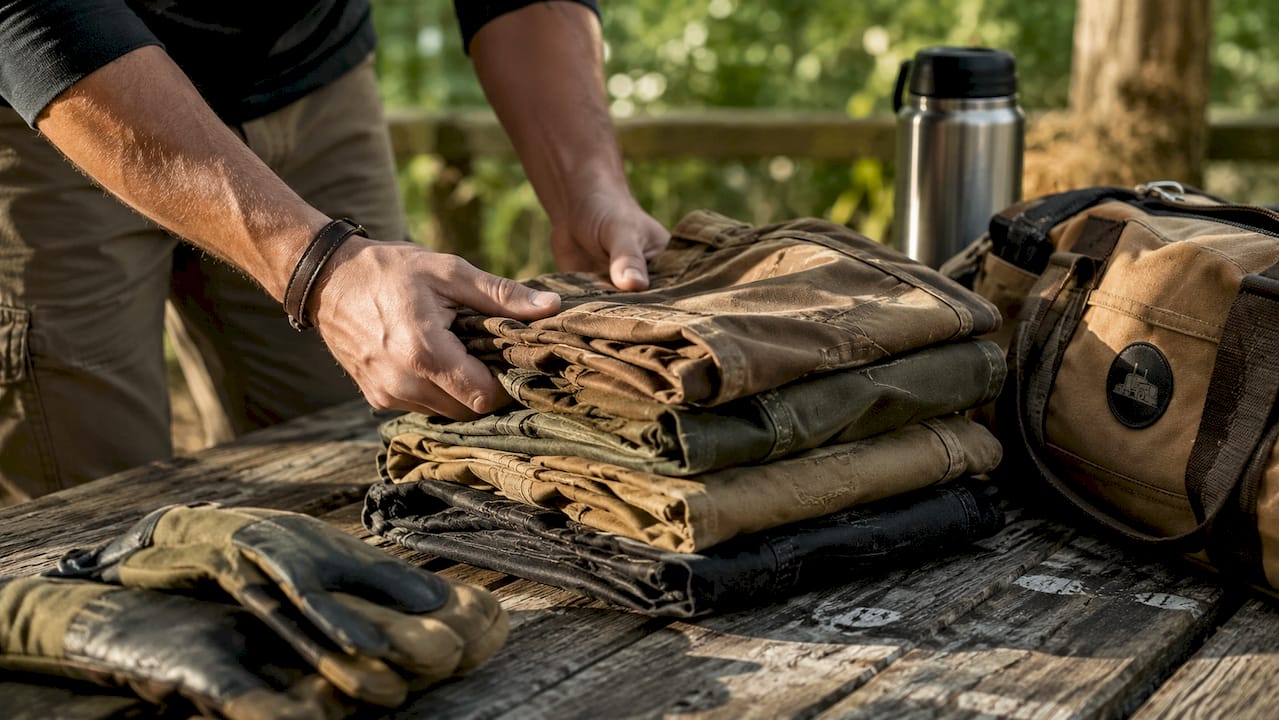
How to build a practical clothing rotation for trucking
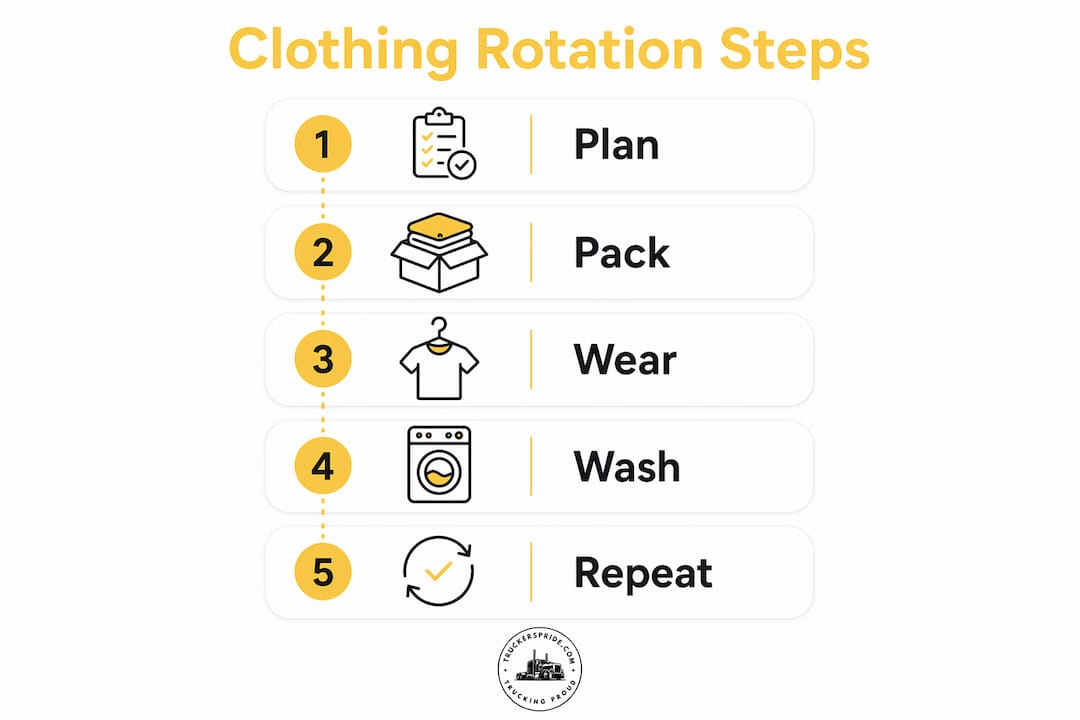
A disciplined clothing rotation is one of the most underrated trucking career wardrobe tips. Most new drivers overestimate how much clothing they need. Packing for 1–2 weeks is optimal because drivers can access laundry facilities during longer trips, reducing storage needs and initial investment. That means fewer items to buy upfront and less clutter in a sleeper cab.
A practical rotation system works like this:
- Count your days between laundry stops. Most long-haul routes pass a truck stop with laundry facilities every 5–7 days. Plan clothing quantities around that window, not around worst-case scenarios.
- Pack shirts and socks in sets of 7–10. These items wear out fastest and need the most frequent washing. Having 7–10 of each covers a full week without running short.
- Pack 3–4 pairs of pants. Pants last longer between washes than shirts. Three to four pairs cover a 10-day stretch comfortably.
- Use layering instead of extra jackets. A base layer, a midlayer fleece, and a weather shell replace three separate coats. This system adapts to temperature swings without adding bulk.
- Schedule laundry during mandatory rest periods. The Federal Motor Carrier Safety Administration (FMCSA) requires rest breaks. Using that downtime for laundry keeps the rotation running without wasting driving hours.
Pro Tip: Pack clothing in compression bags. They cut the volume of soft items by roughly half and keep the sleeper cab organized.
New drivers often overpack because they assume laundry access is unreliable. The reality is that planning laundry stops into a route eliminates that problem entirely. Fewer clothes means less money spent upfront and more room in the cab.
Budgeting tips to avoid emergency apparel purchases
Emergency apparel purchases at truck stops are expensive. A basic rain jacket at a truck stop can cost two to three times what the same item costs at a general retailer like Walmart, Target, or Amazon. Proper planning prevents that kind of spending.
Key strategies for keeping the clothing budget under control:
- Build a cash buffer before the first trip. An owner-operator startup guide recommends having $15,000–$25,000 in accessible cash beyond the down payment to cover emergency costs, including apparel. Even company drivers benefit from a personal buffer of a few hundred dollars set aside for clothing needs.
- Buy seasonally before the season starts. Purchase cold-weather gear in september or october before prices rise. Stock up on lightweight layers in february or March before spring routes begin. Buying ahead of demand keeps costs low.
- Choose multi-season items over single-use specialty gear. A mid-weight waterproof jacket works from april through november across most U.S. routes. Buying one versatile piece beats buying three specialized ones.
- Avoid impulse buys at truck stops. Truck stop clothing is priced for convenience, not value. If a need arises unexpectedly, wait until the next town and find a discount retailer instead.
- Prioritize durability over price alone. A $60 pair of reinforced work pants that lasts two years costs less per month than a $25 pair replaced every four months. The math favors quality when the item sees daily use.
- Start with a core kit, then add based on real experience. Many drivers buy gear they never use. Spending the first month on the road reveals what conditions actually require before committing to more purchases.
The discipline of planning apparel purchases the same way a driver plans fuel stops pays off quickly. Unplanned buys inflate the budget and rarely result in the right gear.
How does apparel balance comfort, durability, and compliance?
Truck driver apparel must solve two problems at once. Inside the cab, clothing needs to be comfortable for prolonged sitting, breathable enough to prevent overheating, and flexible enough to allow easy movement. Outside the cab, the same clothing must be durable, weather-resistant, and visible to other workers and traffic.
Workwear experts emphasize stretch fabrics, breathable blends, and layered reflective pieces for comfort and safety. That combination covers both environments without requiring two separate wardrobes.
| Requirement | Inside the cab | Outside the cab |
|---|---|---|
| Fabric | Breathable, moisture-wicking | Durable, abrasion-resistant |
| Fit | Relaxed, non-restrictive | Secure, no loose fabric |
| Visibility | Not required | High-visibility required |
| Layering | Base layer for temperature control | Midlayer plus weather shell |
| Footwear | Comfortable, supportive | Closed-toe, slip-resistant |
High-visibility compliance under EN ISO 20471 is not optional at many facilities. Adjustable, washable reflective vests reduce repeated purchases because they fit over any outfit and survive regular washing. One good vest covers the compliance requirement across multiple employers and facilities.
Breathability and stretch directly affect how long clothing lasts. Fabrics that breathe reduce sweat buildup, which breaks down fibers faster. Stretch panels prevent seam stress during climbing and bending. Both features extend the life of each garment, which lowers the long-term cost of the wardrobe.
Key Takeaways
Budgeting apparel for a trucking career requires choosing durable, multi-purpose clothing, planning a 7–14 day rotation, and buying ahead of seasonal needs to avoid costly emergency purchases.
| Point | Details |
|---|---|
| Start with a core kit | Moisture-wicking shirts, durable pants, closed-toe boots, rain gear, and a high-visibility vest cover most conditions. |
| Pack for 1–2 weeks only | A 7–14 day clothing rotation with planned laundry stops reduces upfront cost and saves sleeper space. |
| Use a layering system | A base layer, midlayer, and weather shell replace multiple jackets and adapt to changing conditions. |
| Buy before the season | Purchasing cold-weather and warm-weather gear ahead of demand prevents overpaying at truck stops. |
| Prioritize durability | Higher-quality items cost more upfront but last longer, lowering the total cost over a full year. |
What I have learned about building a trucker’s wardrobe from scratch
The most common mistake new drivers make is treating apparel as an afterthought. They budget carefully for CDL training, licensing, and equipment, then show up underprepared on day one. Closed-toe boots and durable garments worn during CDL training help avoid injuries and wear, which indirectly protects the clothing budget by extending apparel life. That lesson applies beyond training.
The second mistake is buying too much too soon. A driver who has never run a route in January does not yet know whether that route crosses the Rockies or stays in the South. Buying a full cold-weather kit before knowing the conditions wastes money. Spending the first few weeks on the road, then filling gaps based on real experience, is a smarter approach.
Layering is the insight that changes everything. A $30 thermal base layer, a $45 midlayer fleece, and a $60 waterproof shell give a driver more flexibility than a single $200 insulated coat. The three pieces work independently in mild weather and together in extreme cold. That flexibility is worth more than any single premium item.
The wardrobe a driver needs is built over miles, not assembled in a store before the first trip. Start lean, pay attention to what the road actually demands, and add pieces with intention. That is how pride in the work gets built, one practical decision at a time.
— Sylvain
Truckerspride gear built for drivers who are just getting started
Starting a trucking career with the right apparel does not require spending a lot. It requires spending wisely on gear that holds up through long hauls and demanding schedules.

Truckerspride designs apparel specifically for the trucking community, printed locally in North America for quality and faster delivery. The Everyday Essentials Bundle combines a hoodie, tee, and cap into one affordable package built for daily wear on and off the road. Each piece is comfort-tested for the specific demands of professional drivers. For drivers who want reliable, trucker-tailored basics without overpaying, Truckerspride offers a starting point that matches the values of the profession: durability, function, and quiet pride in the work.
FAQ
What clothing is essential for new truck drivers?
CDL training checklists identify closed-toe work boots, comfortable pants, a light jacket, rain gear, and sunglasses as the core items. Moisture-wicking shirts and a high-visibility vest round out the practical starter wardrobe.
How many clothes should a truck driver pack?
Packing enough clothing for 1–2 weeks is the standard recommendation because laundry facilities are available at most truck stops along major routes. Overpacking wastes sleeper space and increases upfront clothing costs.
Is high-visibility clothing required for truck drivers?
High-visibility clothing compliant with EN ISO 20471 is mandatory or strongly recommended at loading docks and during roadside inspections. A washable, adjustable reflective vest covers this requirement across most facilities without requiring a full specialized outfit.
How can new drivers avoid emergency clothing purchases?
Planning a 2-week clothing rotation, buying seasonal gear before peak demand, and avoiding truck stop impulse buys are the three most effective strategies. Keeping a small cash buffer specifically for apparel needs prevents last-minute full-price purchases.
What fabrics work best for truck driver clothing?
Moisture-wicking synthetic blends and merino wool perform best for shirts because they breathe, dry fast, and resist odor buildup. For pants, stretch-reinforced fabrics balance comfort during long drives with durability during outdoor dock and inspection work.