

Branded apparel is defined as company-logoed clothing issued to employees as part of a deliberate workforce identity program, and its role in driver retention is direct and measurable. Fleet managers who treat branded uniforms as a culture investment rather than a line-item expense see real reductions in turnover. Well-implemented programs can boost employee retention by up to 20%, with onboarding kits improving first-year retention by up to 32 percentage points. That number reflects something deeper than free gear. When a driver pulls on a company hoodie at 4:00 AM, the clothing signals that the company sees them, respects them, and expects them to stay.
How does branded apparel affect driver retention and team identity?
The impact of branded clothing on retention begins with belonging. 72% of employees state that professional branded uniforms increase their sense of belonging, and 61% feel more confident interacting with customers. Those are not soft metrics. Confidence and belonging are the two psychological anchors that keep a driver from updating their resume on a slow Tuesday.
Researchers call this “enclothed cognition.” The clothing a person wears shapes how they think about their role and their commitment to it. A driver wearing a company-branded shirt does not just look like part of a team. They start to feel like one. That shift in self-perception reduces the mental distance between “this job” and “my career.”
Tribalism matters in trucking more than most industries realize. Drivers spend long hours alone, separated from coworkers and management. Shared apparel creates a visible bond across that distance. When two drivers from the same fleet cross paths at a truck stop and recognize each other’s gear, that moment of recognition builds loyalty that no bonus structure can replicate.
- Branded apparel gives drivers a visible identity tied to the company, not just a paycheck.
- Shared gear creates informal community among drivers who rarely share physical space.
- Employees aligned with company identity are 48% more likely to stay long-term.
- Including drivers in apparel choices increases how often they actually wear the gear.
- Apparel worn beyond the workplace extends brand pride into personal life, deepening commitment.
Pro Tip: Survey drivers before ordering. Ask about preferred fits, colors, and styles. Fleets that involve drivers in the selection process see higher utilization rates and stronger emotional attachment to the gear.
The concept of trucking apparel building camaraderie is not abstract. It is the practical result of giving people something they are proud to wear.
Why does quality and fit determine whether branded apparel actually works?
Quality is where most fleet apparel programs fail. A cheap screen-printed shirt that cracks after three washes does not signal investment. It signals indifference. Employees feel more valued and loyal when apparel is embroidered and made from premium materials rather than budget alternatives. Higher perceived value raises what researchers call the “cost of leaving.” A driver who owns quality gear from a company feels something real when considering walking away.
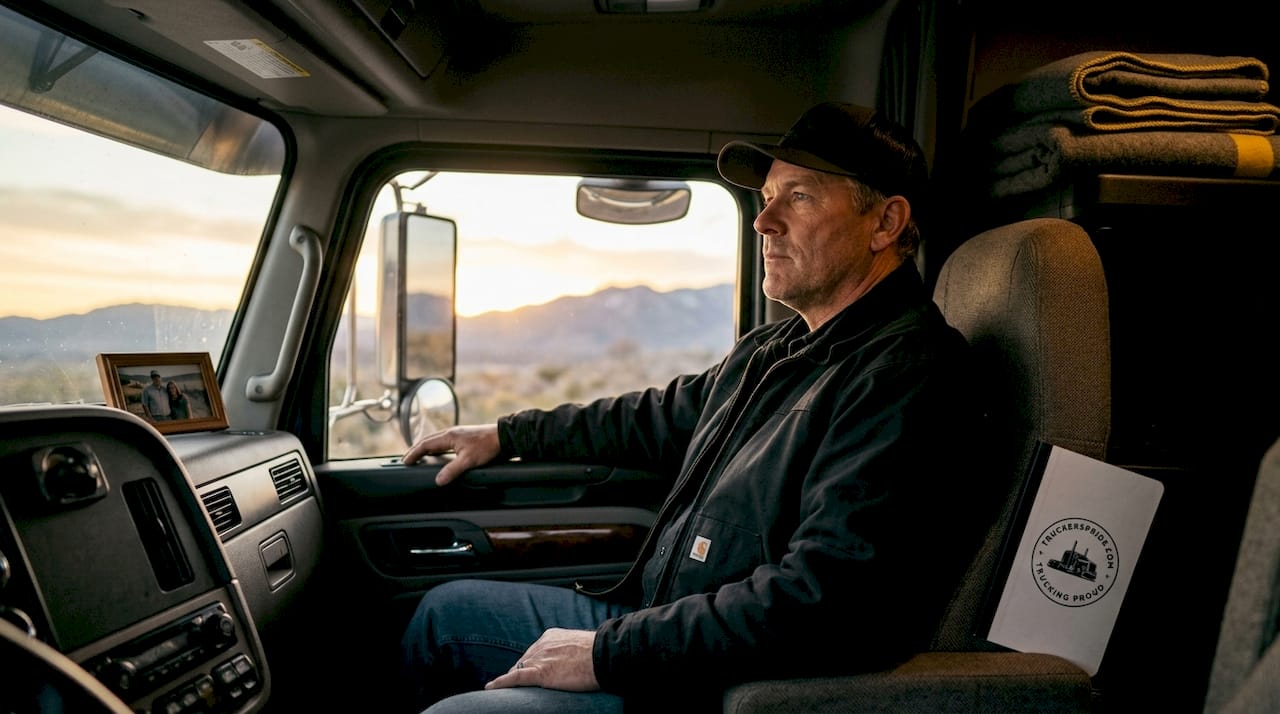
The fit data is equally clear. Branded soft goods achieve 74–81% retention rates when the fit is good, compared to 38–42% for poor-fitting items. That gap is enormous. A driver who receives a shirt that fits well wears it. A driver who receives one that does not fits poorly leaves it in a drawer, and the investment is lost entirely.
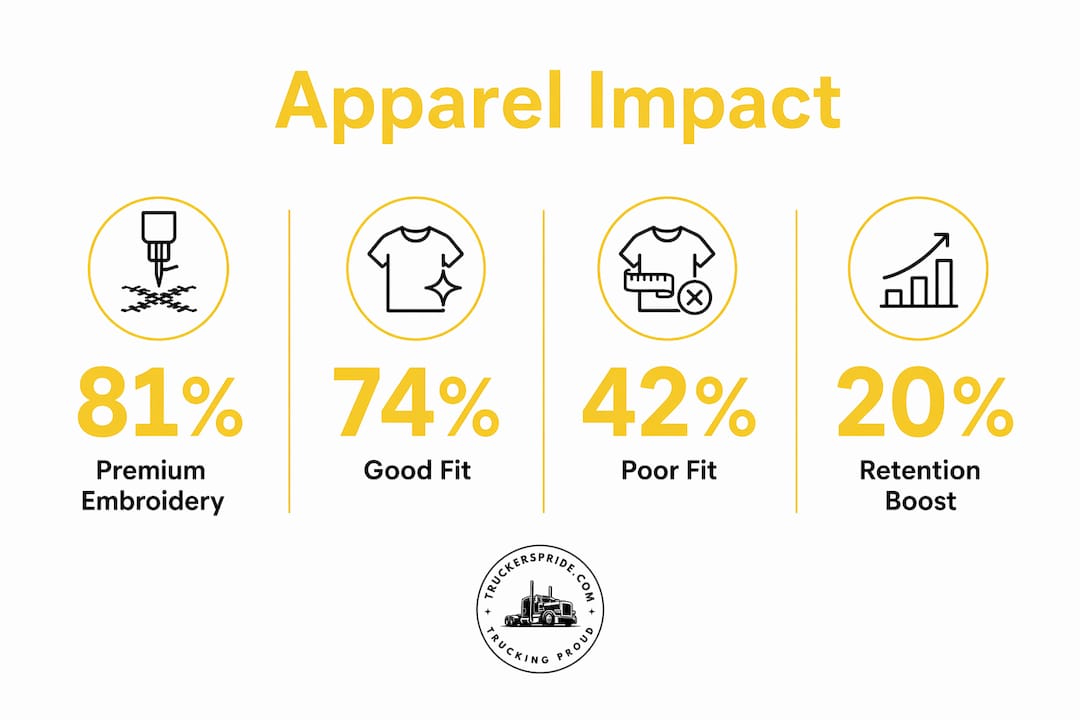
The ROI case for mid-tier apparel is strong. Optimal merchandising ROI occurs in the $15–$30 per item range, balancing upfront cost with garment longevity and driver satisfaction. Spending below that threshold typically produces gear that wears out quickly, while spending significantly above it does not proportionally increase retention impact.
| Apparel quality tier | Fit retention rate | Driver perception |
|---|---|---|
| Premium embroidered gear | 74–81% | High value, high pride |
| Mid-tier printed gear | 50–60% | Acceptable, moderate loyalty |
| Budget screen-printed gear | 38–42% | Low value, low usage |
Ergonomic construction matters too, especially for drivers. Premium-quality branded apparel reduces fatigue and physical strain, which extends career longevity in a physically demanding profession. A driver who is comfortable in their gear performs better and stays longer.
Pro Tip: Choose embroidery over screen printing for items like hats and jackets. Embroidered logos hold up through hundreds of washes and communicate a level of care that drivers notice immediately.
How does branded apparel improve onboarding and driver recognition?
Retention efforts that start at onboarding outperform those that begin later. Providing branded gear on day one signals investment in a driver before performance is even proven. That signal matters. It tells a new hire that the company is already committed to them, which creates a reciprocal sense of obligation and belonging.
The numbers support this approach. Structured onboarding retains 82% of new hires through year one, compared to 50% without structured programs. Apparel embedded in that onboarding process reduces attrition by at least 12% within the first 90 days. A starter wardrobe for new drivers is not a perk. It is a retention mechanism with a measurable return.
Recognition programs that use branded apparel as milestone rewards extend this effect to veteran drivers. A fifth-anniversary jacket or a limited-edition seasonal piece communicates that tenure is noticed and valued. That communication is what keeps experienced drivers from leaving for a fleet that pays marginally more.
A structured apparel recognition program might look like this:
- Day one onboarding kit. Issue a branded hoodie, performance tee, and cap as part of the welcome package. This creates immediate identity alignment.
- 90-day milestone. Provide a second apparel item, reinforcing that the company tracks and celebrates early commitment.
- Annual anniversary gear. Issue a premium item each year, with quality increasing at key milestones like years three and five.
- Performance-based drops. Reward safety records, on-time delivery streaks, or mentorship contributions with limited-edition branded pieces.
- Seasonal refreshes. Offer seasonal apparel updates so drivers always have weather-appropriate gear that keeps the brand visible year-round.
Each step in this structure reinforces the message that the company invests in its drivers continuously, not just at hiring.
What are the best practices for running a fleet apparel program?
A fleet apparel program succeeds or fails based on how it is designed and managed. The most common mistake is treating it as a one-time uniform order rather than an ongoing culture tool. Employers who survey drivers and offer apparel choices see higher utilization and stronger retention than those distributing generic uniforms without input.
Practical program design for fleet managers:
- Survey before ordering. Collect sizing, style, and color preferences from drivers before placing any order. This prevents waste and increases wear rates.
- Offer choice within structure. Give drivers two or three options within a branded palette rather than a single mandated item. Choice increases ownership.
- Plan seasonal cycles. A seasonal apparel checklist keeps gear relevant through weather changes and prevents drivers from wearing worn-out items that reflect poorly on the fleet.
- Track usage and gather feedback. Ask drivers which items they actually wear and why. This data shapes future orders and improves ROI.
- Avoid logo-only thinking. Drivers care about comfort and fit first. A well-fitting shirt with a small logo beats a billboard-style print on a stiff fabric every time.
Branded apparel treated as a culture investment improves engagement, brand presence, and professionalism perception simultaneously. The fleet that gets this right does not just reduce turnover. It builds a reputation that attracts quality drivers before a seat is even open.
Key Takeaways
Branded apparel is the most underused retention tool in trucking, and fleets that treat it as a culture program rather than a uniform order consistently outperform those that do not.
| Point | Details |
|---|---|
| Start at onboarding | Issue branded gear on day one to signal commitment and reduce 90-day attrition by at least 12%. |
| Prioritize quality and fit | Well-fitting premium gear achieves 74–81% retention rates versus 38–42% for poor-fitting items. |
| Involve drivers in choices | Surveying drivers before ordering increases utilization and strengthens emotional attachment to the gear. |
| Build recognition milestones | Anniversary and performance-based apparel rewards keep veteran drivers engaged and feeling valued. |
| Treat apparel as culture | Fleets that view branded clothing as a culture investment see measurable gains in loyalty and professionalism. |
What I have learned about apparel and driver loyalty after years in this industry
Fleet managers often ask whether branded apparel actually moves the needle on retention, or whether it is just a feel-good expense. My honest answer is that it moves the needle precisely because most fleets underestimate it.
The psychological benefit is real but quiet. A driver does not walk into a terminal and announce that the company hoodie made them feel valued. They just stay. They refer a friend. They wear the gear at a family barbecue and answer questions about the company with pride. That kind of loyalty does not show up in a single metric, but it shows up in turnover rates over time.
What I have seen fail consistently is the bulk-order approach. A fleet orders 200 identical shirts in three sizes, distributes them at a safety meeting, and calls it a program. Drivers who receive the wrong size or a style they dislike leave the shirt in a locker. The investment disappears. Quality and fit are not optional details. They are the entire mechanism through which the program works.
The fleets that get this right think of apparel the way they think of equipment. They invest in apparel value, they maintain it through seasonal cycles, and they treat driver feedback as operational data. That discipline is what separates a retention program from a line item.
— Sylvain
Truckerspride apparel built for the drivers who keep America moving
Truckerspride designs apparel specifically for the demands of long-haul driving, not for office hallways or trade show booths. Every piece is comfort-tested and road-proven, printed locally in North America for quality control and faster delivery.
Fleet managers building retention programs will find the Everyday Essentials Bundle a practical starting point. The hoodie, tee, and hat set covers the core wardrobe a driver needs, with the durability to last through real work. Each item carries the kind of quality that drivers notice and wear beyond the cab. When a driver chooses to wear your brand on their own time, the retention work is already done. Truckerspride makes that choice easy.
FAQ
Does branded apparel actually reduce driver turnover?
Yes. Well-implemented branded apparel programs can boost retention by up to 20%, with onboarding kits improving first-year retention by up to 32 percentage points. The effect is strongest when gear is high quality and issued from day one.
How does apparel quality affect whether drivers wear the gear?
Fit is the primary factor. Branded soft goods achieve 74–81% retention rates with good fit, compared to 38–42% for poor-fitting items. Drivers who receive gear that fits well wear it consistently, which reinforces identity and loyalty.
When in the employment cycle should branded apparel be introduced?
Day one of onboarding is the most effective point. Providing branded gear before performance is proven signals company investment and reduces attrition by at least 12% within the first 90 days.
What types of branded apparel work best for trucking fleets?
Hoodies, performance tees, and branded caps are the most practical and most worn items in trucking. Premium embroidered pieces outperform cheap screen-printed alternatives in both durability and driver perception.
How can fleet managers measure the impact of an apparel program?
Track first-year retention rates before and after introducing a structured apparel program. Collect driver feedback on which items they wear and why. Usage rates and turnover data together give a clear picture of program effectiveness.